GOVGovernment and Public Information
Finding Official Government Information: USA.gov, Agencies and Public Records
How to confirm a government website is real, find services via USA.gov, get official documents from GovInfo, request records under FOIA and avoid look-alikes.
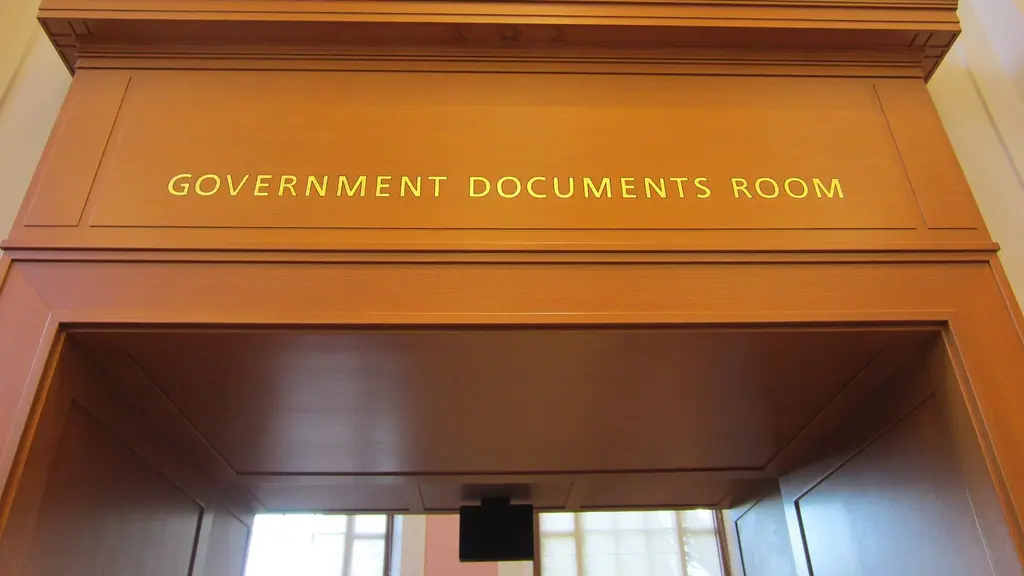
Suppose you need to replace a lost Social Security card, or look up the text of a federal law for a civics assignment. You type the request into a search engine, and the first results include sites with official-looking seals that offer to "process" the paperwork for a fee, a few news articles, and somewhere further down, the agency itself. Knowing which result is genuinely official saves money and protects your personal information.
U.S. government information is free and abundant, but it is spread across thousands of agencies at the federal, state and local levels. This guide shows you how to recognize an official government website, where to start when you do not know which agency handles something, how to find authentic copies of laws and official documents, how public records requests work, and how to spot the impostors.
How to tell that a website is really the government
Look at the domain name, read from right to left. The part just before the first single slash is what matters. In www.ssa.gov/number-card, the domain is ssa.gov. In ssa.gov.example-help.com, the real domain is example-help.com, whatever comes before it.
Understand what .gov means. The .gov domain is managed by the Cybersecurity and Infrastructure Security Agency (CISA), which verifies each organization that requests one. CISA states that .gov domains are "only available to U.S.-based government organizations." Eligible organizations include federal agencies in all three branches, states and territories, federally recognized tribal governments, counties, cities and towns, special districts, independent school districts and interstate organizations. U.S. military sites use .mil.
A few cautions:
- Not every government body uses .gov. Some local governments and public bodies still use other domains. If you are unsure, reach the site through a link on USA.gov or your state's official portal.
- Look-alikes borrow the vocabulary. A domain such as
passport-gov-services.comis not a government site. Seals, flags and words like "official" or "federal" in the page design prove nothing. - Other endings are not government.
.org,.us,.eduand.comsites may be reliable, but they are not federal agencies. - Check for HTTPS. The FTC advises making sure a site is secure (the address begins with
https) before you share sensitive information. HTTPS protects the connection; it does not prove who runs the site, so check the domain too.
Tip: Search results often show paid advertisements first. Skip anything labeled "Sponsored" or "Ad" when you are looking for a government service, and type the agency's address directly if you know it.
Start at USA.gov when you do not know where to go
USA.gov is the federal government's official guide to its information and services. It is organized around tasks people actually need to do: benefits, taxes, travel and passports, voting, health, reporting scams and more. It includes a directory of federal agencies and departments, a "Find benefits" tool, and a contact center you can call at 1-844-USAGOV1 (1-844-872-4681) if you cannot work out which agency handles your question.
For state and local services such as driver's licenses, vital records, property taxes and local courts, start with your state's official portal. Our guides to finding your way around the federal government online and state and local government services explain how those levels are organized.
Finding official documents and data
When you need the authoritative text of something, such as a law, a regulation or a congressional record, go to the publisher of record rather than a copy posted elsewhere.
| You need… | Where to find the official version |
|---|---|
| Federal laws, the U.S. Code, bills, the Congressional Record, the Federal Register | GovInfo (U.S. Government Publishing Office); Congress.gov for bills and legislative history |
| Court decisions | The court's own website; see our guide to finding courts and court opinions online |
| Official statistics | The agency that collects them, such as the Census Bureau or the Bureau of Labor Statistics |
| Government datasets | Data.gov and agency data portals |
GovInfo is a free service of the U.S. Government Publishing Office (GPO), a legislative branch agency, that provides official publications from all three branches. GPO adds digital signatures to its PDF files so readers can verify that a document is an unaltered official version, which matters when you are citing a law or regulation in a paper.
For numbers, our guides to finding reliable statistics and using government open data show how to locate the original tables behind a news story.
Public records and the Freedom of Information Act
A huge amount of government information is already published. When it is not, the Freedom of Information Act (FOIA) gives the public the right to request records from federal agencies.
Before you file, check whether the information is already available on the agency's website or in its online "reading room." If it is not, here is how the process works, according to FOIA.gov, the government's central FOIA site run by the Department of Justice:
- Anyone can ask. FOIA.gov explains that, generally, any person can make a request, whether or not they are a U.S. citizen.
- Identify the right agency. There is no single central office; each agency handles requests for its own records. FOIA.gov has a tool to find the right one and submit a request.
- Describe the records clearly. Name the subject, dates, people and document types as specifically as you can.
- Understand fees. There is no initial fee to submit a request. Agencies may charge for search time and copies, but the first two hours of search and the first 100 pages of copies are usually free, and you can ask for a fee waiver if disclosure serves the public interest.
- Expect exemptions and wait times. Agencies review records before release, and nine exemptions protect certain information, such as personal privacy. Response times vary with complexity and backlog.
FOIA applies to federal agencies. Records held by state and local governments fall under each state's own public records laws instead; your state government's website is the place to find out how to request them.
Spotting government impostors
Scammers pose as government agencies because people trust them. The FTC's guidance on government impersonation scams lists the signs:
- Payment by gift card, wire transfer, cryptocurrency or payment app. Real agencies do not demand these.
- Threats and urgency. Arrest, deportation, a suspended Social Security number or lost benefits unless you pay now.
- Faked caller ID. Scammers can make a call look like it comes from a real agency's name or number.
- Unexpected messages with links. Emails, texts or social media messages asking you to click and "verify" your information.
- Made-up agencies. Official-sounding names that do not exist.
The FTC's advice: hang up or ignore the message, do not call back the number you were given, and contact the agency directly using contact information from its official website. Report impostors to the FTC at ReportFraud.ftc.gov. If you shared personal information, IdentityTheft.gov provides recovery steps. Our guide to recognizing phishing emails, texts and calls covers the same tactics in other settings.
Safety: Be wary of any site that charges a "processing" or "service" fee to submit a form that the agency itself provides. Before entering a Social Security number, payment details or a passport number, confirm you are on the agency's own domain, reached from USA.gov or a link you typed yourself.
Worked example: checking a search result
Say you search for how to replace a Social Security card and see three results:
- A sponsored result titled "Official SS Card Replacement Service," at an address ending in
.com, promising fast processing for a fee. Not government. The.comdomain and the fee are the giveaways. - A news article explaining the process. Possibly useful background, but it is not where you apply.
- A result at
ssa.gov. The Social Security Administration's own site. To be certain, you can also reach it from the agency directory on USA.gov.
Try it: Pick a service your family might actually need, such as renewing a passport, finding a polling place or getting a copy of a birth certificate. Search for it, then list the first five results and label each one as official government, reliable non-government, advertisement or look-alike. Confirm your answers by finding the same service through USA.gov or your state portal.
Quick reference
Checklist: (1) Read the domain from the right: the official part ends in .gov or .mil. (2) Skip ads and "service" sites that charge for free forms. (3) Start at USA.gov or your state portal when you do not know which agency to use. (4) Get laws and official documents from GovInfo, Congress.gov or the issuing agency. (5) Check whether records are already public before filing a FOIA request; state records follow state law. (6) Never pay a "government" caller with gift cards, wire transfers, crypto or payment apps; report impostors at ReportFraud.ftc.gov.
Curated resources
Checked by hand from the Government and Public Information shelf of the library (government sources). Each entry says what it costs and when we last verified it.
Bureau of Labor Statistics
U.S. Department of Laborbls.gov
The principal federal agency for labor economics and statistics, publishing official data on employment, wages, inflation, productivity and workplace safety. Its charts, news releases and databases are essential sources for economics classes and research.
Using it: Free, no account.
Verified
CDC
U.S. Centers for Disease Control and Preventioncdc.gov
The official website of the U.S. Centers for Disease Control and Prevention, providing health information, disease data, vaccination schedules and safety guidance. A primary public health source for families, schools and researchers checking current recommendations.
Using it: Free, no account.
Verified
CISA Cybersecurity Best Practices
Cybersecurity and Infrastructure Security Agencycisa.gov
Guidance from the U.S. Cybersecurity and Infrastructure Security Agency on protecting devices, accounts and data. It covers multifactor authentication, strong passwords, software updates and recognizing phishing, with plain-language tips suitable for households, schools and small organizations.
Using it: Free, no account.
Verified
Congress.gov
Library of Congresscongress.gov
The official source for U.S. federal legislative information, with bill texts, status, sponsors, votes, the Congressional Record and member profiles. Ideal for tracking legislation and teaching how a bill becomes law with real examples.
Using it: Free, no account.
Verified
eSafety Commissioner
Australian Governmentesafety.gov.au
The website of Australia's independent online safety regulator, providing advice for parents, young people, educators and seniors. It explains how to deal with cyberbullying, image-based abuse and online scams, and offers official reporting channels for harmful content.
Using it: Free.
Verified
Federal Register
Office of the Federal Register and Government Publishing Officefederalregister.gov
The daily journal of the U.S. government, publishing proposed and final regulations, executive orders and agency notices. Readers can search documents, follow topics and submit comments on proposed rules.
Using it: Free, no account. Commenting on proposed rules is open to the public.
Verified
Federal Student Aid
U.S. Department of Educationstudentaid.gov
The official U.S. Department of Education site for federal student aid, where students complete the FAFSA, learn about grants, loans and work-study, and manage existing loans. It explains eligibility and deadlines clearly and warns about companies that charge for help that is free here.
Using it: Free. Never pay for FAFSA help.
Verified
FTC Consumer Advice
U.S. Federal Trade Commissionconsumer.ftc.gov
Practical guidance from the U.S. Federal Trade Commission on avoiding scams, protecting your identity, shopping safely and dealing with debt. Scam alerts explain the latest schemes and how to report them.
Using it: Free, no account.
Verified
GOV.UK
UK Government Digital Servicegov.uk
The single website for UK government services and information, from taxes and benefits to passports, driving and education. Its plain-language guides and official publications make it the authoritative starting point for UK public information.
Using it: Free, no account for information; some services require sign-in.
Verified
GovInfo
U.S. Government Publishing Officegovinfo.gov
Free, authenticated access to official publications from all three branches of the U.S. federal government, including the Federal Register, U.S. Code, congressional reports and court opinions. Digital signatures confirm documents are official versions.
Using it: Free, no account.
Verified
IdentityTheft.gov
U.S. Federal Trade Commissionidentitytheft.gov
The U.S. Federal Trade Commission's official site for reporting identity theft and getting a personalized recovery plan. It walks victims through steps such as contacting companies, placing fraud alerts and correcting credit reports, with prefilled letters and forms.
Using it: Free.
Verified
IRS
Internal Revenue Serviceirs.gov
The official site of the U.S. Internal Revenue Service, providing tax forms, instructions, filing information, refund status and free filing options. It also explains tax scams and how to report them.
Using it: Free. The IRS does not initiate contact by email, text or social media to request personal information.
Verified
legislation.gov.uk
The National Archives (UK)legislation.gov.uk
The official home of UK legislation, publishing acts of Parliament and secondary legislation in original and revised versions. Users can see how laws have changed over time.
Using it: Free, no account.
Verified
Library and Archives Canada
Government of Canadacanada.ca
Canada's national library and archive, preserving published materials, government records, photographs and documents about Canadian history. The site provides collection search, genealogy databases such as census and immigration records, and guidance on accessing materials in person or online.
Using it: Free to search. Some digitized records and copy requests involve fees.
Verified
National Do Not Call Registry
U.S. Federal Trade Commissiondonotcall.gov
The official U.S. registry for limiting telemarketing calls. Register home or mobile numbers, check whether a number is listed and report unwanted or illegal robocalls, which helps regulators track phone scams. Registration is free, so any caller asking for payment to sign you up is a scammer.
Using it: Free. Registration never expires; the government never charges to register or calls to ask for payment.
Verified
NCSC (UK) Advice for You and Your Family
National Cyber Security Centre (UK)ncsc.gov.uk
Practical cyber security advice from the UK National Cyber Security Centre for individuals and families. Short guides explain how to secure email and social media accounts, back up data, set up devices safely and recognize scam messages, all written for non-technical readers.
Using it: Free, no account.
Verified
Occupational Outlook Handbook
U.S. Bureau of Labor Statisticsbls.gov
An official guide from the U.S. Bureau of Labor Statistics describing hundreds of occupations, including what workers do, required education and training, typical pay and projected job growth. A trusted starting point for career research assignments and for students exploring future paths.
Using it: Free, no account.
Verified
Office for National Statistics
UK Statistics Authorityons.gov.uk
The UK's national statistical institute and the largest producer of official statistics in the country. It publishes data and analysis on population, the economy, employment, health and society, with bulletins and interactive tools that make official numbers accessible.
Using it: Free, no account.
Verified
Supreme Court of the United States
Supreme Court of the United Statessupremecourt.gov
The official website of the U.S. Supreme Court, offering opinions, docket information, oral argument transcripts and audio, and visitor information. The primary source for reading decisions as issued.
Using it: Free, no account.
Verified
The National Archives (UK)
The National Archives (UK government)nationalarchives.gov.uk
The official archive of the UK government, holding over a thousand years of records. Research guides explain how to find wills, military service records, census returns and government papers, and the catalog lists holdings from The National Archives and hundreds of other UK archives.
Using it: Free to browse and search; some digitized records cost a fee to download, many are free.
Verified
U.S. Census Bureau
U.S. Census Bureaucensus.gov
The primary source of statistics about the people and economy of the United States, from the decennial census to the American Community Survey. The site offers data, quick facts, maps and teaching resources for exploring population, housing and business trends.
Using it: Free, no account.
Verified
U.S. National Archives
National Archives and Records Administrationarchives.gov
The agency that preserves the permanent records of the U.S. federal government, from founding documents to military service files and immigration records. The site explains what records exist, how to request them, how to visit research rooms and how to start genealogy or historical research.
Using it: Free to browse. Ordering reproductions or certified copies of records carries fees.
Verified
Unclaimed.org (NAUPA)
National Association of Unclaimed Property Administratorsunclaimed.org
The official directory of U.S. state and Canadian unclaimed property programs. It links to each official state search where people can look for forgotten bank accounts, refunds and other assets held by the state, free of charge.
Using it: Free. Searching and claiming through state programs is always free; avoid paid finders.
Verified
USA.gov
U.S. General Services Administrationusa.gov
The official guide to U.S. government information and services, organized around everyday tasks such as getting a passport, finding benefits, contacting agencies or reporting scams. A dependable first stop when you are not sure which agency handles a question.
Using it: Free, no account. Official site; watch out for look-alike sites that charge for free services.
Verified
See all 47 Government and Public Information resources in the library
Sources
- USA.gov, USAGov, General Services Administration
- .gov Domain Eligibility, Cybersecurity and Infrastructure Security Agency
- About GovInfo, U.S. Government Publishing Office
- FOIA.gov Frequently Asked Questions, U.S. Department of Justice, Office of Information Policy
- How to Avoid a Government Impersonation Scam, Federal Trade Commission