GOVGovernment and Public Information
Finding Courts and Court Opinions Online: Federal and State
How U.S. federal and state courts are organized, how to find the right court, and where to read court opinions and case records free or at low cost online.
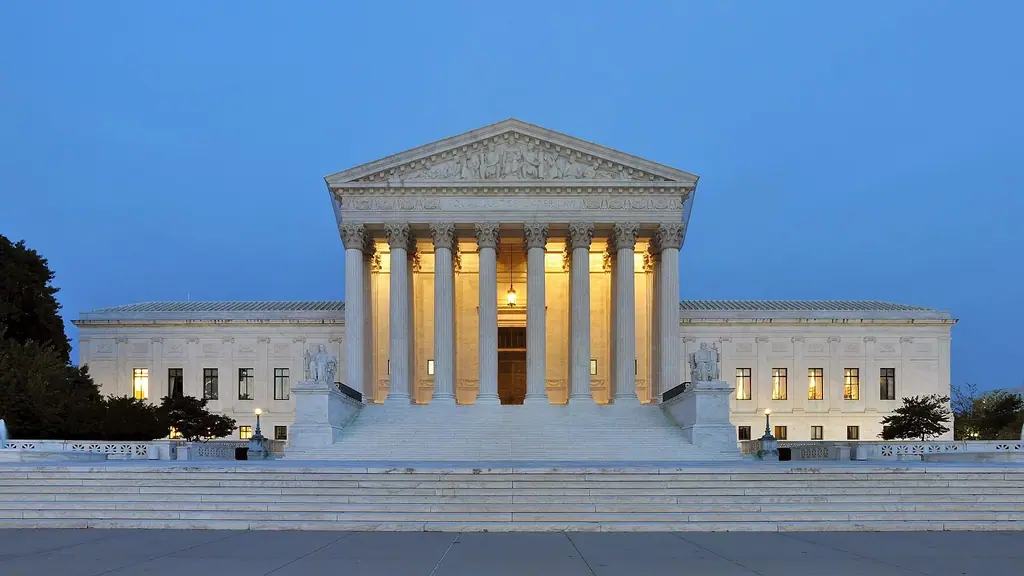
Suppose a news story mentions that "a federal appeals court" struck down a state law, and you want to read the decision yourself. Or a family member has a hearing in "superior court" and you want to know what that means and where to find the case schedule. Either way, the first step is understanding which court you are dealing with, because that determines where its records live.
The United States has two parallel court systems, federal and state, plus specialized courts within each. Opinions and dockets are increasingly available online, some free and some behind modest fees. This page explains the structure briefly, shows how to locate a specific court, and lists where to read opinions and case records.
Note: This page offers general information for research, not legal advice. For your own case, contact the court clerk, a court self-help center or a licensed attorney.
How the federal courts are organized
Federal courts hear cases involving the U.S. Constitution, federal laws, disputes between states, and certain cases between citizens of different states. According to the federal judiciary, the system has three main levels:
| Level | Number | What happens there |
|---|---|---|
| U.S. district courts | 94 | Trial courts: evidence, witnesses, juries, initial decisions |
| U.S. bankruptcy courts | 90 | Units of the district courts that handle bankruptcy cases |
| U.S. courts of appeals | 13 (12 regional circuits plus the Federal Circuit) | Review whether the law was applied correctly at trial or by a federal agency |
| Supreme Court of the United States | 1 | Final word on federal law and the Constitution; hears a small number of cases it chooses to review |
There are also specialized federal courts, such as the U.S. Tax Court and the U.S. Court of Appeals for Veterans Claims. When a story says "the Ninth Circuit," it means the court of appeals covering several western states; each circuit's website lists which states and districts it covers.
How state courts are organized
Most legal disputes in the United States, including most criminal, family, traffic, landlord-tenant and probate cases, are handled by state courts. Every state sets up its own system, but most follow a similar three-level pattern:
- Trial courts, sometimes split into limited-jurisdiction courts (small claims, traffic, municipal) and general-jurisdiction courts.
- Intermediate appellate courts, present in most states, which hear routine appeals.
- A court of last resort, usually called the supreme court, which has the final say on state law.
Names are not consistent between states, which causes real confusion. In New York, for example, the "Supreme Court" is a trial court, and the highest court is the Court of Appeals. Always check the state's own judiciary website for what each court does. The companion page on state laws, codes and statutes points to the official legislation that state courts interpret.
Tip: To find which court is handling a case, start with the county where it was filed. Most state judiciary websites have a court locator and an online case search, though coverage and fees vary by state and county.
Reading court opinions online
An opinion is the court's written explanation of its decision. Here is where to find them:
- U.S. Supreme Court: The Court posts opinions on its own website on the day they are announced, along with orders, argument transcripts and argument audio. For older cases, the official United States Reports are digitized by the Library of Congress, and Oyez offers case summaries with argument audio.
- Federal appeals and district courts: Each court posts opinions on its own website. GovInfo, run by the U.S. Government Publishing Office, publishes opinions from many federal courts in a searchable collection. Within PACER, judicial opinions are always free.
- State courts: Appellate opinions appear on each state judiciary's website. Cornell's Legal Information Institute links to the opinions pages for every state by jurisdiction.
- Free legal research databases: CourtListener, from the nonprofit Free Law Project, gathers millions of opinions and federal dockets into one searchable site with alerts. Harvard Law School Library's Caselaw Access Project has made a large digitized collection of historical U.S. case law freely available.
When reading an opinion, note the court, date, docket number and citation. Check whether a later court reversed or limited it before relying on it, especially for anything beyond a school assignment.
Dockets and case records
A docket is the list of filings and events in a case: complaints, motions, orders and hearing dates. For federal cases, the system is PACER (Public Access to Court Electronic Records). It charges $0.10 per page, capped at $3 per document, and fees are waived if your charges total $30 or less in a calendar quarter; audio files cost $2.40 each. Many students and researchers never pay because of that waiver.
The free RECAP browser extension, from Free Law Project, lets PACER users share documents they have bought into a public archive and shows you when a document is already available free on CourtListener.
State and local case records vary widely. Some states offer free statewide case search; others charge per search or require a visit to the clerk's office. Records in family, juvenile and some other matters are often confidential by law.
Safety: Court records can contain personal information about real people. Use them for research and civic understanding, not to harass or expose anyone, and be careful about sharing names from cases involving minors or victims.
A research routine
Try it: Pick a recent Supreme Court decision mentioned in the news. Find the opinion on supremecourt.gov, identify the lower court it came from, and locate that lower court's earlier decision on CourtListener or the court's own site. Note one way the Supreme Court's reasoning differed.
If you need a lawyer rather than records, the page on bar associations and lawyer referral services explains how to find and verify one. For broader legal research starting points, see Gavel2Gavel revisited and finding official government information.
Recommended resources
- Court Website Links — Official links to every federal appellate, district and bankruptcy court website, where local opinions, rules and calendars are posted (Administrative Office of the U.S. Courts; free).
- Court Role and Structure — A plain overview of how federal courts are organized, with a map of the circuits (Administrative Office of the U.S. Courts; free).
- Supreme Court Opinions — Slip opinions, orders, argument transcripts and audio straight from the Court (Supreme Court of the United States; free; no account).
- PACER — The official system for federal court dockets and filings; registration is required and per-page fees apply above the quarterly waiver (Administrative Office of the U.S. Courts; low cost).
- GovInfo: United States Courts Opinions — Searchable, authenticated opinions from many federal appellate, district and bankruptcy courts (U.S. Government Publishing Office; free).
- CourtListener — A free search engine for millions of court opinions, oral argument recordings and federal dockets, with email alerts (Free Law Project; free; account for alerts).
- RECAP — Browser extensions that make PACER documents publicly available and show free copies when they exist (Free Law Project; free).
- Caselaw Access Project — A digitized collection of historical U.S. court decisions released for free public use (Harvard Law School Library; free).
- LII State Courts by Jurisdiction — Links to court opinion sources for every U.S. state and territory (Legal Information Institute, Cornell Law School; free).
- Oyez — Supreme Court case summaries, justices' biographies and synchronized oral argument audio, good for classroom use (Oyez project with Cornell LII and Justia; free).
- Federal Judicial Center: History of the Federal Judiciary — Histories of federal courts, biographical data on judges and teaching materials on landmark cases (Federal Judicial Center; free).
- USAGov: Courts — A starting point for finding federal, state, territorial, county and municipal courts (U.S. General Services Administration; free).
- National Center for State Courts — Research and data on how state courts work, including court structure and access to justice topics (National Center for State Courts; free).
Sources
- Court Role and Structure, Administrative Office of the U.S. Courts
- PACER Pricing: How fees work, Administrative Office of the U.S. Courts
- Opinions, Supreme Court of the United States
- State Courts: by Jurisdiction, Legal Information Institute, Cornell Law School
- CourtListener, Free Law Project