GOVGovernment and Public Information
Finding Your Way Around the U.S. Federal Government Online
How the federal government is organized and which official sites answer which questions: agencies, Congress, courts, regulations, spending and labs.
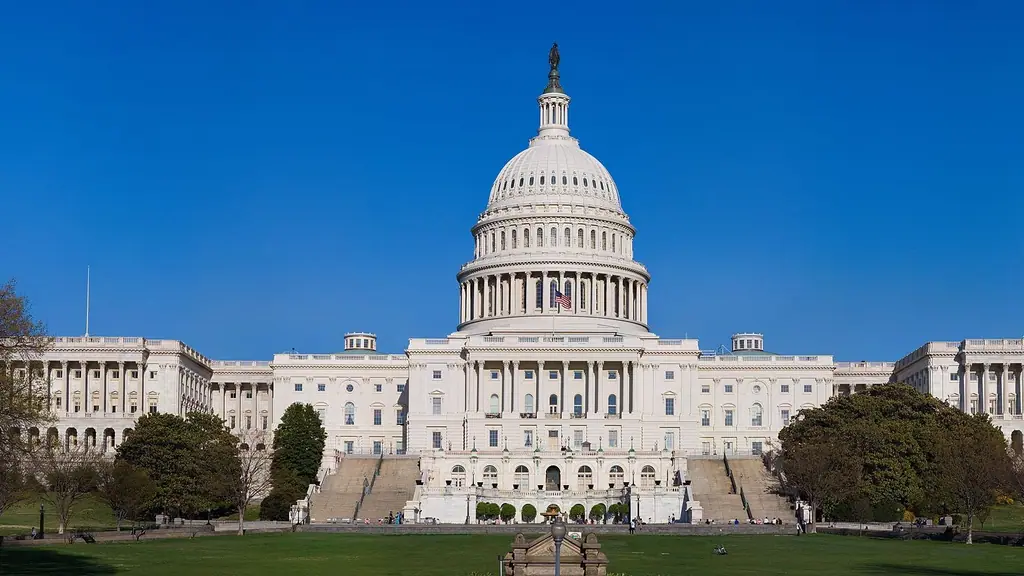
Suppose you need to know which agency inspects the meat in your school cafeteria, who decides whether a drug can be sold, or what a new federal rule actually says. A search engine will happily send you to news stories, advocacy groups and lookalike sites before it shows you the government's own page.
The federal government publishes an enormous amount of free, authoritative information, but it is spread across hundreds of websites. This page gives you a map: how the government is organized, which official directories list its parts, and which site to open for each kind of question.
How the federal government is organized
The Constitution divides federal power among three branches, and USAGov's overview is a clear starting point:
- Legislative branch. Congress, made up of the Senate (100 senators, two per state) and the House of Representatives (435 voting members apportioned by population). Congress writes laws, approves the budget and confirms presidential nominees. Support agencies such as the Library of Congress, the Government Accountability Office and the Government Publishing Office also sit here.
- Executive branch. The president, vice president and Cabinet, plus the executive departments, independent agencies, boards and commissions that carry out federal law. This is by far the largest branch and the one most people mean when they say "the government."
- Judicial branch. The Supreme Court and the lower federal courts, which interpret laws, apply them to cases and decide whether laws are constitutional.
Within the executive branch, it helps to know the difference between executive departments (large Cabinet-level organizations led by a secretary or, for Justice, the attorney general), agencies within departments (for example, the National Park Service is part of the Department of the Interior) and independent agencies (organizations outside the departments, such as NASA or the Federal Trade Commission). Names and structures change from time to time through laws and reorganizations, so check an official directory rather than an old list.
The official directories
Three free directories will answer most "who does what?" questions.
USAGov's A–Z agency index. The quickest way to find an agency's official website and contact details. Each entry gives a short description, the main website, and often phone numbers and social media accounts.
The United States Government Manual. Described by its publisher as the official handbook of the federal government, the Manual explains each agency's purpose, legal authority, programs and leadership across all three branches. Use it when you need to understand what an agency is responsible for, not just how to reach it.
The Federal Register's agency list. Shows every agency that publishes rules, proposed rules and notices, with links to everything each has published. Useful when you want to see what an agency is actually doing right now.
Tip: Official federal websites usually end in .gov or .mil, and many show a banner reading "An official website of the United States government." Be wary of lookalike sites that charge fees for forms or services the government provides free.
Which site answers which question?
| Your question | Start here |
|---|---|
| Which agency handles this, and how do I contact it? | USAGov A–Z index |
| What is this agency responsible for? | U.S. Government Manual |
| What does a bill say, and where is it in Congress? | Congress.gov |
| Who represents me in Congress? | House and Senate "find your member" pages |
| What rule did an agency propose or finalize? | Federal Register; comment on proposals at Regulations.gov |
| What is the current text of a federal regulation? | eCFR (Electronic Code of Federal Regulations) |
| Where does federal money go? | USAspending.gov |
| Is there federal data on this topic? | Data.gov |
| What happened in a federal court case? | U.S. Courts and the Supreme Court's website |
| What benefits or services might I qualify for? | USAGov benefits pages |
The White House, Congress and the courts
The White House website publishes presidential statements, executive orders and the list of Cabinet members. Executive orders are also published officially in the Federal Register, which is the better place to read and cite their full text.
Congress has several official sites. Congress.gov, run by the Library of Congress, tracks bills and resolutions, the Congressional Record and committee reports. House.gov and Senate.gov list members and committees and explain procedures; both have tools for finding your own representative and senators.
The courts are covered by uscourts.gov, which explains how federal courts are organized and links to every federal court, and by supremecourt.gov, which posts opinions, argument transcripts and calendars. For how state courts fit alongside federal ones, see our guide to finding courts and court opinions.
Federal laboratories and the military
Many people are surprised by how much science the government runs directly. The Department of Energy oversees a network of national laboratories that conduct research in physics, energy, computing and national security, and the Federal Laboratory Consortium connects hundreds of federal labs with businesses and universities that want to use their research. Agencies such as NASA, NOAA, NIST and the National Institutes of Health also run their own research centers and publish results freely.
Each branch of the armed forces maintains its own official website with history, careers and news, and the Defense Department's site links to them. The A–Z index is the most reliable way to reach the current official address of any military branch or command.
Getting help in person and practicing with students
You do not have to do this alone. Federal depository libraries, found at many public and university libraries across the country, provide free public access to government publications and staff who know how to find them. Your local librarian can also help you navigate agency websites.
For younger learners, Ben's Guide from the Government Publishing Office explains the branches, how laws are made and how citizens participate, with sections for different grade levels.
Try it: Pick a product you used today, such as a cereal box, a bike helmet or a phone. Use the USAGov A–Z index to identify which federal agency sets rules for it, then find one recent document from that agency in the Federal Register. Record the agency, the document title and its publication date.
To go further, our guides to finding official government information and using government open data build on this map, and finding state and local government services covers the levels of government closest to home.
Recommended resources
- USAGov A–Z Agency Index — The official alphabetical directory of federal departments and agencies, with websites and contact details. Free, no account (General Services Administration).
- United States Government Manual — The official handbook describing each agency's mission, programs and leadership across all three branches. Free (Office of the Federal Register; PDFs on GovInfo).
- Federal Register — The daily journal of federal rules, proposed rules, notices and presidential documents, searchable by agency and topic. Free (Office of the Federal Register and Government Publishing Office).
- Congress.gov — The official source for federal legislation, the Congressional Record and member profiles. Free (Library of Congress).
- House.gov: Find Your Representative — Enter a ZIP code to identify your member of the House and reach their office. Free (U.S. House of Representatives).
- Senate.gov: Contacting Senators — Lists every senator by state with office contact information. Free (U.S. Senate).
- Regulations.gov — Read proposed federal rules and submit public comments during comment periods. Free; no account needed to comment (eRulemaking Program).
- eCFR — A continuously updated online version of the Code of Federal Regulations, the current text of federal rules. Free (Office of the Federal Register).
- GovInfo — Authenticated official publications from all three branches, including the Federal Register, U.S. Code and congressional documents. Free (Government Publishing Office).
- USAspending.gov — Searchable data on federal contracts, grants and spending by agency and location. Free (U.S. Department of the Treasury).
- United States Courts — Explains the federal court system, links to every federal court and offers educational resources. Free (Administrative Office of the U.S. Courts).
- Supreme Court of the United States — Opinions, argument transcripts and audio, and the Court's calendar. Free.
- DOE National Laboratories — Overview and links for the Department of Energy's national laboratories. Free.
- Federal Laboratory Consortium — A nationwide network that helps businesses, universities and the public find federal laboratories, their facilities and technologies available for partnership. Free to browse.
- Ben's Guide to the U.S. Government — Civics explanations and activities for K–12 learners, organized by grade band. Free (Government Publishing Office).
Curated resources
Checked by hand from the Government and Public Information shelf of the library. Each entry says what it costs and when we last verified it.
Bureau of Labor Statistics
U.S. Department of Laborbls.gov
The principal federal agency for labor economics and statistics, publishing official data on employment, wages, inflation, productivity and workplace safety. Its charts, news releases and databases are essential sources for economics classes and research.
Using it: Free, no account.
Verified
C-SPAN
National Cable Satellite Corporation (nonprofit, funded by the cable industry)c-span.org
A nonprofit public affairs network that records congressional sessions, hearings, campaign events and author talks. Its online video library of floor debates and historical programs lets students watch government in action and review primary-source footage of political events over several decades.
Using it: Free to watch online; no account needed for most video.
Verified
CDC
U.S. Centers for Disease Control and Preventioncdc.gov
The official website of the U.S. Centers for Disease Control and Prevention, providing health information, disease data, vaccination schedules and safety guidance. A primary public health source for families, schools and researchers checking current recommendations.
Using it: Free, no account.
Verified
CISA Cybersecurity Best Practices
Cybersecurity and Infrastructure Security Agencycisa.gov
Guidance from the U.S. Cybersecurity and Infrastructure Security Agency on protecting devices, accounts and data. It covers multifactor authentication, strong passwords, software updates and recognizing phishing, with plain-language tips suitable for households, schools and small organizations.
Using it: Free, no account.
Verified
College Scorecard
U.S. Department of Educationcollegescorecard.ed.gov
An official U.S. Department of Education tool for comparing colleges and fields of study by cost, graduation rate, student debt and typical earnings after attending. Helps students and families make informed decisions with federal data rather than marketing claims.
Using it: Free, no account.
Verified
Congress.gov
Library of Congresscongress.gov
The official source for U.S. federal legislative information, with bill texts, status, sponsors, votes, the Congressional Record and member profiles. Ideal for tracking legislation and teaching how a bill becomes law with real examples.
Using it: Free, no account.
Verified
CPI Inflation Calculator (BLS)
U.S. Bureau of Labor Statisticsbls.gov
An official calculator from the U.S. Bureau of Labor Statistics that adjusts dollar amounts for inflation using the Consumer Price Index. Useful for comparing historical prices and wages, such as understanding what a past salary or cost would be worth today.
Using it: Free.
Verified
data.census.gov
U.S. Census Bureaudata.census.gov
The Census Bureau's main platform for searching and downloading detailed census and survey data. Build tables and maps by geography, from the nation down to neighborhoods, for research, journalism and school data projects.
Using it: Free, no account. The interface has a learning curve; start with the Census Bureau's tutorials.
Verified
Data.gov
U.S. General Services Administrationdata.gov
The U.S. government's open data portal, cataloging hundreds of thousands of datasets from federal, state and local agencies. Researchers, students and developers can find data on topics such as agriculture, climate, education, health and public safety for analysis projects.
Using it: Free, no account. Each dataset is hosted by its publishing agency, so formats and update schedules vary.
Verified
eSafety Commissioner
Australian Governmentesafety.gov.au
The website of Australia's independent online safety regulator, providing advice for parents, young people, educators and seniors. It explains how to deal with cyberbullying, image-based abuse and online scams, and offers official reporting channels for harmful content.
Using it: Free.
Verified
FactCheck.org
Annenberg Public Policy Center, University of Pennsylvaniafactcheck.org
A nonpartisan project that monitors the factual accuracy of statements by U.S. political figures, ads and viral claims. Articles explain evidence in detail, and its SciCheck feature examines claims about science and health.
Using it: Free, no account, no ads.
Verified
Federal Register
Office of the Federal Register and Government Publishing Officefederalregister.gov
The daily journal of the U.S. government, publishing proposed and final regulations, executive orders and agency notices. Readers can search documents, follow topics and submit comments on proposed rules.
Using it: Free, no account. Commenting on proposed rules is open to the public.
Verified
Federal Student Aid
U.S. Department of Educationstudentaid.gov
The official U.S. Department of Education site for federal student aid, where students complete the FAFSA, learn about grants, loans and work-study, and manage existing loans. It explains eligibility and deadlines clearly and warns about companies that charge for help that is free here.
Using it: Free. Never pay for FAFSA help.
Verified
FRED Economic Data
Federal Reserve Bank of St. Louisfred.stlouisfed.org
A free database maintained by the Federal Reserve Bank of St. Louis with hundreds of thousands of economic time series from national and international sources. Easy charting and download tools make it a favorite for economics classes, research and journalism.
Using it: Free; account optional for saved graphs.
Verified
FTC Consumer Advice
U.S. Federal Trade Commissionconsumer.ftc.gov
Practical guidance from the U.S. Federal Trade Commission on avoiding scams, protecting your identity, shopping safely and dealing with debt. Scam alerts explain the latest schemes and how to report them.
Using it: Free, no account.
Verified
Full Fact
Full Fact (UK charity)fullfact.org
The UK's independent fact-checking charity, checking claims by politicians, media and online posts. It also publishes guides on spotting misinformation and campaigns for better standards in public information.
Using it: Free, no ads.
Verified
Google Dataset Search
Googledatasetsearch.research.google.com
A search engine for datasets published across the web by governments, universities and research organizations. Filters for format, usage rights and topic help researchers and students find data for analysis projects.
Using it: Free, no account. Datasets are hosted by their publishers, so licenses vary.
Verified
GOV.UK
UK Government Digital Servicegov.uk
The single website for UK government services and information, from taxes and benefits to passports, driving and education. Its plain-language guides and official publications make it the authoritative starting point for UK public information.
Using it: Free, no account for information; some services require sign-in.
Verified
GovInfo
U.S. Government Publishing Officegovinfo.gov
Free, authenticated access to official publications from all three branches of the U.S. federal government, including the Federal Register, U.S. Code, congressional reports and court opinions. Digital signatures confirm documents are official versions.
Using it: Free, no account.
Verified
iCivics
iCivics (nonprofit)ed.icivics.org
A nonprofit founded by Justice Sandra Day O'Connor providing civics games, lesson plans and digital tools. Students learn about government, rights and citizenship through interactive simulations while teachers access ready-to-use curriculum.
Using it: Free; teacher accounts manage classes and assignments.
Verified
IdentityTheft.gov
U.S. Federal Trade Commissionidentitytheft.gov
The U.S. Federal Trade Commission's official site for reporting identity theft and getting a personalized recovery plan. It walks victims through steps such as contacting companies, placing fraud alerts and correcting credit reports, with prefilled letters and forms.
Using it: Free.
Verified
IRS
Internal Revenue Serviceirs.gov
The official site of the U.S. Internal Revenue Service, providing tax forms, instructions, filing information, refund status and free filing options. It also explains tax scams and how to report them.
Using it: Free. The IRS does not initiate contact by email, text or social media to request personal information.
Verified
Legal Information Institute (Cornell)
Cornell Law Schoollaw.cornell.edu
A free legal research resource from Cornell Law School offering the U.S. Code, Constitution annotations, federal regulations and Supreme Court opinions, plus a plain-language legal encyclopedia. Helpful for students and citizens trying to understand the law.
Using it: Free, no account. Not legal advice; consult official sources for authoritative text.
Verified
legislation.gov.uk
The National Archives (UK)legislation.gov.uk
The official home of UK legislation, publishing acts of Parliament and secondary legislation in original and revised versions. Users can see how laws have changed over time.
Using it: Free, no account.
Verified
Library and Archives Canada
Government of Canadacanada.ca
Canada's national library and archive, preserving published materials, government records, photographs and documents about Canadian history. The site provides collection search, genealogy databases such as census and immigration records, and guidance on accessing materials in person or online.
Using it: Free to search. Some digitized records and copy requests involve fees.
Verified
Miller Center Presidential Speeches
Miller Center, University of Virginiamillercenter.org
A collection of major presidential speeches from George Washington onward, with transcripts and many audio or video recordings. Alongside its presidential biographies and essays, it helps students analyze rhetoric and compare how presidents addressed the nation at key moments.
Using it: Free, no account.
Verified
National Archives: Resources for Genealogists
National Archives and Records Administrationarchives.gov
A practical starting point for family history research in U.S. federal records, explaining census, immigration, naturalization, military and land records. It shows which records the National Archives holds, what each type can reveal and how to search or request them.
Using it: Free guidance pages; some linked record databases are run by partner sites that require accounts or subscriptions.
Verified
National Do Not Call Registry
U.S. Federal Trade Commissiondonotcall.gov
The official U.S. registry for limiting telemarketing calls. Register home or mobile numbers, check whether a number is listed and report unwanted or illegal robocalls, which helps regulators track phone scams. Registration is free, so any caller asking for payment to sign you up is a scammer.
Using it: Free. Registration never expires; the government never charges to register or calls to ask for payment.
Verified
NCSC (UK) Advice for You and Your Family
National Cyber Security Centre (UK)ncsc.gov.uk
Practical cyber security advice from the UK National Cyber Security Centre for individuals and families. Short guides explain how to secure email and social media accounts, back up data, set up devices safely and recognize scam messages, all written for non-technical readers.
Using it: Free, no account.
Verified
Occupational Outlook Handbook
U.S. Bureau of Labor Statisticsbls.gov
An official guide from the U.S. Bureau of Labor Statistics describing hundreds of occupations, including what workers do, required education and training, typical pay and projected job growth. A trusted starting point for career research assignments and for students exploring future paths.
Using it: Free, no account.
Verified
Office for National Statistics
UK Statistics Authorityons.gov.uk
The UK's national statistical institute and the largest producer of official statistics in the country. It publishes data and analysis on population, the economy, employment, health and society, with bulletins and interactive tools that make official numbers accessible.
Using it: Free, no account.
Verified
Our World in Data
Global Change Data Lab (nonprofit) with University of Oxfordourworldindata.org
Research and interactive charts on global problems such as poverty, health, energy, climate and education, built from carefully sourced data. Every chart links to its sources and can be downloaded, making it outstanding for evidence-based essays, lessons and presentations about long-term world trends.
Using it: Free, no account. Charts and data are openly licensed with attribution.
Verified
Oyez
Cornell LII, Chicago-Kent College of Law and Justiaoyez.org
A multimedia archive of the U.S. Supreme Court, with case summaries, decisions and audio recordings of oral arguments. Hearing justices question lawyers makes it a compelling resource for civics and government classes.
Using it: Free, no account.
Verified
Pew Research Center
Pew Research Center (nonpartisan)pewresearch.org
A nonpartisan research organization that publishes survey research and data analysis on public opinion, demographics, technology use, religion and media. Its reports and methodology notes make it a dependable source for statistics on social trends.
Using it: Free; datasets can be downloaded with a free account.
Verified
PolitiFact
Poynter Institutepolitifact.com
A fact-checking site that rates the accuracy of claims by politicians and viral posts on its Truth-O-Meter scale. Each rating links to the evidence used, helping readers judge political statements on their merits.
Using it: Free with ads.
Verified
Supreme Court of the United States
Supreme Court of the United Statessupremecourt.gov
The official website of the U.S. Supreme Court, offering opinions, docket information, oral argument transcripts and audio, and visitor information. The primary source for reading decisions as issued.
Using it: Free, no account.
Verified
The American Presidency Project
University of California, Santa Barbarapresidency.ucsb.edu
A searchable archive of documents related to the U.S. presidency, including inaugural addresses, State of the Union messages, executive orders, press conferences and campaign documents. Statistics and data tables on elections and presidential activity make it a premier source for civics and history research.
Using it: Free, no account.
Verified
The Avalon Project
Yale Law School, Lillian Goldman Law Libraryavalon.law.yale.edu
A long-standing digital collection of documents in law, history and diplomacy, from ancient codes to twentieth-century treaties. It includes U.S. founding documents, presidential papers and international agreements in clean transcriptions, a useful source for history and government students.
Using it: Free, no account. Plain text transcriptions; consult original sources for scholarly citation of facsimiles.
Verified
The National Archives (UK)
The National Archives (UK government)nationalarchives.gov.uk
The official archive of the UK government, holding over a thousand years of records. Research guides explain how to find wills, military service records, census returns and government papers, and the catalog lists holdings from The National Archives and hundreds of other UK archives.
Using it: Free to browse and search; some digitized records cost a fee to download, many are free.
Verified
U.S. Census Bureau
U.S. Census Bureaucensus.gov
The primary source of statistics about the people and economy of the United States, from the decennial census to the American Community Survey. The site offers data, quick facts, maps and teaching resources for exploring population, housing and business trends.
Using it: Free, no account.
Verified
U.S. National Archives
National Archives and Records Administrationarchives.gov
The agency that preserves the permanent records of the U.S. federal government, from founding documents to military service files and immigration records. The site explains what records exist, how to request them, how to visit research rooms and how to start genealogy or historical research.
Using it: Free to browse. Ordering reproductions or certified copies of records carries fees.
Verified
Unclaimed.org (NAUPA)
National Association of Unclaimed Property Administratorsunclaimed.org
The official directory of U.S. state and Canadian unclaimed property programs. It links to each official state search where people can look for forgotten bank accounts, refunds and other assets held by the state, free of charge.
Using it: Free. Searching and claiming through state programs is always free; avoid paid finders.
Verified
UNdata
United Nations Statistics Divisiondata.un.org
A single access point to statistical databases from the United Nations system, with country profiles and indicators on population, economy, trade, education and environment. Useful for international comparisons in geography and social studies projects.
Using it: Free, no account.
Verified
UNESCO World Heritage List
UNESCO World Heritage Centrewhc.unesco.org
The official list of cultural and natural sites recognized as World Heritage. Each site page describes its significance, location, criteria and conservation status, with maps and images, a reliable reference for geography, history and travel research.
Using it: Free, no account.
Verified
USA.gov
U.S. General Services Administrationusa.gov
The official guide to U.S. government information and services, organized around everyday tasks such as getting a passport, finding benefits, contacting agencies or reporting scams. A dependable first stop when you are not sure which agency handles a question.
Using it: Free, no account. Official site; watch out for look-alike sites that charge for free services.
Verified
WHO Data
World Health Organizationdata.who.int
The World Health Organization's data portal with global health statistics, country profiles and indicators on disease, mortality, health systems and risk factors. An authoritative source for health statistics in research and school projects.
Using it: Free, no account.
Verified
World Bank Open Data
The World Bankdata.worldbank.org
Free access to global development data, including thousands of indicators on poverty, health, education, economy and environment for nearly every country. Charts, maps and downloadable datasets make it a key resource for comparing countries over time.
Using it: Free, no account. Data is openly licensed.
Verified
Sources
- Branches of the U.S. government, USAGov
- A-Z index of U.S. government departments and agencies, USAGov
- The United States Government Manual, Office of the Federal Register
- Federal Register: Agencies, Office of the Federal Register
- Ben's Guide to the U.S. Government, U.S. Government Publishing Office