The Spanish-American War (1898): Primary Sources and Teaching Resources
Causes, the USS Maine, yellow journalism, the campaigns in Cuba and the Philippines, and the war's results, with primary sources and teaching ideas for 1898.
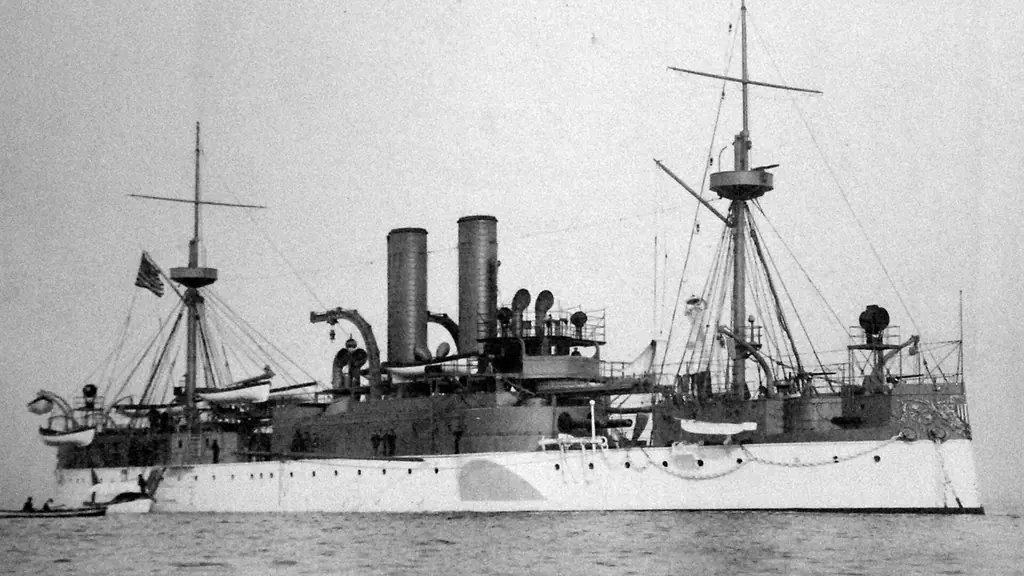
Imagine opening a New York newspaper in February 1898. A U.S. battleship has exploded in Havana harbor, the headlines blame Spain, and a stolen letter from the Spanish minister insulting the president has just been printed. Within ten weeks, the United States is at war.
The Spanish-American War lasted only months, but it turned the United States into a power with territories in the Caribbean and the Pacific, and it remains a classic case study in how news coverage can shape a nation's choices. This page summarizes what happened, points you to the key primary sources, and offers ways to teach and research the war.
Why the war began
Cuba was one of Spain's last colonies in the Americas, and Cubans had fought for independence more than once. A new revolt began in 1895. Spanish efforts to suppress it, including the forced relocation of rural civilians into guarded camps where many died, were widely reported in the United States. American business interests in Cuba, sympathy for the rebels, and a growing appetite among some politicians for overseas expansion all raised pressure on President William McKinley to act.
Two events in February 1898 brought matters to a head:
- The de Lôme letter. A private letter by Spain's minister in Washington, Enrique Dupuy de Lôme, criticizing McKinley as weak, was intercepted and published by William Randolph Hearst's New York Journal on February 9, 1898. The National Archives holds the original.
- The USS Maine. On February 15, 1898, the battleship Maine, sent to Havana to protect American interests, exploded and sank. More than 250 of its crew were killed; the Naval History and Heritage Command notes that published totals vary depending on who is counted.
The Maine and the press: a media-literacy case study
What sank the Maine? A U.S. Navy court of inquiry in 1898 concluded that an external mine had set off the forward magazines, and a second board reached a similar conclusion after the wreck was examined in 1911. In 1976 a study led by Admiral Hyman Rickover argued that the damage was more consistent with an internal explosion, probably a fire in a coal bunker next to a magazine. The Naval History and Heritage Command describes the question as still unresolved; no evidence has ever tied the Spanish government to the explosion.
The press did not wait for answers. Hearst's Journal and Joseph Pulitzer's New York World, locked in a circulation battle, had already filled their pages with dramatic and sometimes false stories about Cuba. Their style became known as "yellow journalism." The State Department's Office of the Historian offers a balanced verdict: the papers helped create a climate that made war more likely, but they did not cause it on their own, and the often-repeated line attributed to Hearst about "furnishing the war" overstates what newspapers could do.
Try it: Search Chronicling America for newspapers dated February 16–20, 1898. Compare two papers from different cities or political leanings. Which ones state a cause for the explosion as fact? What evidence do they give? Then read the NHHC summary of the 1898 and 1976 investigations and decide what a careful headline would have said.
The war, step by step
| Date (1898) | Event |
|---|---|
| April 20 | Congress passes a joint resolution recognizing Cuban independence and authorizing force; the Teller Amendment disclaims any U.S. intention to annex Cuba |
| April 25 | Congress declares that war has existed since April 21 |
| May 1 | Commodore George Dewey's squadron defeats the Spanish fleet at Manila Bay in the Philippines |
| June | U.S. forces land at Guantánamo Bay and near Santiago de Cuba |
| July 1 | Battles of El Caney and San Juan Heights (including Kettle Hill, where Theodore Roosevelt's "Rough Riders" fought) |
| July 3 | The U.S. Navy destroys Spain's Caribbean squadron off Santiago |
| July 25 | U.S. troops land in Puerto Rico |
| August 12 | Armistice (peace protocol) signed; the same day, Hawaii's annexation formally takes effect |
| December 10 | Treaty of Paris signed |
Disease killed far more American soldiers than combat did, a fact that led to major reforms in army medicine and sanitation.
Results and long shadows
Under the Treaty of Paris, Spain relinquished its claim to Cuba and ceded Puerto Rico and Guam to the United States; it also gave up the Philippines in exchange for a payment of $20 million. The Senate approved the treaty on February 6, 1899, by just one vote more than the required two-thirds.
Cuba became formally independent in 1902, but under the Platt Amendment, written into a 1903 treaty, the United States kept the right to intervene and to lease naval stations, the origin of the base at Guantánamo Bay. Puerto Rico and Guam remain U.S. territories today.
In the Philippines, independence fighters led by Emilio Aguinaldo had expected freedom, not a new colonial ruler. Fighting broke out on February 4, 1899, and the Philippine-American War that followed was longer and deadlier than the war with Spain. The Office of the Historian estimates that more than 4,200 American and more than 20,000 Filipino combatants died, and that as many as 200,000 Filipino civilians died from violence, famine and disease.
Researching and teaching 1898
The best approach is to read several perspectives side by side. The Library of Congress research guide World of 1898 is organized by Cuban, Philippine, Puerto Rican, Spanish and American perspectives, with chronologies and biographies.
Checklist: A strong student project on 1898 uses (1) at least one government document such as the Teller Amendment or Treaty of Paris, (2) at least two newspapers from the time, (3) one source from a Cuban, Filipino, Puerto Rican or Spanish perspective, and (4) a modern scholarly or official summary to check facts against.
- Primary documents: the de Lôme letter and Platt Amendment (National Archives Milestone Documents), the Treaty of Paris (Avalon Project at Yale).
- Newspapers: the Library of Congress guide to the war in Chronicling America suggests search terms and sample articles.
- Film and photographs: the Library of Congress holds early motion pictures of the war, some of them staged re-enactments, which makes them excellent for discussing how images can mislead.
For classroom methods, see teaching with primary sources; for the broader skill of judging coverage, see our page on news literacy. More document collections are gathered in founding documents and historical records, and our guide to researching history online explains digitized newspapers in detail.
Recommended resources
- Library of Congress: World of 1898 — A research guide presenting the war from Cuban, Philippine, Puerto Rican, Spanish and American perspectives, with chronologies and short biographies. Free (Library of Congress Hispanic Reading Room).
- Spanish-American War: Topics in Chronicling America — Search strategies and selected newspaper articles from 1898 in the Library's digitized newspaper collection. Free.
- The Spanish-American War in Motion Pictures — Early films of troops, ships and battle scenes (some of them staged re-enactments), with catalog descriptions. Free (Library of Congress).
- Office of the Historian: The Spanish-American War, 1898 — A concise, dated diplomatic history of the war and the Treaty of Paris. Free (U.S. Department of State).
- Office of the Historian: Yellow Journalism — A short essay on how Hearst and Pulitzer covered Cuba and how much influence the press really had. Free.
- National Archives: De Lôme Letter — Images, transcript and background for the letter that inflamed opinion in February 1898. Free.
- National Archives: Platt Amendment — The 1903 treaty text defining U.S.–Cuban relations, with context on the Teller Amendment. Free.
- National Archives: Spanish-American War and Philippine Insurrection Records — Guides to military service records and articles for genealogists and researchers. Free.
- Avalon Project: Treaty of Paris (1898) — The full text of the peace treaty between the United States and Spain. Free (Yale Law School).
- Naval History and Heritage Command: Destruction of the Maine — The Navy's documentary history of the sinking and the investigations that followed. Free (U.S. Navy).
- Theodore Roosevelt Center: Spanish-American War — An encyclopedia entry and digitized Roosevelt papers about his service with the Rough Riders. Free (Dickinson State University).
- San Juan National Historic Site — National Park Service site for the Spanish colonial fortifications of San Juan, Puerto Rico, with history of the island before and after 1898. Free.
- War in the Pacific National Historical Park — The National Park Service park on Guam, useful for understanding the island that became a U.S. territory in 1898. Free.
Sources
- The Spanish-American War, 1898, Office of the Historian, U.S. Department of State
- U.S. Diplomacy and Yellow Journalism, 1895–1898, Office of the Historian, U.S. Department of State
- Destruction of the Maine, Naval History and Heritage Command
- De Lôme Letter (1898), National Archives
- The Philippine-American War, 1899–1902, Office of the Historian, U.S. Department of State
- World of 1898: International Perspectives on the Spanish American War, Library of Congress