Historical Law: Founding Documents and Famous Trials, a Source Guide
Where to read reliable full texts of landmark legal documents and trial records, from Magna Carta to Nuremberg, and how to handle translations.
A student writing about the rule of law wants to quote Magna Carta. A quick search turns up a dozen versions: a modern paraphrase on a history blog, a list of "the 10 most important clauses," a medieval Latin transcription, and a translation with no date or translator named. Which one can she cite? A classmate researching the Nuremberg trials finds a dramatic courtroom quote on a poster website but no transcript page to check it against.
Legal history is unusually well served by free, authoritative collections: law school libraries, national archives and university projects have put complete texts and trial records online. The challenge is knowing which version you're reading. This guide maps the dependable collections and explains three distinctions that matter in any essay: original versus translation, full text versus summary, and official record versus later retelling.
Founding documents and charters
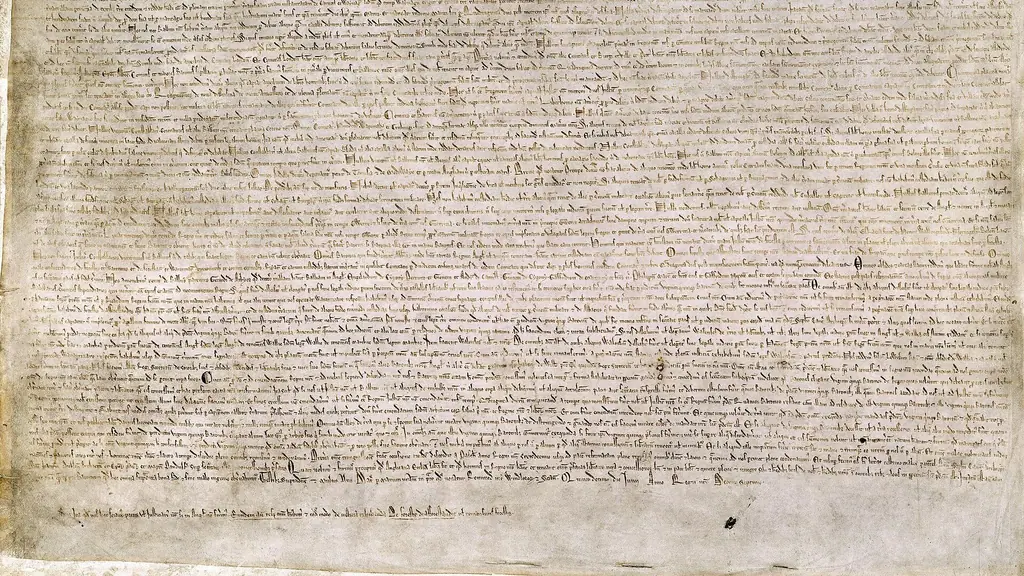
Magna Carta is the classic example of a document that exists in several versions. King John agreed to the charter in June 1215 to end a rebellion by his barons, and the pope annulled it within months. It was then reissued, with changes, under Henry III in 1216, 1217 and 1225, and the 1297 confirmation under Edward I was entered on England's statute rolls. Four copies of the 1215 charter survive, two of them in the British Library. The National Archives in Washington displays one of four surviving originals of the 1297 version.
So "Magna Carta" might mean the 1215 text, the 1225 reissue that became the lasting law, or the 1297 version. When you cite it, say which. Yale's Avalon Project offers an English translation of the 1215 charter; the National Archives provides a translation of its 1297 copy; and the UK National Archives' teaching collection Magna Carta 1214–1225 places the charter among the royal records surrounding it.
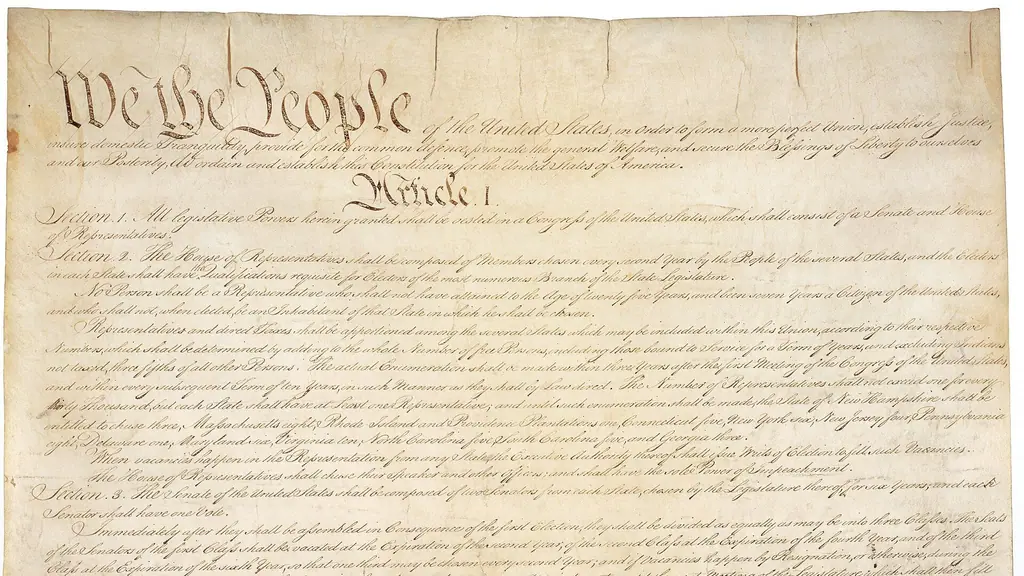
For the United States, the National Archives' America's Founding Documents pages give images and transcriptions of the Declaration of Independence, the Constitution and the Bill of Rights, with background on how each was written. Its Milestone Documents list extends the story through later landmarks. Founders Online, also from the National Archives, publishes the correspondence and papers of George Washington, Benjamin Franklin, John Adams, Thomas Jefferson, Alexander Hamilton, John Jay and James Madison, which helps when you need to know what the framers said about a clause. The Library of Congress's research guide to Primary Documents in American History links each document to its digitized originals.
Tip: Use a transcription for reading and quoting, and the image of the original to check spelling, capitalization or an unclear passage. Archival transcriptions follow the original closely; textbook versions sometimes modernize them silently.
Trial records: transcripts, summaries and retellings
Trial records come in layers, and it pays to know which layer you're holding.
| Layer | What it is | Example | How far to trust it |
|---|---|---|---|
| Official record | Transcript, exhibits, judgments produced by or for the court | Nuremberg IMT proceedings | Highest, but check translation and editing |
| Contemporary account | Newspaper reports, published trial pamphlets | Old Bailey Proceedings | Valuable but selective; written for readers |
| Edited collection | Selected documents with commentary | Famous Trials; Salem archive | Excellent for study; note what's omitted |
| Retelling | Plays, films, popular histories | Inherit the Wind, The Crucible | Useful for context, not as evidence |
The Nuremberg trials. The International Military Tribunal, set up by the United States, the United Kingdom, the Soviet Union and France, opened on November 20, 1945, and delivered its judgment on October 1, 1946. According to the United States Holocaust Memorial Museum, 22 defendants were tried; 19 were convicted and 12 sentenced to death. Twelve later trials before American military tribunals prosecuted 185 more people between December 1946 and April 1948.
For the records themselves, Yale's Avalon Project hosts the proceedings and key documents of the International Military Tribunal. The Harvard Law School Library Nuremberg Trials Project, an open-access collection, covers all thirteen trials with searchable transcripts, document images and evidence files, and it advises readers to check the page images because full-text versions may differ slightly from the originals. The Robert H. Jackson Center documents the work of the chief U.S. prosecutor.
Earlier trials. The Old Bailey Proceedings Online makes searchable the published accounts of trials at London's central criminal court from 1674 to 1913, a remarkable source on crime, punishment and everyday life. The University of Virginia's Salem Witch Trials Documentary Archive transcribes the court records of 1692 alongside maps and contemporary books. The Famous Trials website, created by Douglas O. Linder of the University of Missouri–Kansas City School of Law, gathers documents, excerpts and essays on trials from Socrates to modern times. For U.S. federal courts, the Federal Judicial Center's Famous Federal Trials series offers concise histories with document links.
Translation and editing caveats
Many landmark legal texts weren't written in English, and translation shapes what you read.
- Medieval Latin. Magna Carta and most medieval legal records are in Latin. Translations differ in word choice ("free man," "freeman"), and those choices can carry modern assumptions.
- Multilingual courts. At Nuremberg, proceedings ran with simultaneous interpretation in English, French, German and Russian. A quotation in English may be a translation of German testimony.
- Edited transcripts. Published trial records were sometimes condensed. The Old Bailey Proceedings, for example, were written for sale and varied in detail over time.
- Selected excerpts. Teaching collections choose highlights. Before building an argument on one passage, read the surrounding pages.
Try it: Find clause 39 of the 1215 Magna Carta in the Avalon translation, then find the corresponding clause in the National Archives' translation of the 1297 version. Note the clause number and any differences in wording, and write one sentence on why the version matters if you cite it.
How to cite historical legal texts
Give enough detail for a reader to find exactly what you read: the document's title and date, the version or edition (for example, "1215 charter, trans. Avalon Project"), the collection or archive, and the URL. For trial transcripts, include the trial name, date of the session and page or volume number when available. Our guide to citing online sources has examples in MLA, APA and Chicago, and primary, secondary and tertiary sources explains how to classify each layer.
For particular documents and trials, see reading the U.S. Constitution online, the constitutional amendments, ancient law codes from Ur-Nammu to Justinian and the trial of Joan of Arc. Teachers can find classroom approaches in teaching with primary sources.
Recommended resources
- The Avalon Project — Full texts of documents in law, history and diplomacy from antiquity to the present, including Magna Carta and the Nuremberg proceedings. Lillian Goldman Law Library, Yale Law School; free; no account.
- Avalon: The International Military Tribunal for Germany — The proceedings, judgment and key documents of the main Nuremberg trial. Yale Law School; free.
- Harvard Law School Library Nuremberg Trials Project — Searchable transcripts, document images and evidence for all thirteen Nuremberg trials. Harvard Law School Library; free, open access.
- America's Founding Documents — Images, transcriptions and histories of the Declaration of Independence, Constitution and Bill of Rights. National Archives; free.
- Milestone Documents — Key documents of U.S. history with images, transcripts and teaching context. National Archives; free.
- Magna Carta at the National Archives — The 1297 Magna Carta on display in Washington, with a translation. National Archives; free.
- Magna Carta 1214–1225 — Royal records surrounding the charter, with questions for students aged 11 to 18. The National Archives (UK); free.
- Founders Online — Searchable papers and letters of seven major founders, useful for interpreting founding documents. National Archives and University of Virginia Press; free.
- Primary Documents in American History — Library of Congress research guides linking landmark documents to digitized originals. Library of Congress; free.
- Famous Trials — Documents, excerpts and essays on landmark trials across history. Created by Douglas O. Linder, University of Missouri–Kansas City School of Law; free.
- Old Bailey Proceedings Online — Searchable published accounts of London criminal trials from 1674 to 1913. Free; best for high school and older.
- Salem Witch Trials Documentary Archive — Transcribed court records, maps and contemporary sources on the 1692 trials. University of Virginia; free for non-commercial education.
- Famous Federal Trials — Concise histories of significant trials in U.S. federal courts with document links. Federal Judicial Center; free.
- International Military Tribunal at Nuremberg — A clear, sourced overview of the trial's organization, defendants and verdicts. United States Holocaust Memorial Museum; free.
- Internet History Sourcebooks — Translated primary sources for ancient, medieval and modern history, including legal texts. Fordham University; free; check each text's translator and date.
Sources
- The Avalon Project: Documents in Law, History and Diplomacy, Lillian Goldman Law Library, Yale Law School
- America's Founding Documents, National Archives
- International Military Tribunal at Nuremberg, United States Holocaust Memorial Museum
- Nuremberg Trials Project, Harvard Law School Library
- Magna Carta (featured document), National Archives