The Trial of Joan of Arc (1431): Records, Translations and Sources
How Joan of Arc's 1431 condemnation trial and the 1456 nullification trial were recorded, which manuscripts survive, and where to read reliable translations.
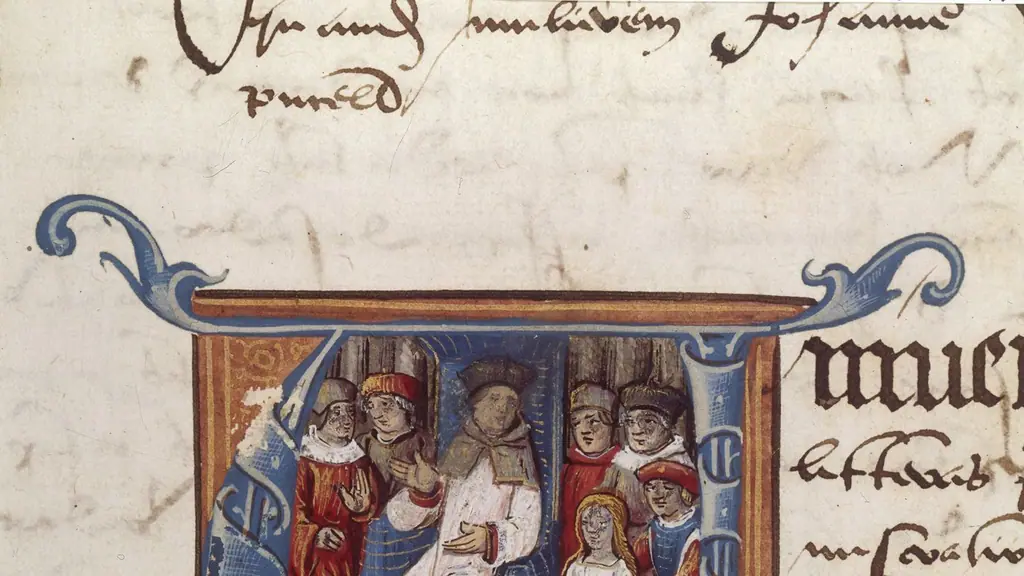
Suppose your history teacher asks whether Joan of Arc's answers to her judges can be trusted as her own words. It is a better question than it first appears. The record of her trial is one of the most detailed surviving accounts of a medieval life, but it was produced by the court that condemned her, translated into Latin after her death, and later challenged by a second trial that declared the first one void.
This page explains how the two trials were recorded, which manuscripts survive, which editions and English translations to use, and how to read the record critically. It gives context and short summaries rather than long extracts; the full texts are linked at the end.
The two trials in brief
Joan, a peasant girl from Domrémy in eastern France, had led French forces to lift the English siege of Orléans in 1429 and seen Charles VII crowned at Reims. In May 1430 she was captured at Compiègne by Burgundian forces allied with England and later handed over to the English.
The condemnation trial (1431). The English arranged for her to be tried for heresy by a church court at Rouen, then under English control. It was presided over by Pierre Cauchon, bishop of Beauvais, with a vice-inquisitor joining later. Preliminary proceedings began in January 1431, and Joan first appeared before her judges on February 21. Over the following weeks she was questioned in public sessions and then in her prison, on her voices and visions, her wearing of men's clothing, her obedience to the Church and her role in the war. Under pressure in late May she signed an abjuration in the cemetery of Saint-Ouen; days later she was declared a relapsed heretic and was burned in Rouen on May 30, 1431.
The nullification trial (1455–1456). After Charles VII recovered Rouen, he had reason to clear the name of the woman who had helped crown him, and Joan's family and supporters pressed the case. With the authorization of Pope Callixtus III, proceedings opened in Paris in 1455. Investigators gathered sworn testimony from people who had known her, from childhood neighbors in Domrémy to soldiers and to clerics who had sat at the first trial. On July 7, 1456, the judges declared the 1431 trial null and void, citing fraud and errors of procedure. This was not a new judgment on her beliefs; it was a finding that the first trial had been invalid. The Catholic Church later beatified her in 1909 and canonized her in 1920.
How the record was made
The record survives because the first trial was designed to look scrupulously legal. Notaries, chief among them Guillaume Manchon, took notes in French during the sessions. Those working notes, often called the French minute, are mostly lost; a fragment covering the later sessions survives in a manuscript known as the d'Urfé manuscript.
Some years after the execution, the record was translated into Latin and formally compiled, with the trial documents, articles of accusation and legal opinions arranged in order. According to the introduction to W. P. Barrett's English translation, five official copies were made and authenticated by the notaries. Three survive in Paris: two in the Bibliothèque nationale de France (manuscripts Latin 5965 and 5966) and one in the library of the French National Assembly. Scholars judge the surviving copies to be substantially the same.
The nullification trial produced its own large record, including the depositions of witnesses taken a quarter century after the events.
What that means for readers
| Question | What to keep in mind |
|---|---|
| Are these Joan's exact words? | They are notaries' records of her spoken French, later rendered in Latin, then translated again into English. Treat them as close reports, not transcripts. |
| Is the record biased? | It was compiled by the court that condemned her, and the nullification judges argued that parts were irregular. Read it as evidence of how the judges built their case as well as of what she said. |
| Is the nullification testimony neutral? | Witnesses spoke 25 years later, after Joan had become a French hero and when the outcome favored her. Memories may be sincere and still shaped by hindsight. |
| Which version should I quote? | Name the translation and its source text; different translators made different choices. |
Editions and translations
The standard edition of the original Latin and French texts for over a century was prepared by the French scholar Jules Quicherat and published in five volumes between 1841 and 1849. It includes both trials and many related chronicles and letters, and all volumes are freely available as scans.
English translations to know:
- W. P. Barrett, The Trial of Jeanne d'Arc (1932). A full translation of the condemnation trial, with an essay by Pierre Champion on the manuscripts. Substantial parts are online in Fordham University's Medieval Sourcebook.
- T. Douglas Murray (ed.), Jeanne d'Arc, Maid of Orleans. An early-twentieth-century English compilation drawing on sworn testimony from the trial documents, now in the public domain and online at the Internet Archive.
- Daniel Hobbins, The Trial of Joan of Arc (Harvard University Press, 2005). A modern translation from the Latin with an introduction placing the trial in its legal context. Reviewers have described it as more literal than Barrett's. It is a print book, available through libraries.
Tip: Popular websites and films often quote Joan's most famous answers in polished, modern forms. Before you quote one, find it in a named translation, note the session date, and cite the translator. If two translations differ, say so.
A method for working with the trial record
- Pick one session. Each public session is dated, which makes it a manageable unit for a paper or lesson.
- Identify the speakers. Note who asked each question and who recorded it.
- Separate question from answer. Watch how questions are framed; many were designed to trap, inviting her to claim certainty about grace or to defy the Church.
- Compare with the nullification testimony. Look for witnesses who describe the same session or the same issue.
- Check the context. An older reference work such as the 1910 Catholic Encyclopedia article supplies a detailed chronology; modern scholarship adds legal and political background.
- Write with care about certainty. Use phrases such as "according to the trial record" rather than presenting reported speech as verbatim.
Try it: Read the first public session (February 21, 1431) in Barrett's translation on the Fordham site. List three questions Joan refused or qualified, and explain in a sentence each why she might have answered that way.
Joan's case is one of several famous trials covered in our guide to historical law, founding documents and famous trials, which also includes Abraham Lincoln's work as a trial lawyer. For method, see primary, secondary and tertiary sources and researching history online. If you read French sources through machine translation, our guide to online translation tools explains their limits.
Recommended resources
- The Trial of Jeanne d'Arc (Barrett translation) — The Medieval Sourcebook's long online text of W. P. Barrett's 1932 translation, including Pierre Champion's notes on the manuscripts and the early sessions (Fordham University; free).
- Joan of Arc: Letter to the King of England (1429) — A short translated letter from the siege of Orléans, useful for comparing her voice outside the courtroom (Fordham University Medieval Sourcebook; free).
- Quicherat edition, volume 1: condemnation trial — Scan of the 1841 volume containing the Latin record of the 1431 trial, for advanced students and readers of Latin and French (Internet Archive; free download).
- Quicherat edition, volume 2: rehabilitation — The volume that begins the nullification proceedings; volume 3 continues them and includes the d'Urfé manuscript text (Internet Archive; free download).
- Jules Quicherat on Wikisource — A French-language author page listing the volumes of the edition and Quicherat's other works (Wikisource; free).
- Jeanne d'Arc, Maid of Orleans (ed. T. Douglas Murray) — A public-domain English compilation drawing on the trial documents; this scan is a 1907 New York printing (Internet Archive; free).
- Review of Hobbins, The Trial of Joan of Arc — A scholarly review explaining what the 2005 translation is based on and how it differs from earlier ones; helpful when choosing an edition (H-France Review; free PDF).
- Historial Jeanne d'Arc — A museum in Rouen's former archbishop's palace, on the site where Joan was condemned and where the nullification trial sat; its site introduces the trials and the later myth (Historial Jeanne d'Arc; English and French).
- St. Joan of Arc, Catholic Encyclopedia (1910) — A detailed encyclopedia account of her career, trial and execution; written before her canonization, so read it alongside newer work (New Advent; free).
- Why Joan of Arc Was Acquitted—25 Years After Her Execution — A general-audience account of the nullification trial and its political background (HISTORY; free, with advertising).
- The Trials of Joan of Arc — A feature article on both trials from a long-established history magazine (History Today; some articles require a subscription).
Sources
- The Trial of Jeanne d'Arc (trans. W. P. Barrett, 1932), Internet History Sourcebooks Project, Fordham University
- St. Joan of Arc (Catholic Encyclopedia, 1910), New Advent
- Why Joan of Arc Was Acquitted—25 Years After Her Execution, HISTORY
- Historial Jeanne d'Arc, Historial Jeanne d'Arc, Rouen
- Procès de condamnation et de réhabilitation de Jeanne d'Arc, vol. 1 (ed. Jules Quicherat, 1841), Internet Archive