Researching History Online: Archives, Digitized Newspapers and Oral Histories
How to search digitized newspapers, the National Archives Catalog and oral history collections, read archival sources carefully and record citation details.
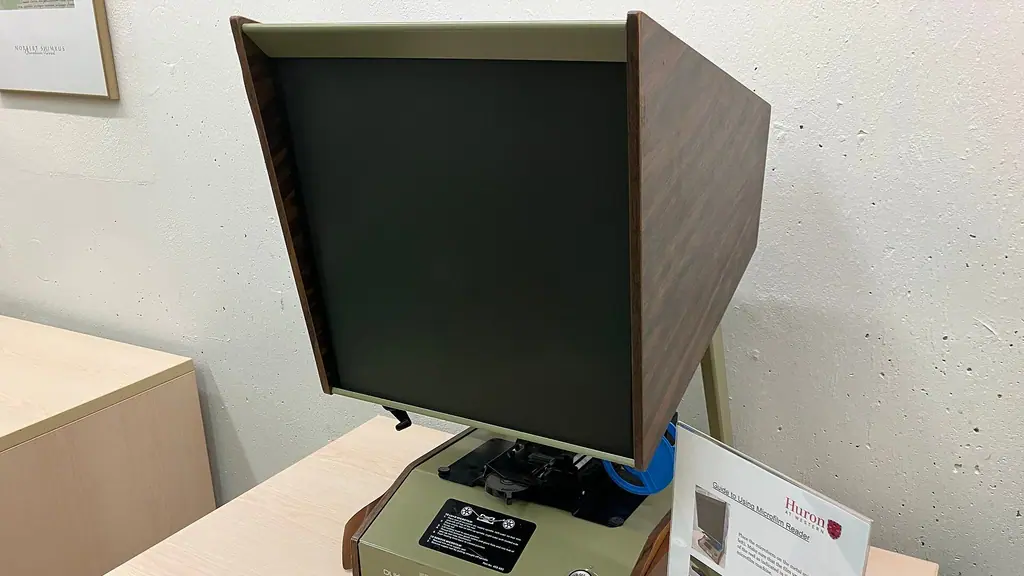
Imagine you are writing about how your town experienced the 1918 influenza pandemic. Textbooks give you the national picture, but you want the local one: when the schools closed, what the newspaper told readers, whether anyone who lived through it was ever interviewed. A generation ago that meant weeks at a library's microfilm reader. Today much of it can be found from a laptop, if you know where to look and how archives are organized.
Digital archives are not search engines. They hold scanned pages read by software, catalog descriptions written by archivists, and recordings with their own rules for use. This guide explains how the three most useful kinds of historical collections work (digitized newspapers, government archives and oral histories), how to search each one well, how to read what you find responsibly, and what to write down so you can cite it later.
Match the question to the right kind of collection
Different questions lead to different archives. A quick map:
| If you want… | Look in… | Examples in our library |
|---|---|---|
| How events were reported at the time | Digitized newspapers | Chronicling America (Library of Congress), national library newspaper portals in other countries |
| Government records: laws, letters, photographs, military and census records | National and state archives | National Archives Catalog; your state archives |
| Photographs, letters and objects from many institutions at once | Aggregators that search many collections together | Digital Public Library of America; Europeana |
| People's own memories and voices | Oral history collections | Library of Congress Veterans History Project; university and local oral history programs |
| Local detail: yearbooks, church records, small-town papers | Local archives | State historical societies, public library local history rooms, university special collections |
Before searching any of them, it helps to know whether you are looking for primary sources (created at the time) or secondary sources (later interpretations). Our guide to primary, secondary and tertiary sources explains the difference, and the history and geography subject page lists the collections we have checked.
Searching digitized newspapers
Historic newspapers are some of the richest sources online. In the United States, the largest free collection is Chronicling America, produced by the National Digital Newspaper Program, which the Library of Congress describes as a partnership between the National Endowment for the Humanities (NEH) and the Library of Congress. Its research guide describes millions of digitized pages from nearly every state and territory, with papers published as late as 1963.
Searching scanned newspapers takes a few adjustments:
- Expect imperfect text. The searchable text is created by optical character recognition (OCR), software that reads the page image. Faded ink, tight columns and old typefaces produce errors, so a word can be on the page but missing from the search. Try several spellings and nearby words.
- Use the vocabulary of the time. People in 1918 wrote "Spanish influenza," "the grippe" or "the epidemic," not modern terms. Place names, organizations and even common words change. A quick look at one relevant article will show you the period's language.
- Narrow by date and place first. Limit results to the state, city and months you care about before adding keywords.
- Read the whole page. Search results point to a page, not an article. Look at the headline, the neighboring stories and the advertisements; context often matters as much as the article itself.
- Note which newspaper you are reading. Papers had owners, politics and audiences. Comparing two papers from the same town can reveal very different accounts.
Tip: Historic newspapers reflect the attitudes of their time and can contain language and images that are offensive today. That is part of the historical record; quote and discuss it carefully and with context.
Searching the National Archives Catalog
The National Archives and Records Administration (NARA) holds the records of the federal government. Its online catalog is powerful but works differently from a library catalog. According to NARA's quick tips, the catalog includes descriptions of most holdings, but only a small percentage of records are digitized, so many results describe material you would need to view in person or order a copy of.
Search tips from NARA:
- Filter for "Available to access online" to see only descriptions with digitized records attached.
- Combine words carefully. Multiple keywords are joined with AND automatically; put an exact phrase in quotation marks.
- Try name variations. Search first-last and last-first, surname only, and spelling variants joined with OR. Names often appear only in machine-read text, so results vary.
- Use "Search within" on a record group, series or file unit page to stay inside one body of records.
- Refine results by level of description, record group, type of material, file format and date.
Archival records are organized by where they came from, not by topic. A record sits inside a file unit, which belongs to a series, which belongs to a record group (usually the agency that created it). Each description also has a National Archives Identifier (NAID). Write these down; you will need them to cite the record or to find it again.
NARA's Citizen Archivist program invites volunteers to transcribe documents, tag photographs and comment on records, which makes them easier for everyone to find. Transcribing a few pages is also a remarkably good way to learn to read old handwriting.
Using oral histories
Oral histories are recorded interviews in which people describe their own experiences. They capture what documents leave out: how events felt, what ordinary people noticed, and voices that rarely appear in official records. Many are held by the Library of Congress, universities, state archives and local historical societies, often with transcripts.
The Oral History Association's best practices include guidance for people who use interviews, not just those who record them. Its main points for researchers:
- Keep the narrator's perspective intact. Avoid stereotypes, misrepresentations and manipulation of the narrator's words; do not trim a quote so it says something the speaker did not mean.
- Give context. When you quote an excerpt, explain who is speaking and when, and provide a citation to where the full interview can be found.
- Remember that memory is subjective. Interviews may be recorded decades after events. Treat factual details (dates, numbers, names) as claims to verify against other sources, and value the interview for what it uniquely offers: experience and meaning.
- Respect access conditions. Repositories honor agreements made with narrators, which can include restrictions or pseudonyms.
If you are planning to record interviews yourself, the same best practices cover informed consent and release forms; discuss them with your teacher before you start.
Reading archival sources responsibly
Every archival source was made by someone, for a reason, for an audience. For each item you plan to use, ask:
- Who created it, and why? A government report, a campaign newspaper and a private diary have different purposes.
- When was it made, relative to the events? Same day, a year later or fifty years later?
- What is missing? Whose voices are absent from this collection, and why might that be?
- What else confirms it? Look for a second, independent source for important facts.
- What are the rights? Check the item's rights statement before reusing images in a published project. Our guide to public domain books and archives explains what is generally free to reuse.
Record what you need to cite
The most painful moment in historical research is finding the perfect document again three weeks later. Capture citation details the moment you decide to keep something.
Checklist: For every archival source, record: (1) creator or author, if known; (2) title or a short description; (3) date of the item; (4) newspaper name, page and edition, or collection, series and record group; (5) repository (for example, the Library of Congress or the National Archives); (6) identifier, such as a NAID or call number; (7) the URL of the item page, not a search results page; (8) the date you accessed it.
Worked example. For a newspaper page you might note: newspaper title, city, full date, page number, "Chronicling America, Library of Congress," the page URL and today's date. For a National Archives photograph: photographer (if given), the catalog title, date, series and record group, the NAID, the URL and the date you viewed it. With those details, formatting the citation in MLA, APA or Chicago style takes a minute; our guide on how to cite online sources shows the formats.
Try it: Pick a date that matters to your family or town, such as a birthday or the day a local landmark opened. Find a newspaper published that week in a digitized collection, read the whole front page, and write down three things that surprised you along with full citation details for the page.
For more on working with original documents in class, see teaching with primary sources.
Curated resources
Checked by hand from the History and Geography shelf of the library (libraries and archives). Each entry says what it costs and when we last verified it.
British Library
The British Librarybl.uk
The national library of the United Kingdom, holding a vast collection of books, manuscripts, maps, newspapers and sound recordings. Its website offers online exhibitions, digitized treasures, collection guides and information on using the reading rooms for in-depth research.
Using it: Free to browse; some services and reading-room access require registration. Parts of the online catalog have been affected by service disruption since 2023.
Verified
Chronicling America
Library of Congress and National Endowment for the Humanitiesloc.gov
A free, searchable archive of digitized historic American newspapers, with millions of pages through the early 1960s from every state. Ideal for local history, genealogy and seeing how events were reported at the time, with page images alongside machine-read text you can search by date, place and title.
Using it: Free, no account. Full-text search works on OCR text, so try spelling variants and expect some recognition errors.
Verified
David Rumsey Map Collection
David Rumsey Map Collection (with Stanford University Libraries)davidrumsey.com
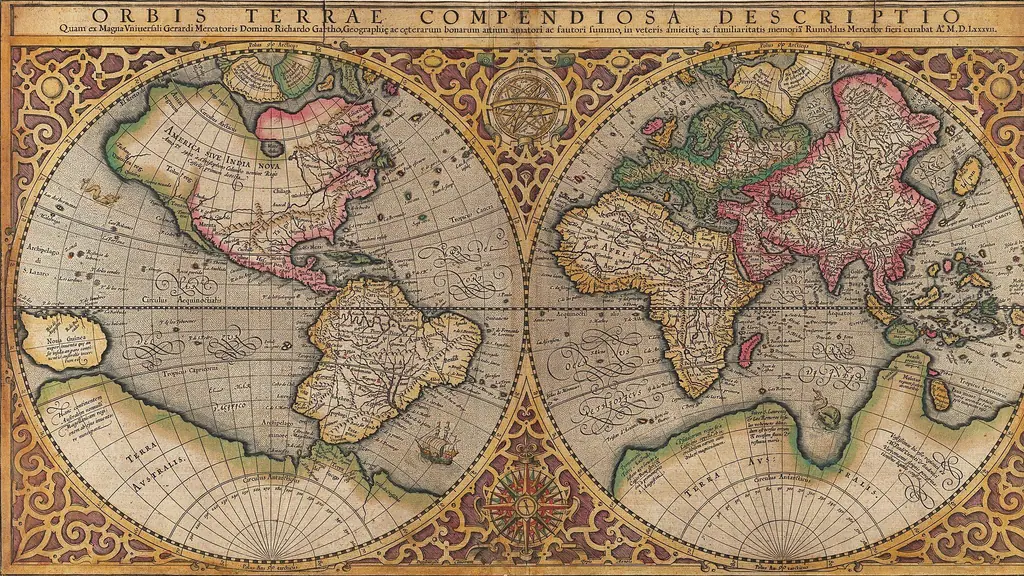
One of the largest online collections of historical maps, with high-resolution images of atlases, globes, charts and city plans from the sixteenth to twenty-first centuries. Georeferencing tools let you overlay old maps on modern geography, ideal for historical geography projects.
Using it: Free, no account. Many images are licensed for non-commercial reuse.
Verified
Digital Public Library of America
Digital Public Library of Americadp.la
A single search across millions of digitized photographs, manuscripts, books and objects from American libraries, archives and museums. Its curated primary source sets with teaching guides and its online exhibitions make it valuable for classroom history research as well as independent exploration.
Using it: Free, no account needed. Items link out to the contributing library or archive, where viewing options vary.
Verified
Europeana
Europeana Foundation (EU-funded)europeana.eu
A European platform that brings together millions of digitized artworks, books, photographs, recordings and objects from thousands of museums, libraries and archives. Filters for reuse rights make it especially useful for finding images and documents you can legally use in teaching and publishing.
Using it: Free, no account required. Each item shows its rights statement; many are openly licensed for reuse.
Verified
FamilySearch
The Church of Jesus Christ of Latter-day Saintsfamilysearch.org
A free genealogy service with billions of historical records, including census, birth, marriage and immigration documents. Its research wiki explains record types country by country, making it one of the most useful starting points for tracing family history.
Using it: Free; account required to view most records. Homepage redirects by region.
Verified
Founders Online
National Archives (National Historical Publications and Records Commission) with University of Virginia Pressfounders.archives.gov
Searchable, annotated correspondence and papers of George Washington, Benjamin Franklin, John Adams, Thomas Jefferson, Alexander Hamilton and James Madison. Drawn from authoritative scholarly editions, it lets students read the founders' own words with expert notes and context.
Using it: Free, no account.
Verified
Gallica (Bibliothèque nationale de France)
Bibliothèque nationale de Francegallica.bnf.fr
The digital library of the national library of France, offering millions of digitized books, manuscripts, newspapers, maps, prints and recordings. A key source for French history and literature, and a rich supply of authentic texts for advanced students of French.
Using it: Free. Interface available in English; most documents are in French. Commercial reuse may need permission.
Verified
Gilder Lehrman Institute of American History
Gilder Lehrman Institute of American History (nonprofit)gilderlehrman.org
A nonprofit devoted to American history education, offering primary sources from its collection, essays by historians, lesson plans and teacher seminars. Its document collection and spotlight features help bring original letters and manuscripts into history classrooms.
Using it: Many resources free; teacher affiliate membership (free for many schools) unlocks the full collection and programs.
Verified
Internet History Sourcebooks Project
Fordham Universitysourcebooks.fordham.edu
A classic collection of public domain and copy-permitted historical texts for teaching ancient, medieval and modern history. Organized by period and theme, it remains a quick way to find translated primary sources for history classes and reading assignments.
Using it: Free, no account. The site is older in design and some external links are broken.
Verified
Library of Congress
Library of Congressloc.gov
The national library of the United States and a gateway to millions of digitized books, photographs, maps, manuscripts, recordings and films. Strong for primary sources on American history and culture, with rights statements on each item that help you judge how material can be reused.
Using it: No account needed. Most digitized items are free to view; reuse rights vary by item and are stated on each record.
Verified
Miller Center Presidential Speeches
Miller Center, University of Virginiamillercenter.org
A collection of major presidential speeches from George Washington onward, with transcripts and many audio or video recordings. Alongside its presidential biographies and essays, it helps students analyze rhetoric and compare how presidents addressed the nation at key moments.
Using it: Free, no account.
Verified
National Archives Catalog
National Archives and Records Administrationcatalog.archives.gov
The searchable online catalog of U.S. National Archives holdings, describing millions of records and offering digitized copies of many. Use it to locate specific federal documents, photographs, maps and films, see which facility holds an item and download files that are already online.
Using it: Free; optional account lets you tag and transcribe. The search interface needs JavaScript and can be slow for large result sets.
Verified
Oyez
Cornell LII, Chicago-Kent College of Law and Justiaoyez.org
A multimedia archive of the U.S. Supreme Court, with case summaries, decisions and audio recordings of oral arguments. Hearing justices question lawyers makes it a compelling resource for civics and government classes.
Using it: Free, no account.
Verified
Perry-Castañeda Library Map Collection
University of Texas Librariesmaps.lib.utexas.edu
A large online collection of maps maintained by the University of Texas Libraries, featuring current and historical maps of countries, cities and regions. Many maps come from public domain government sources and can be used freely in schoolwork and presentations.
Using it: Free, no account. Most maps are public domain.
Verified
The American Presidency Project
University of California, Santa Barbarapresidency.ucsb.edu
A searchable archive of documents related to the U.S. presidency, including inaugural addresses, State of the Union messages, executive orders, press conferences and campaign documents. Statistics and data tables on elections and presidential activity make it a premier source for civics and history research.
Using it: Free, no account.
Verified
The Avalon Project
Yale Law School, Lillian Goldman Law Libraryavalon.law.yale.edu
A long-standing digital collection of documents in law, history and diplomacy, from ancient codes to twentieth-century treaties. It includes U.S. founding documents, presidential papers and international agreements in clean transcriptions, a useful source for history and government students.
Using it: Free, no account. Plain text transcriptions; consult original sources for scholarly citation of facsimiles.
Verified
Trove (National Library of Australia)
National Library of Australiatrove.nla.gov.au
Australia's national discovery service, searching digitized newspapers, books, photographs, diaries and archived websites from libraries and collecting institutions. Its huge collection of historic Australian newspapers, searchable by full text, is invaluable for family history and Australian studies.
Using it: Free, no account needed. A free account lets you correct newspaper text and save lists.
Verified
Wellcome Collection
Wellcome Collection (Wellcome Trust)wellcomecollection.org
The online catalog and digitized collections of a museum and library devoted to health and human experience. Search books, manuscripts, photographs and artworks on the history of medicine, many free to view and reuse, making it excellent for science history projects.
Using it: Free. Many digitized items are openly licensed; some sensitive medical material requires registration.
Verified
Sources
- Chronicling America: A Guide to Historic Newspapers, Library of Congress
- National Digital Newspaper Program, Library of Congress
- National Archives Catalog: Quick Tips, National Archives and Records Administration
- Citizen Archivist, National Archives and Records Administration
- Oral History Best Practices, Oral History Association