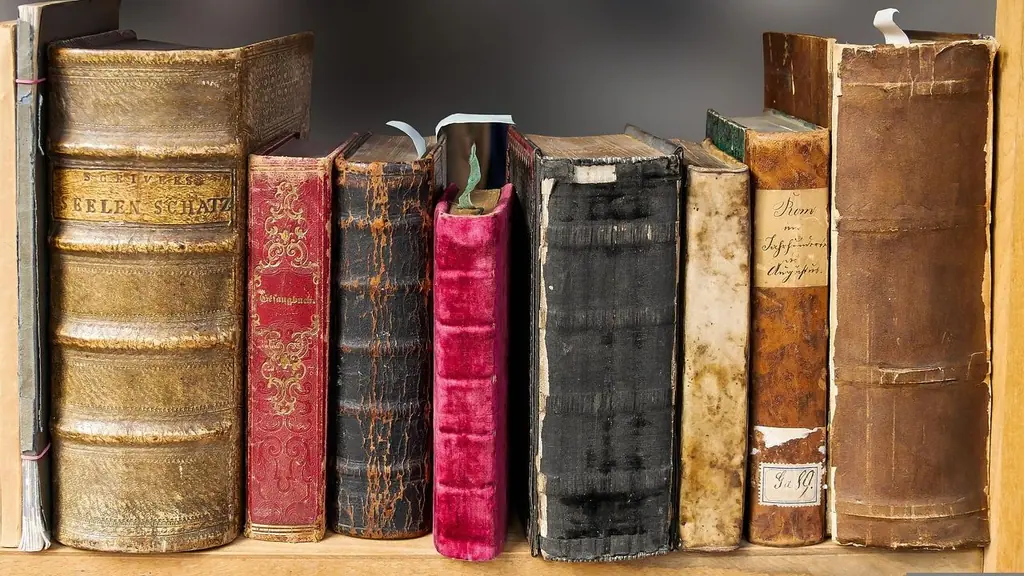
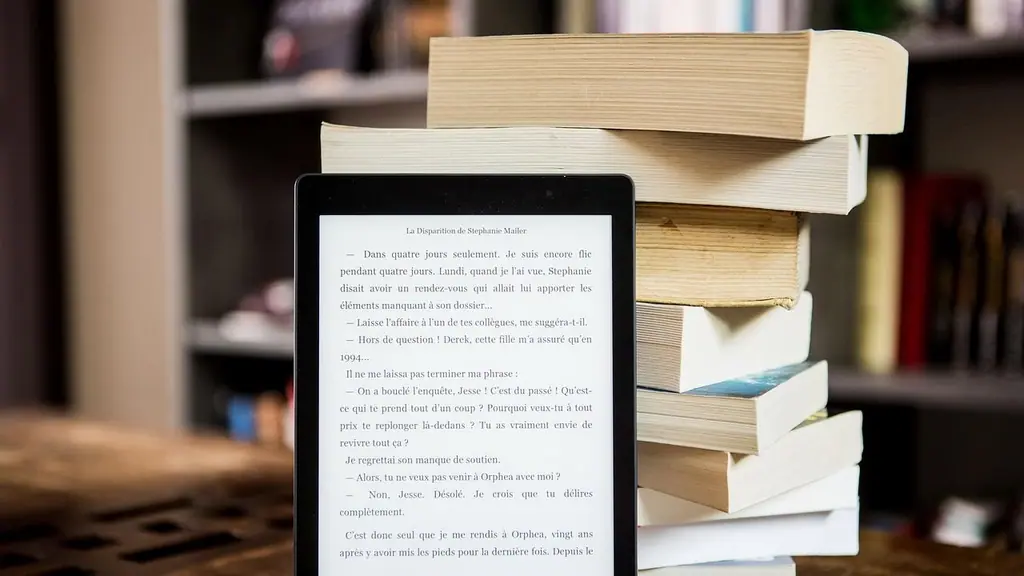
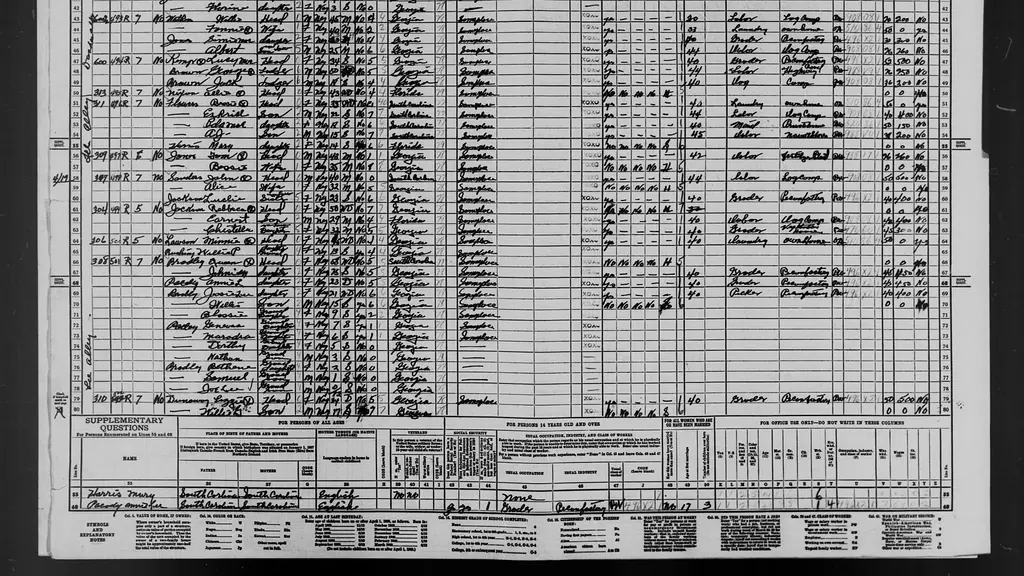
Public Domain Books and Archives: Free Texts, Images and Recordings
What public domain means under U.S. law, how Public Domain Day works, how to confirm a work's status, and where to find free texts, images and recordings.
Say you are making a video about the Roaring Twenties for a history class. You want a jazz recording from the period, a few photographs of city streets, a newspaper front page and a passage from a novel of the time. Some of these you can use freely, some you cannot, and the difference often comes down to a date and a few rules most people have never been taught.
This guide explains what "public domain" means in the United States, why new works join it every January 1, how to check whether a particular book, image or recording is free to use, and where the large, reliable public domain collections are. It is general information about U.S. law, not legal advice; for a commercial project or a hard case, consult your school's copyright librarian or a qualified attorney.
What "public domain" means
A work in the public domain is not protected by copyright, so anyone may copy, share, perform, adapt and build on it without asking permission or paying a fee. Works get there in three main ways:
- The copyright term expired. This is how most old books, films and songs become free.
- The work was never eligible. Facts, ideas and raw data cannot be copyrighted. Neither can works created by U.S. federal government employees as part of their official duties.
- The owner dedicated it to the public. Some institutions and creators waive their rights, often with the Creative Commons CC0 tool.
Public domain is not the same as "free to view online." A news article you can read without paying is almost always still under copyright. Nor is it the same as an open license: a Creative Commons BY license, for example, lets you reuse a work but requires you to credit the creator.
The U.S. rules in brief
U.S. copyright duration depends mainly on when and whether a work was published. The table below simplifies a complicated area; the Cornell University Library's chart, linked in the sources, is the standard detailed reference that librarians use.
| Situation | General rule | What it means in 2026 |
|---|---|---|
| Published in the U.S. before 1930 | Term has expired | Public domain |
| Published 1930–1977 with a copyright notice | 95 years from publication (if renewal requirements were met for works before 1964) | Works from 1930 entered the public domain on January 1, 2026 |
| Created from 1978 on by an individual | Life of the author plus 70 years | Still protected for a long time |
| Created from 1978 on as a work for hire, or anonymously | 95 years from publication or 120 from creation, whichever ends first | Still protected |
| Never published, created before 1978 | Generally life plus 70 years | Works by authors who died in 1955 or earlier are public domain |
| Works of the U.S. federal government | Not protected by copyright in the U.S. | Free to use, with exceptions noted below |
Sound recordings follow their own timeline. Under the Music Modernization Act, older recordings are entering the public domain on a staggered schedule. On January 1, 2026, sound recordings from 1925 became public domain, according to Duke's Center for the Study of the Public Domain. Note that a recording and the song it contains are separate works: a 1925 recording of a song may be free while a later arrangement or performance of the same song is not.
Other countries are different. Many countries, including those of the European Union, use a life-plus-70 rule even for older works. A book can be public domain in the United States and protected elsewhere, or the reverse.
Public Domain Day
Because U.S. terms for older works end on December 31 of the 95th year, a new year's worth of works enters the public domain each January 1. Duke's Center for the Study of the Public Domain publishes a well-researched list each year. Its 2026 list of works from 1930 includes William Faulkner's As I Lay Dying, Dashiell Hammett's novel The Maltese Falcon, Agatha Christie's The Murder at the Vicarage (the first Miss Marple novel) and the first four Nancy Drew books, along with the first appearances of characters such as Betty Boop and Pluto. Following the same rule, works published in 1931 are due to enter the U.S. public domain on January 1, 2027.
Tip: When a character enters the public domain, only the version in the public domain work is free. Later traits, designs and story elements may still be under copyright, and the character's name may be a trademark for certain products. You can use the public domain version creatively; you cannot imply that a company endorses your work.
How to confirm a work's status
Before you reuse something, work through these steps and keep a note of what you found.
- Find the first publication date and place. Look at the title page and copyright page of a book, or the item record in a library catalog. Reprints and new editions do not restart the clock on the original text, but new material in them (an introduction, notes, a fresh translation, new illustrations) has its own copyright.
- Apply the basic rule. Published in the United States before 1930? It is public domain in the U.S. For 1930 to 1963, the work also needed a notice and a renewal to stay protected; many were never renewed, but confirming that takes research in copyright records, so treat these as protected unless a reliable source says otherwise.
- Check whether it is a federal government work. If it was created by a federal employee doing their job, it is not under U.S. copyright. USAGov cautions that federal websites also contain material owned by others, used with permission, and that agency logos and trademarks have their own restrictions. Works of state and local governments may be copyrighted.
- Read the rights statement. Good digital collections label each item: "public domain," "no known copyright restrictions," a Creative Commons license, or "rights reserved." Follow the label, and note it in your records.
- Consider the country. If you or your audience are outside the United States, check that country's rules.
- When in doubt, ask. University copyright librarians answer these questions daily, and many publish guides.
Where to find public domain material
Texts
- Project Gutenberg offers tens of thousands of free ebooks, mostly older literature, with no registration.
- HathiTrust Digital Library marks public domain volumes "Full View," readable by anyone. It is strong for nonfiction, government documents and older scholarship.
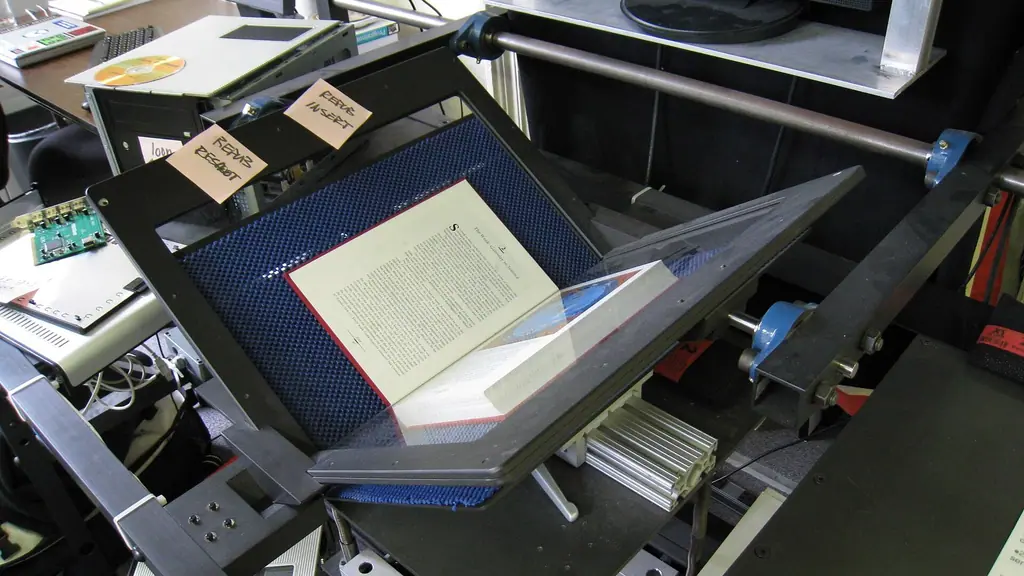
- Internet Archive and its Open Library hold millions of scanned books; the public domain items can be read and downloaded freely.
- Standard Ebooks produces carefully proofread editions of public domain classics and dedicates its own work to the public domain.
For a comparison of these and of library lending apps, see The Best Free Digital Libraries, and for literature specifically, our restored page on free classic literature online.
Images and objects
- Library of Congress Free to Use and Reuse groups more than 100 themed sets of historical photographs, posters, maps and films that are free to use, and the Library's larger digital collections label rights item by item.
- Smithsonian Open Access has released millions of images and 3D models under CC0. Items marked CC0 can be reused without permission; the Smithsonian notes that other rights, such as those of people pictured, may still apply.
- NASA images are generally not copyrighted, but NASA's media guidelines restrict uses that imply endorsement and cover a few exceptions, such as material from partners.
Sound and film
- LibriVox volunteers record public domain books and release the recordings into the public domain.
- The Library of Congress offers public domain films from the National Film Registry and historical recordings in its online collections.
Try it: Pick a book published in your state or city before 1930. Find a full-text copy in two of the collections above. Compare the editions: who digitized each one, is the scan complete, and does either add new material (an introduction, notes) that would not be public domain?
Using public domain work well
Public domain means you need no permission, but good practice still applies. Cite your source in school work: copying a public domain text without attribution is still plagiarism, even though it is not copyright infringement. Credit the institution that digitized the item; it is courteous and helps others find it. For material that is not public domain, our guide to copyright, fair use and Creative Commons for students explains what you can and cannot do.
Checklist: (1) I know when and where the work was first published. (2) It was published in the U.S. before 1930, is a federal government work, or carries a clear public domain or CC0 label. (3) The edition I am using does not add copyrighted material I plan to reuse. (4) No logos, trademarks or identifiable people raise separate issues. (5) I saved the item's URL and rights statement. (6) I cited the work and the collection that provided it.
Browse more checked archives and collections below, or explore the Libraries and Archives subject page.
Curated resources
Checked by hand from the Libraries and Archives shelf of the library (libraries and archives or museums, free). Each entry says what it costs and when we last verified it.
Biodiversity Heritage Library
Biodiversity Heritage Library consortiumbiodiversitylibrary.org
An open access library of natural history literature, offering digitized books and journals on plants, animals and ecosystems going back centuries. Scientists use it to trace species descriptions, while students and artists enjoy its vast collection of historical scientific illustrations.
Using it: Free, no account needed. Much content is public domain or openly licensed.
Verified
British Library
The British Librarybl.uk
The national library of the United Kingdom, holding a vast collection of books, manuscripts, maps, newspapers and sound recordings. Its website offers online exhibitions, digitized treasures, collection guides and information on using the reading rooms for in-depth research.
Using it: Free to browse; some services and reading-room access require registration. Parts of the online catalog have been affected by service disruption since 2023.
Verified
Chronicling America
Library of Congress and National Endowment for the Humanitiesloc.gov
A free, searchable archive of digitized historic American newspapers, with millions of pages through the early 1960s from every state. Ideal for local history, genealogy and seeing how events were reported at the time, with page images alongside machine-read text you can search by date, place and title.
Using it: Free, no account. Full-text search works on OCR text, so try spelling variants and expect some recognition errors.
Verified
David Rumsey Map Collection
David Rumsey Map Collection (with Stanford University Libraries)davidrumsey.com
One of the largest online collections of historical maps, with high-resolution images of atlases, globes, charts and city plans from the sixteenth to twenty-first centuries. Georeferencing tools let you overlay old maps on modern geography, ideal for historical geography projects.
Using it: Free, no account. Many images are licensed for non-commercial reuse.
Verified
Digital Public Library of America
Digital Public Library of Americadp.la
A single search across millions of digitized photographs, manuscripts, books and objects from American libraries, archives and museums. Its curated primary source sets with teaching guides and its online exhibitions make it valuable for classroom history research as well as independent exploration.
Using it: Free, no account needed. Items link out to the contributing library or archive, where viewing options vary.
Verified
Europeana
Europeana Foundation (EU-funded)europeana.eu
A European platform that brings together millions of digitized artworks, books, photographs, recordings and objects from thousands of museums, libraries and archives. Filters for reuse rights make it especially useful for finding images and documents you can legally use in teaching and publishing.
Using it: Free, no account required. Each item shows its rights statement; many are openly licensed for reuse.
Verified
FamilySearch
The Church of Jesus Christ of Latter-day Saintsfamilysearch.org
A free genealogy service with billions of historical records, including census, birth, marriage and immigration documents. Its research wiki explains record types country by country, making it one of the most useful starting points for tracing family history.
Using it: Free; account required to view most records. Homepage redirects by region.
Verified
Founders Online
National Archives (National Historical Publications and Records Commission) with University of Virginia Pressfounders.archives.gov
Searchable, annotated correspondence and papers of George Washington, Benjamin Franklin, John Adams, Thomas Jefferson, Alexander Hamilton and James Madison. Drawn from authoritative scholarly editions, it lets students read the founders' own words with expert notes and context.
Using it: Free, no account.
Verified
Gallica (Bibliothèque nationale de France)
Bibliothèque nationale de Francegallica.bnf.fr
The digital library of the national library of France, offering millions of digitized books, manuscripts, newspapers, maps, prints and recordings. A key source for French history and literature, and a rich supply of authentic texts for advanced students of French.
Using it: Free. Interface available in English; most documents are in French. Commercial reuse may need permission.
Verified
Google Books
Googlebooks.google.com
A searchable index of millions of scanned books. Search full text to find where a phrase appears, read public domain books in full, preview many modern titles and find library copies, helpful for checking quotations and finding sources.
Using it: Free to search; preview availability varies by publisher and copyright.
Verified
HathiTrust Digital Library
HathiTrust (partnership of research libraries)hathitrust.org
A partnership of research libraries that preserves millions of digitized books and journals. Public domain volumes can be read in full, and in-copyright works can still be searched for where terms appear. Particularly strong for older scholarly, government and literary publications.
Using it: Free full view for public domain works; members of partner institutions get extra download and access features.
Verified
Internet Archive
Internet Archive (nonprofit)archive.org
A nonprofit digital library of books, texts, films, audio, software and archived web pages. Public domain items can be downloaded freely, while many modern books can be borrowed digitally. Excellent for out-of-print works, historical media and older government publications.
Using it: Free. Borrowing in-copyright books requires a free account and is limited to one reader at a time per copy.
Verified
Internet History Sourcebooks Project
Fordham Universitysourcebooks.fordham.edu
A classic collection of public domain and copy-permitted historical texts for teaching ancient, medieval and modern history. Organized by period and theme, it remains a quick way to find translated primary sources for history classes and reading assignments.
Using it: Free, no account. The site is older in design and some external links are broken.
Verified
Libby
OverDrivelibbyapp.com
A free app from OverDrive for borrowing ebooks, audiobooks and magazines from your public library using a library card. It works on phones, tablets and computers and can send books to some e-readers, making it easy for families to read widely without buying books.
Using it: Free with a participating library card.
Verified
Library of Congress
Library of Congressloc.gov
The national library of the United States and a gateway to millions of digitized books, photographs, maps, manuscripts, recordings and films. Strong for primary sources on American history and culture, with rights statements on each item that help you judge how material can be reused.
Using it: No account needed. Most digitized items are free to view; reuse rights vary by item and are stated on each record.
Verified
LibriVox
LibriVox (volunteer project)librivox.org
Free audiobooks of public domain books, read and recorded by volunteers around the world. Thousands of titles span classic fiction, poetry, history and non-English works, useful for listening practice, accessible reading and enjoying literature while commuting or doing other tasks.
Using it: Free, no account needed. Recording quality varies by volunteer reader.
Verified
NASA Image and Video Library
NASAimages.nasa.gov
A searchable collection of NASA images, videos and audio covering missions, astronauts, planets and Earth. Useful for finding high-quality space imagery for reports, presentations and classroom use.
Using it: Free; NASA media is generally not copyrighted but credit is requested.
Verified
National Archives Catalog
National Archives and Records Administrationcatalog.archives.gov
The searchable online catalog of U.S. National Archives holdings, describing millions of records and offering digitized copies of many. Use it to locate specific federal documents, photographs, maps and films, see which facility holds an item and download files that are already online.
Using it: Free; optional account lets you tag and transcribe. The search interface needs JavaScript and can be slow for large result sets.
Verified
New York Public Library
New York Public Librarynypl.org
One of the world's great public research libraries. Its website offers research guides, blog posts from librarians, online exhibitions and access to digital collections, plus ebooks and databases for cardholders. The Ask NYPL service answers reference questions by chat, email or phone.
Using it: Website and research guides free; a library card for ebooks is available to people who live, work or study in New York State.
Verified
Open Library
Internet Archive (nonprofit)openlibrary.org
An open, editable catalog that aims to have a web page for every book, linked to digital copies where available. You can borrow many modern ebooks, read public domain titles and track books you have read or want to read, all from a library-style catalog.
Using it: Free account needed to borrow; borrowed books are read in the browser or app for a limited loan period.
Verified
Perry-Castañeda Library Map Collection
University of Texas Librariesmaps.lib.utexas.edu
A large online collection of maps maintained by the University of Texas Libraries, featuring current and historical maps of countries, cities and regions. Many maps come from public domain government sources and can be used freely in schoolwork and presentations.
Using it: Free, no account. Most maps are public domain.
Verified
Poetry Foundation
Poetry Foundationpoetryfoundation.org
A large online collection of poems, poet biographies, articles and audio. Teachers and students can explore poetry across eras and styles, with learning resources and guides for close reading.
Using it: Free, no account.
Verified
PubMed Central
U.S. National Library of Medicinepmc.ncbi.nlm.nih.gov
A free full-text archive of biomedical and life sciences journal articles. Unlike PubMed, which indexes citations, everything in PMC can be read in full, including many publicly funded research papers, making it ideal when you need the complete article.
Using it: Free, no account. Every article is free to read in full.
Verified
Smithsonian Open Access
Smithsonian Institutionsi.edu
Millions of images and data records from Smithsonian museums and research centers released for free reuse. Search across art, natural history, air and space, and American history collections, then download high-resolution images for school projects, publications or presentations without permission requests.
Using it: Free. Open Access items are released under CC0 and may be reused without permission; other items carry restrictions.
Verified
Standard Ebooks
Standard Ebooks (volunteer project)standardebooks.org
A volunteer project producing carefully edited, well-typeset ebook editions of public domain literature. Texts are proofread, formatted to modern standards and offered in formats for Kindle, Kobo and other readers, making classic novels, essays and poetry pleasant to read on any device.
Using it: Free, no account needed. Downloads work with most e-readers; the books are public domain in the United States.
Verified
The Avalon Project
Yale Law School, Lillian Goldman Law Libraryavalon.law.yale.edu
A long-standing digital collection of documents in law, history and diplomacy, from ancient codes to twentieth-century treaties. It includes U.S. founding documents, presidential papers and international agreements in clean transcriptions, a useful source for history and government students.
Using it: Free, no account. Plain text transcriptions; consult original sources for scholarly citation of facsimiles.
Verified
The Met Collection
The Metropolitan Museum of Artmetmuseum.org
A searchable online collection of hundreds of thousands of artworks spanning five thousand years. Many public domain images are released for unrestricted reuse, and object pages include dates, materials and context, making it a dependable reference for art history and world cultures.
Using it: Free. Works marked Open Access can be downloaded and reused freely; other images have restrictions.
Verified
Trove (National Library of Australia)
National Library of Australiatrove.nla.gov.au
Australia's national discovery service, searching digitized newspapers, books, photographs, diaries and archived websites from libraries and collecting institutions. Its huge collection of historic Australian newspapers, searchable by full text, is invaluable for family history and Australian studies.
Using it: Free, no account needed. A free account lets you correct newspaper text and save lists.
Verified
Wellcome Collection
Wellcome Collection (Wellcome Trust)wellcomecollection.org
The online catalog and digitized collections of a museum and library devoted to health and human experience. Search books, manuscripts, photographs and artworks on the history of medicine, many free to view and reuse, making it excellent for science history projects.
Using it: Free. Many digitized items are openly licensed; some sensitive medical material requires registration.
Verified
Wikimedia Commons
Wikimedia Foundation (community-run)commons.wikimedia.org
A shared library of more than one hundred million freely licensed images, audio files and videos used across Wikipedia. Every file shows its license and author, making it one of the best places to find pictures you can legally reuse with proper attribution.
Using it: Free, no account to download. Check each file's license and give the attribution it requires.
Verified
WorldCat
OCLC (library cooperative)search.worldcat.org
A global catalog of library collections that shows which libraries hold a particular book, journal, recording or archive. Use it to identify editions, find copies near you, generate citations or request items through interlibrary loan at your own library.
Using it: Free to search; optional account for saved lists. Shows nearby libraries holding an item.
Verified
Sources
- How long does a copyright last?, U.S. Copyright Office
- Public Domain Day 2026, Center for the Study of the Public Domain, Duke University School of Law
- Copyright Term and the Public Domain in the United States, Cornell University Library
- Learn about copyright and federal government materials, USAGov
- Library of Congress Free to Use and Reuse, Library of Congress