Free Classic Literature Online: Public Domain Books and Where to Read Them
Where to read classic novels, plays and poems legally for free, how the U.S. public domain works in 2026, and how to choose a reliable edition.
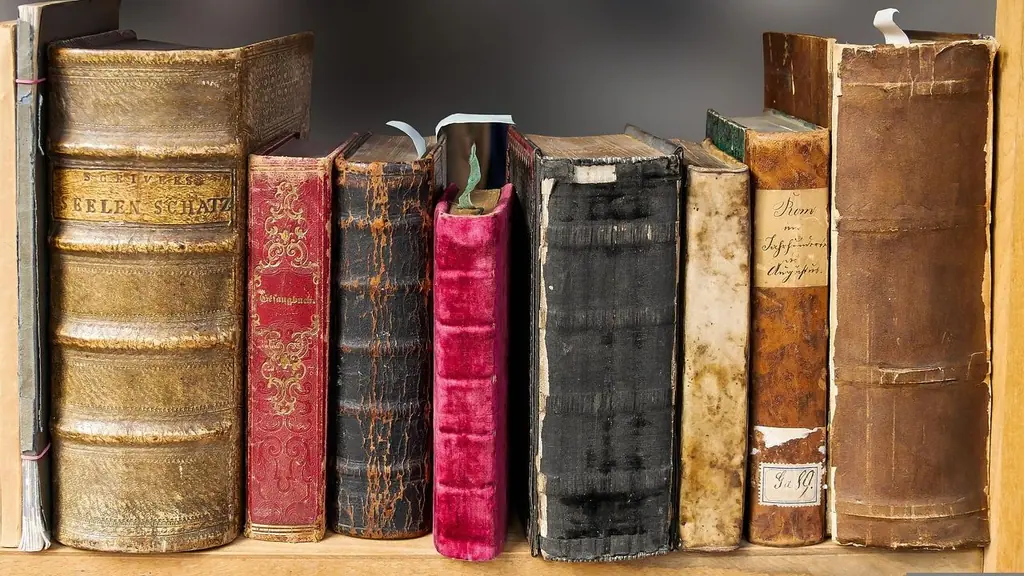
An English teacher assigns Pride and Prejudice, and half the class arrives with different editions: a cheap paperback, a phone app full of ads, a scanned 1890s printing with missing pages, and one student who found the novel on a site that also wanted a credit card "to verify age." Every one of them could have read a clean, complete, legal copy for nothing.
Thousands of classic novels, plays, poems and essays are in the public domain, which means anyone may read, copy and share them freely. This page explains how the U.S. public domain works, where the reliable free copies are, and how to choose an edition you can actually cite in an essay.
How the public domain works in the United States
Copyright is temporary. When it ends, a work enters the public domain. U.S. rules depend mainly on when a work was published:
| Work | U.S. copyright term |
|---|---|
| Published before 1978 (with copyright maintained) | 95 years from publication, ending on January 1 after the 95th year |
| Created in or after 1978 by an individual | The author's life plus 70 years |
| Created in or after 1978 as a work for hire, anonymously or under a pseudonym | 95 years from publication or 120 years from creation, whichever ends first |
In practice, on January 1, 2026, books, films and songs first published in 1930 entered the U.S. public domain, among them Evelyn Waugh's Vile Bodies, Edna Ferber's Cimarron, Arthur Ransome's Swallows and Amazons and T.S. Eliot's Ash Wednesday. Works published in 1931 follow on January 1, 2027. Duke Law School's Center for the Study of the Public Domain publishes a list each year. Sound recordings follow separate rules: recordings from 1925 joined the public domain in 2026.
Some later works are also free because their copyrights were never renewed when renewal was required, but checking that takes research, so the large digital libraries do it for you. Cornell University Library's copyright term chart is the standard quick reference for edge cases.
Tip: "Public domain" is country by country. Many countries protect works for the author's life plus 70 years, so a book that is free in the United States may still be under copyright in Europe, and the reverse can happen too. If you're outside the U.S., check your own country's rules before downloading.
Two common traps: a modern translation of an ancient or foreign classic can be under copyright even though the original is not, and a modern edition's introduction, notes and illustrations may be protected even when the novel itself is free.
Where to read classics legally for free
| If you want… | Try |
|---|---|
| A quick, plain-text or EPUB copy of a famous book | Project Gutenberg |
| A beautifully formatted, proofread ebook | Standard Ebooks |
| A scan of a specific historical printing | HathiTrust; Internet Archive |
| An audiobook | LibriVox |
| A transcription you can check against the original page | Wikisource |
| Shakespeare with line numbers and notes | Folger Shakespeare Library |
| A catalog of free books across many sites | The Online Books Page |
Project Gutenberg, the oldest of these, has offered free ebooks since 1971 and is run largely by volunteers. Its texts come in HTML, EPUB, Kindle and plain-text formats, with no registration. Standard Ebooks is a volunteer-driven project that takes public domain texts and produces carefully formatted, proofread and accessible ebooks, often the most pleasant free editions to read on an e-reader.
HathiTrust, a partnership of research libraries, and the Internet Archive hold millions of scanned books. Their value is authenticity: you see the actual pages of a particular edition, which matters for historical research and for citing a specific printing. The Internet Archive's Open Library also catalogs editions and offers digital borrowing of some books with a free account.
LibriVox volunteers record public domain books as free audiobooks, which helps struggling readers, English learners and anyone who prefers listening. Quality varies by reader, so sample a minute before committing to a long book. Wikisource hosts volunteer transcriptions linked to page scans, so you can verify any line against the original.
The Online Books Page, maintained at the University of Pennsylvania Libraries, lists over three million free books across the web and is a good way to find a specific title or edition quickly.
Don't forget your public library. With a free library card, apps such as Libby lend modern ebooks and audiobooks, including recent translations and annotated editions of classics that aren't in the public domain.
Choosing a good edition
Free copies differ in quality. Before you assign or cite one, check:
- Completeness. Some online texts are abridged or missing chapters, prefaces or footnotes.
- Source edition. Good projects say which printing they transcribed. A novel revised by its author (Mary Shelley's Frankenstein exists in 1818 and 1831 versions) can differ significantly between editions.
- Translation. For works not originally in English, note the translator and date. Older translations are free but may use archaic language or censor passages.
- Accuracy. Proofread projects (Standard Ebooks, Wikisource pages marked validated) have fewer typos than raw scans converted by software.
- Ads and permissions. Avoid sites that bury the text in ads, require payment for public domain books, or ask for personal information.
Try it: Find *Frankenstein* on Project Gutenberg and on Standard Ebooks. Which edition (1818 or 1831) does each use? Read the first paragraph of the introduction in each and note one difference.
Citing a free online edition
Teachers often want students to cite the edition they actually read. For an ebook from a digital library, include the author, title, original publication date if known, the website, and the URL; your citation style may also ask for an access date. For a scan of a particular printing, cite that printing's publisher and year as well. Our guide to citing online sources shows the formats.
Safety: For younger readers, stick to the established libraries named here. "Free book" sites found through search ads sometimes push downloads, pop-ups or sign-ups that ask for payment details. A legitimate public domain library never needs a credit card.
For more places to borrow and read, see the best free digital libraries and public domain books and archives. Poetry has its own page, poetry online, and younger readers may enjoy nursery rhymes and their origins. More collections are in Libraries and Archives.
Recommended resources
- Project Gutenberg — A volunteer-run library of free public domain ebooks in several formats, online since 1971. Project Gutenberg Literary Archive Foundation; free; no registration.
- Standard Ebooks — Carefully formatted, proofread and accessible editions of public domain books. A volunteer-driven project; free; no account.
- HathiTrust Digital Library — Millions of scanned books from research libraries, with public domain volumes readable in full. HathiTrust, a library partnership; free to read.
- Internet Archive: Books — Scanned books, including many historical editions, to read or download. Internet Archive, a nonprofit; free; account needed to borrow some titles.
- Open Library — A catalog of book editions with free reading and digital borrowing where available. Internet Archive; free account for borrowing.
- LibriVox — Free public domain audiobooks read by volunteers. LibriVox; free; downloads in MP3.
- Wikisource — Volunteer transcriptions of public domain texts linked to page scans for checking. Wikimedia Foundation; free, no ads.
- The Online Books Page — An index of over three million free books on the web, searchable by author, title and subject. University of Pennsylvania Libraries; free.
- Folger Shakespeare: Shakespeare's works — Free texts of Shakespeare's plays and poems with line numbers and context. Folger Shakespeare Library; free.
- Digital Public Library of America — Searches digitized books, images and documents from American libraries, archives and museums. DPLA; free.
- Library of Congress: Classic Children's Books — Digitized classic picture books and stories free to read and reuse. Library of Congress; free; good for families.
- Libby — The library lending app for ebooks and audiobooks, including annotated and translated classics. OverDrive; free with a participating library card.
- Public Domain Day 2026 — The annual list of works newly in the U.S. public domain, with an explanation of the rules. Center for the Study of the Public Domain, Duke Law School; free.
- Copyright Term and the Public Domain — The widely used chart for working out whether a U.S. work is in the public domain. Cornell University Library; free.
- U.S. Copyright Office: Duration FAQ — The official short answer on how long copyright lasts. U.S. Copyright Office; free.
Sources
- How Long Does Copyright Protection Last? (FAQ), U.S. Copyright Office
- Public Domain Day 2026, Center for the Study of the Public Domain, Duke Law School
- Copyright Term and the Public Domain, Cornell University Library
- About Standard Ebooks, Standard Ebooks
- The Online Books Page, University of Pennsylvania Libraries