Nursery Rhymes: Texts, Origins and the Myths About Their Meanings
Why nursery rhymes matter for early literacy, what is really known about famous rhymes' origins, and how to spot the 'dark history' myths that circulate online.
At bedtime a three-year-old asks for "Jack and Jill" for the fourth time, and somewhere in the middle you remember a video claiming the rhyme is secretly about a beheaded king. Is it? And does it matter which version of the words you use?
Nursery rhymes are some of the oldest texts most people ever learn, and they are surrounded by confident stories about their "real" meanings. This page looks at why rhymes are worth sharing with young children, what scholars actually know about where some favorites came from, and how to check the dramatic origin stories that circulate online. It ends with a short list of reliable places to find texts, recordings and early-literacy ideas.
Why rhymes matter for young children
Rhymes are short, rhythmic and repetitive, which makes them easy to remember and fun to say together. They also do quiet work for early reading. Head Start's guidance on preschool literacy describes enjoying rhyme and alliteration as part of how young children develop phonological awareness: the ability to hear and play with the sounds inside words. Being able to notice that "hill" and "Jill" share an ending sound is a step toward connecting sounds with letters later on.
You do not need special materials to use rhymes well:
- Say them often. Repetition is the point. Children enjoy predicting what comes next.
- Pause before the rhyming word. "Jack and Jill went up the..." and let your child fill in "hill." Head Start suggests this kind of fill-in game.
- Add movement. Clapping the beat, bouncing a toddler on your knee or acting out the words helps children feel the rhythm of language.
- Use home languages too. Rhymes, songs and chants in any language build listening skills. Keep the ones your family grew up with.
- Keep it playful. Rhymes work because they are fun. They are not drills.
Tip: Public libraries offer free baby and toddler rhyme times in many communities. They are an easy way to learn new rhymes, meet other families and borrow board books with the words.
Where nursery rhymes come from
Most traditional English nursery rhymes were passed on by word of mouth long before anyone printed them, which is why their origins are so hard to pin down. The earliest surviving collection of English nursery rhymes is generally identified as Tommy Thumb's Pretty Song Book, published in London in 1744. Later eighteenth-century collections, notably one titled Mother Goose's Melody, spread many rhymes further, including to North America.
Because rhymes lived in speech, they exist in many versions. Words change from region to region and generation to generation, and there is rarely one "correct" text. When you see a rhyme in a book, it is one version among several.
Four familiar rhymes
Jack and Jill. The rhyme is known from eighteenth-century printed collections. Online stories claim it describes the execution of Louis XVI and Marie Antoinette, but that happened in 1793, after the rhyme was already in print. Like most such theories, it was attached to the rhyme long after the fact.
Jack Sprat. The couple who "licked the platter clean" between them appear in a version recorded as a proverb in the seventeenth century, long before it settled into its familiar nursery form. Stories linking Jack and his wife to particular kings and queens are speculation.
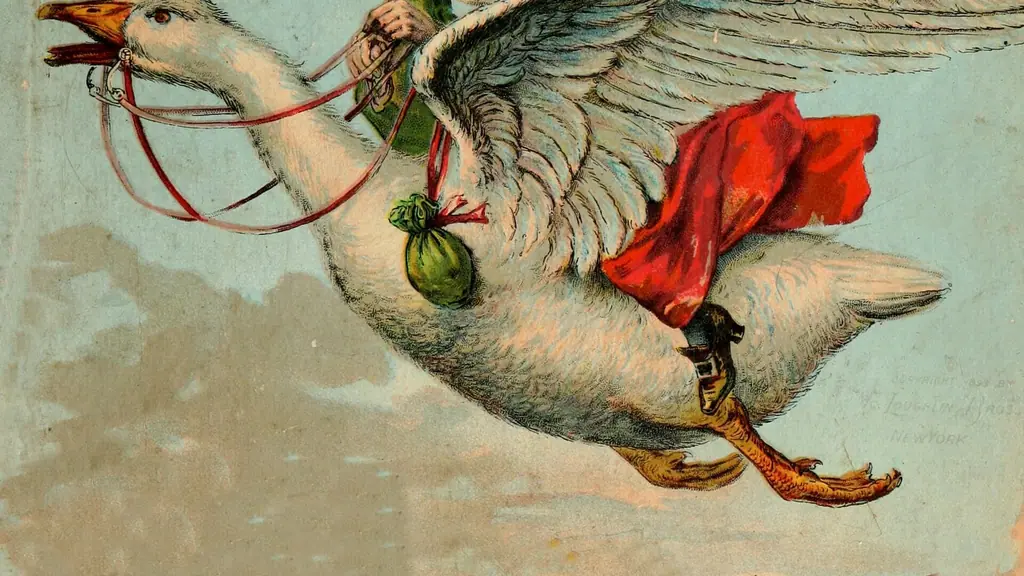
Old Mother Hubbard. The best-known version is a comic picture book published in 1805, The Comic Adventures of Old Mother Hubbard and Her Dog by Sarah Catherine Martin, which follows the dog through a long series of silly adventures. It is one of the few nursery rhymes with a known author for its popular form.
Mary Had a Little Lamb. This one has a documented American origin. The poem appeared in Poems for Our Children by the editor and writer Sarah Josepha Hale, published in Boston around 1829 to 1830; the National Park Service notes that Hale later spent years campaigning for Thanksgiving to become a national holiday. A competing claim that a boy named John Roulstone wrote the first verses circulated later, but no printed copy older than Hale's has been found. The rhyme gained a second claim to fame in 1877: an assistant's account preserved by the National Park Service records Thomas Edison reciting "Mary had a little lamb" during early experiments that led to the phonograph.
The "dark origins" myth problem
Few internet stories are shared as eagerly as the claim that innocent rhymes hide grim histories. The best-known example is "Ring a Ring o' Roses" (in the U.S., "Ring Around the Rosie"), said to describe the plague: the rosy rash, the posies carried against bad air, the sneezing and the "all fall down" of death.
Folklorists reject this story. The Library of Congress's American Folklife Center explains that the rhyme exists in many versions, many of which have no sneezing or falling, that it appears in English print only in the late 1800s, and that the plague interpretation was first printed in the mid-twentieth century. Snopes reaches the same conclusion. In other words, the plague story is itself a piece of modern folklore: a tale about a rhyme rather than its origin.
The same pattern appears again and again. A rhyme's meaning is "revealed" by matching its words to a historical event, with no evidence that anyone linked the two before the twentieth century.
Checklist: When you meet a claim about a rhyme's secret meaning, ask: When was the rhyme first recorded? When was this explanation first recorded? Does the explanation work for other versions of the words? Who is making the claim, and do they cite a source? If the explanation is centuries younger than the rhyme, treat it as a story, not history.
This kind of checking is a good first exercise in media literacy for older children. Our guides to understanding misinformation and fact-checking a claim offer simple routines that work just as well for rhymes as for news.
Try it: With a child aged eight or older, look up "Ring Around the Rosie" origin stories online. Find one site that tells the plague story and one that debunks it. Compare their evidence. Which one tells you when and where the claim was first made?
Bringing it together at home
Share rhymes for the sound and the fun, not the hidden meanings. Choose versions of the words your family likes, mix in rhymes from your own culture, and let children make up silly new verses. For more ideas on reading and learning together, see Digital Literacy for Families, the For Families page and the For Families subject collection.
Recommended resources
- Ring Around the Rosie: Metafolklore, Rhyme and Reason — A folklorist at the Library of Congress explains why the plague story is modern folklore, with historical versions of the rhyme (Library of Congress; free).
- "Ring Around the Rosie" and the Plague, on the Folklife Today Podcast — A podcast episode and post revisiting the same question for listeners (Library of Congress; free).
- Exploring the History of Children's Songs — Ideas for teachers on using historical songbooks and recordings from the Library's collections with students (Library of Congress; free).
- Is 'Ring Around the Rosie' About the Black Plague? — A fact-check of the plague claim with a summary of the evidence (Snopes; free, with advertising).
- Sarah Josepha Hale — A short biography of the author of "Mary Had a Little Lamb," including her editing career and Thanksgiving campaign (National Park Service; free).
- Origins of Sound Recording: Edison's Path to the Phonograph — Primary accounts of the 1877 experiments in which "Mary had a little lamb" was among the first words recorded (National Park Service; free).
- Baldwin Library of Historical Children's Literature — A special collection of more than 115,000 British and American children's books from the mid-1600s onward, with digitized titles free to browse and read online (University of Florida George A. Smathers Libraries; free).
- Every Child Ready to Read — An early literacy initiative for parents and caregivers of children from birth to five, from two divisions of the American Library Association (PLA and ALSC; free information).
- Tips for Helping Children Learn and Read — Practical, everyday suggestions for families, including rhyming games (Office of Head Start; free).
- Literacy Preschool — Head Start's description of preschool literacy skills, including rhyme and phonological awareness, useful for teachers and curious parents (Office of Head Start; free).
- Reach Out and Read — A national nonprofit that works through pediatric checkups to encourage reading aloud, with tips for families of young children (Reach Out and Read; free).
- Mother Goose on the Loose — An early-literacy program used by many libraries for rhyme and song sessions with babies and toddlers; the site explains the approach (Mother Goose on the Loose; free information).
- Mama Lisa's World — A long-running collection of children's songs and rhymes from many countries, often with translations; useful for finding rhymes in a family's home language (independent site; free, with advertising).
- Association for Library Service to Children — Book lists, awards and early literacy resources from librarians who specialize in serving children (American Library Association; free).
Sources
- Ring Around the Rosie: Metafolklore, Rhyme and Reason, Library of Congress, American Folklife Center
- Is 'Ring Around the Rosie' About the Black Plague?, Snopes
- Sarah Josepha Hale, National Park Service
- Origins of Sound Recording: Edison's Path to the Phonograph, National Park Service, Thomas Edison National Historical Park
- Literacy Preschool, Office of Head Start, U.S. Department of Health and Human Services