Jimmy Carter's Inaugural Address (1977): Text, Context and Sources
Jimmy Carter's January 20, 1977 inaugural address: its post-Watergate setting, main themes of humility, human rights and limits, and where to read or hear it.
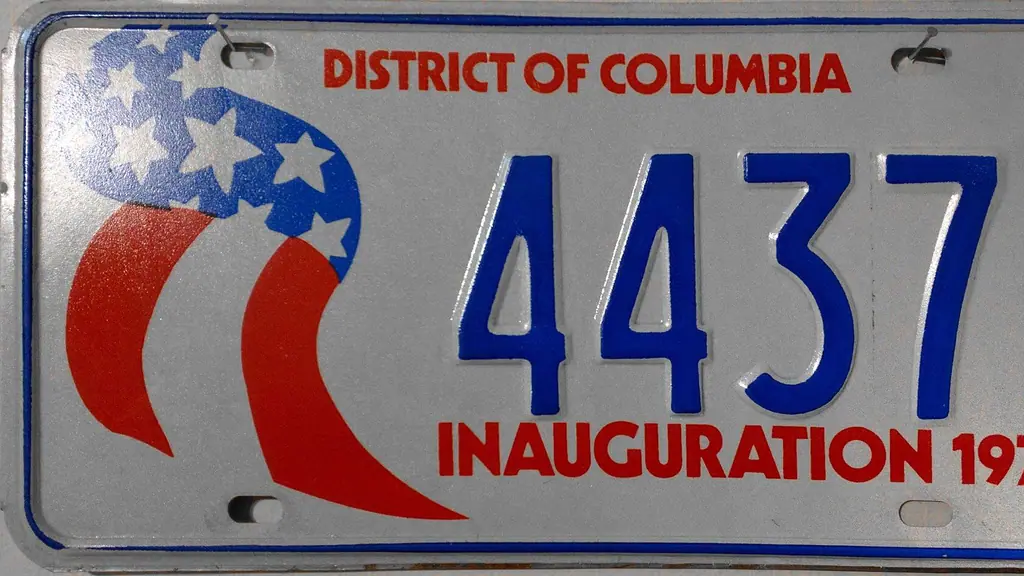
Imagine you are asked to compare two inaugural addresses for a history class, and one of them is Jimmy Carter's. It is not famous for a single quotable line in the way some addresses are. Its interest lies elsewhere: in what a new president chose to say to a country that had just lived through the Watergate scandal, a presidential resignation and the end of a long, divisive war.
This page sets out when and where the address was given, how it is organized, the ideas it returns to and how to find reliable full texts, audio and video. Inaugural addresses by presidents are works of the U.S. government and are in the public domain, so you can read the complete text free at any of the sources listed below.
The setting: January 20, 1977
Carter, a former governor of Georgia, had defeated the incumbent, Gerald Ford, in the November 1976 election. Ford had become president in August 1974 when Richard Nixon resigned, and he had pardoned Nixon a month later. U.S. combat involvement in Vietnam had ended earlier in the decade, and Saigon fell in 1975. Inflation and energy prices were pressing concerns. Many Americans said they distrusted government, and Carter had campaigned as an outsider who promised honesty.
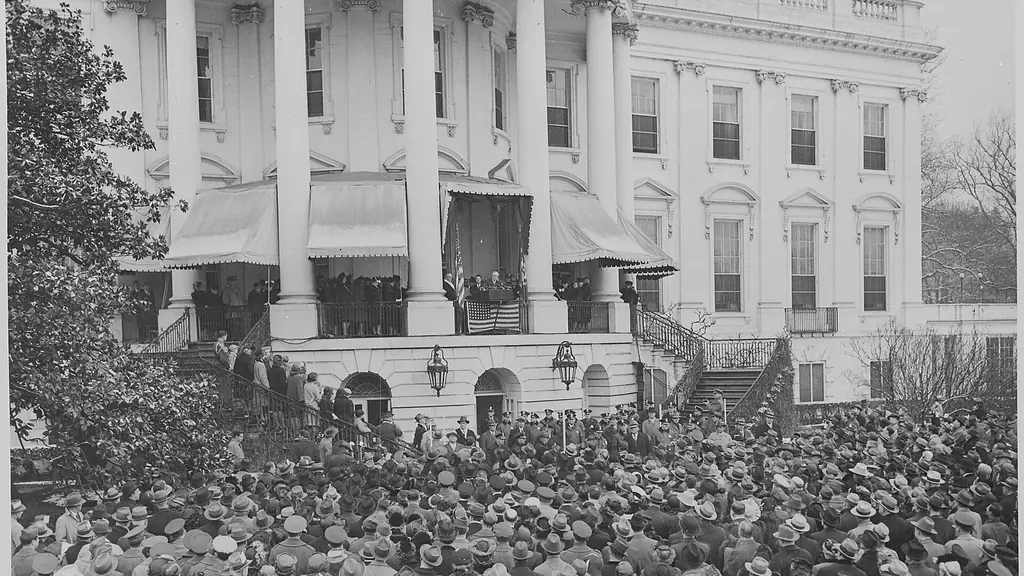
The swearing-in took place on the East Front of the Capitol, the usual location until 1981. Chief Justice Warren Burger administered the oath. Afterward, in a gesture that became one of the best-remembered images of the day, Carter, his wife Rosalynn and their daughter Amy left the presidential limousine and walked much of the parade route along Pennsylvania Avenue to the White House. Later presidents have often walked part of the route too.
How the address is organized
The speech is relatively short and moves through a clear sequence. Reading it with this outline in hand makes the structure easier to see:
| Section | What Carter does |
|---|---|
| Opening | Thanks his predecessor for helping to "heal our land," without naming him |
| The two Bibles | Notes that he took the oath on a Bible his mother gave him, with the 1789 inaugural Bible of George Washington also present, and reads a verse from the prophet Micah |
| A new beginning | Calls the day a fresh start for government and citizens alike |
| Limits and humility | Argues that the nation must accept limits and cannot solve every problem |
| Human rights and the world | Places human rights at the center of foreign policy and calls for reducing nuclear arms |
| Closing hopes | Lists what he would like people to say about the nation when his term ends |
The main themes
Humility and moral purpose. The verse Carter chose, Micah 6:8, asks what is required of a person and answers with justice, mercy and walking humbly with God. He returns to it at the end, so the address begins and closes on the same idea. For a president following Watergate, the emphasis on personal and public morality was a deliberate signal.
Limits. Unusually for an inaugural address, Carter told the country it could not do everything. His most often-quoted sentence on the subject says that more is not necessarily better, and that even a great nation has recognized limits. The message fit a decade of energy shortages, economic strain and a war that had shaken confidence in American power.
Human rights. Carter declared that "our commitment to human rights must be absolute." Human rights became a defining theme of his foreign policy, and historians frequently trace that emphasis back to this speech. Students can test the claim by comparing the address with later actions of his administration.
Nuclear arms. He promised to move toward the elimination of nuclear weapons from the Earth, a goal that set up his administration's arms-control negotiations with the Soviet Union.
Citizens and government together. Throughout, Carter speaks of what "we" must do rather than what the government will do for people, echoing his campaign's appeal to trust and shared responsibility.
Tip: Inaugural addresses are short enough to read in one sitting. Read the full text first, then the commentary. You will notice tone and emphasis that summaries, including this one, cannot capture.
Reading the address in class
The address works well for practicing close reading and for comparing presidential rhetoric across eras. Some questions to start with:
- Why might Carter thank his predecessor without naming him? What does the phrase about healing suggest about the previous few years?
- What is unusual about a president arguing for limits at the moment he takes power? How might listeners in 1977 have heard it?
- Find every use of "we" and "our" in one paragraph. What relationship between citizens and government does the language suggest?
- Compare the closing list of hopes with the opening of another inaugural address from the 1960s or 1980s. What has changed in tone?
- Listen to the audio while following the text. Where do pauses, emphasis or applause change how a line lands?
Try it: Choose one theme from the table above. Find a primary source from 1977 to 1981, such as a later speech, a signed treaty or a press conference transcript, that shows whether the administration acted on that theme. The Miller Center and the American Presidency Project both make this kind of comparison easy.
For a broader method, see teaching with primary sources, and for help telling a speech text apart from commentary about it, see primary, secondary and tertiary sources.
Finding a reliable text, audio and video
Because inaugural addresses circulate widely, you will find many copies online with small errors or missing paragraphs. Use a text published by an archive, library or university project:
- The Jimmy Carter Presidential Library, part of the National Archives, publishes the text among Carter's selected speeches.
- The Avalon Project at Yale Law School and the American Presidency Project at UC Santa Barbara both host the full text alongside every other inaugural address, which makes comparisons simple.
- The Miller Center at the University of Virginia pairs the text with audio and video of the delivery and a short summary.
- The Library of Congress resource guide on presidential inaugurations gathers primary sources about the ceremonies themselves.
For all the addresses from 1789 to the present, see the companion page Presidential Inaugural Addresses: A Guide to the Complete Texts, or browse History and Geography.
Recommended resources
- Inaugural Address of President Jimmy Carter — The full text from the presidential library that holds Carter's records (Jimmy Carter Presidential Library and Museum, National Archives; free).
- Inaugural Address of Jimmy Carter — A clean, stable full text that is easy to cite and print (The Avalon Project, Yale Law School; free).
- Inaugural Address, January 20, 1977 — Full text within a searchable archive of presidential documents, useful for finding later speeches on the same themes (American Presidency Project, UC Santa Barbara; free).
- January 20, 1977: Inaugural Address — Text with audio, video and a brief summary; ideal for listening while reading (Miller Center, University of Virginia; free).
- Jimmy Carter — A scholarly overview of Carter's life and presidency, with essays on domestic and foreign affairs (Miller Center; free).
- U.S. Presidential Inaugurations: A Resource Guide — Primary sources on every inauguration, including photographs, programs and manuscripts (Library of Congress; free).
- The Inaugural Addresses of the Presidents — Index of every inaugural address in the Avalon Project, for comparing Carter's speech with others (Yale Law School; free).
- Jimmy Carter Library: Research — How to search the library's archival collections, photographs and audiovisual records, with contact details for archivists (National Archives; free, research visits by arrangement).
- Jimmy Carter National Historical Park — The National Park Service site in Plains, Georgia, covering Carter's early life and community; good background for student projects (NPS; free to visit online).
- Presidential Libraries and Museums — An introduction to the presidential library system and links to each library, including Carter's (National Archives; free).
- DocsTeach — Primary-source activities built on National Archives documents, which teachers can adapt for lessons on the 1970s (National Archives; free, optional teacher account).
Sources
- Inaugural Address of President Jimmy Carter, Jimmy Carter Presidential Library and Museum
- Inaugural Address of Jimmy Carter, The Avalon Project, Yale Law School
- January 20, 1977: Inaugural Address, Miller Center, University of Virginia
- Inaugural Address (Jimmy Carter, January 20, 1977), The American Presidency Project, UC Santa Barbara
- U.S. Presidential Inaugurations: A Resource Guide, Library of Congress