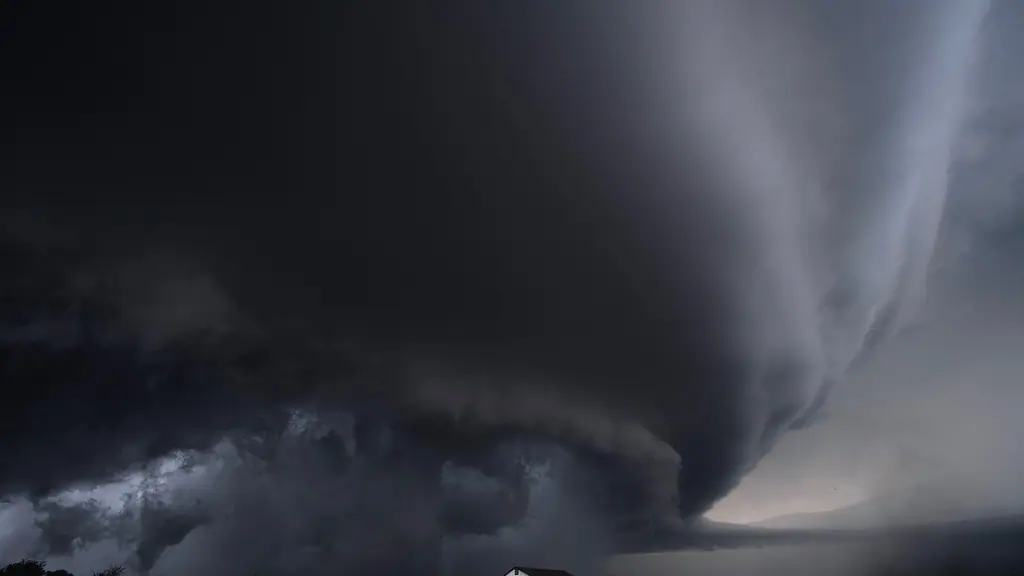
Weather and Meteorology: Forecasts, Science and Learning Resources
Where to get official U.S. forecasts, radar and severe weather alerts, what watches and warnings mean, and the best free resources for learning weather science.
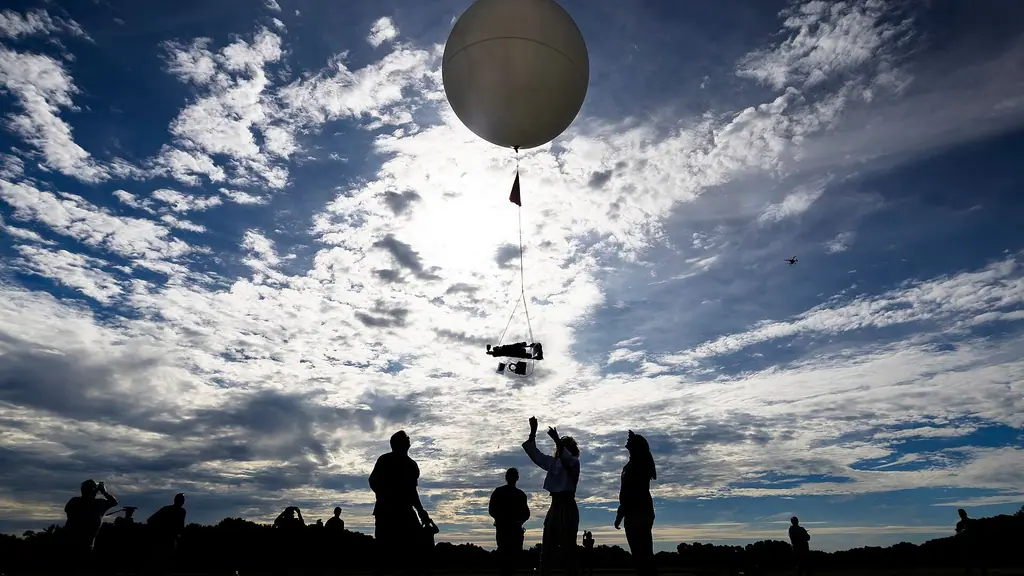
On a summer afternoon, three apps on the same phone can show three different chances of rain. A friend shares a dramatic "storm of the century" graphic that turns out to be one computer model's run ten days out. Meanwhile, a short, plain text alert from the National Weather Service is the message that actually matters.
Weather information is everywhere, but most of it is repackaged from a small number of public sources. Knowing where forecasts originate, what official alert terms mean, and where to learn the science behind them makes you a calmer and better-informed reader of the sky. This page covers all three, for students, teachers and families.
Where forecasts come from
In the United States, the National Weather Service (NWS), part of the National Oceanic and Atmospheric Administration (NOAA), collects observations from surface stations, weather balloons, radar, satellites, aircraft and ocean buoys, runs numerical forecast models, and issues official forecasts and warnings. Local NWS forecast offices cover specific areas, while national centers specialize:
| Center | What it covers |
|---|---|
| Local NWS forecast offices | Your area's forecast, plus warnings for tornadoes, severe thunderstorms, floods and winter storms |
| Storm Prediction Center (SPC) | Severe thunderstorm and tornado outlooks and watches for the contiguous U.S. |
| National Hurricane Center (NHC) | Tropical storms and hurricanes in the Atlantic and eastern Pacific |
| Weather Prediction Center (WPC) | National precipitation forecasts, heavy rain and winter weather outlooks |
| National Centers for Environmental Information (NCEI) | Historical weather and climate records |
Commercial apps and TV stations add their own presentation, local expertise and sometimes their own models, but they rely heavily on government observations and data. When stakes are high, go to the source: weather.gov for your location, and the relevant national center for hurricanes or severe outbreaks. Other countries have their own national meteorological services, coordinated internationally through the World Meteorological Organization.
Be especially careful with long-range forecasts shared on social media. Computer models are run many times a day, and a single run a week or more ahead can show a dramatic storm that later runs drop entirely. Forecasters compare many runs and several different models, and they express growing uncertainty the further ahead they look. A post that shows one model's map for ten days out, without saying so, is not a forecast. Ask who made the graphic, which model it shows, and whether your local NWS office says anything similar.
Tip: A "40 percent chance of rain" is a probability for a point in the forecast area over a set period, not a promise that it will rain on 40 percent of the area. Read the forecast discussion on your local NWS office page to see the forecasters' reasoning and confidence.
Watches, warnings and advisories
Official alerts use precise words. Learning them takes five minutes and may matter a great deal.
- Outlook: Hazardous weather is possible in the coming days. Stay informed.
- Watch: Conditions are favorable for a hazard to develop. Review your plan and know where you would shelter.
- Warning: The hazard is occurring or imminent in your area. Act now.
- Advisory: A less serious hazard that could still be inconvenient or dangerous, such as dense fog or minor flooding.
For tornadoes, the Storm Prediction Center issues watches over broad areas, while warnings come from each local NWS office. For tropical systems, the National Hurricane Center issues advisory products at least every six hours whenever a tropical cyclone is active in its basins, along with hurricane and tropical storm watches and warnings. Receiving alerts in more than one way, such as a phone's wireless emergency alerts plus a NOAA Weather Radio, means one failed channel does not leave you uninformed.
Safety: The National Weather Service's lightning guidance is simple: there is no safe place outside when thunderstorms are in the area. When thunder roars, go indoors, and stay in a safe shelter for at least 30 minutes after the last thunder. Children's outdoor sports and field trips need an adult who watches the sky and has a shelter plan. Never drive into flooded roads, and never chase storms for fun; leave that to trained spotters and researchers.
Reading radar and satellite images
Radar shows precipitation, not clouds. Colors indicate how strongly the radar beam is reflected, which relates to how heavy the rain, snow or hail is. Satellite images show clouds from above: visible imagery works only in daylight, while infrared imagery shows cloud-top temperatures day and night, with colder (higher) tops often marking strong storms. The NWS radar viewer and NOAA's GOES satellite imagery viewer are free and need no account.
When you watch a loop, look at motion and change over time rather than a single frame. Storms that grow quickly, rotate, or line up in a bowing shape are the ones forecasters watch most closely. For a deeper look at severe storm science and the role of trained spotters, see the guide to storm chasing and severe weather science.
Learning the science
Meteorology draws on physics, chemistry and geography, which makes it a rich subject for school projects. Good free starting points include NOAA's JetStream online school for weather, the UCAR Center for Science Education's Learning Zone, and NASA's Earth Observatory for satellite views of weather and climate events. Students who want to collect real data can join citizen science networks: CoCoRaHS volunteers measure rain, hail and snow with standard gauges, and the GLOBE Program supports school-based observations used by scientists.
For younger children, NWS's Owlie Skywarn pages and Ready.gov's kids section turn safety into activities. Live weather cameras are another classroom favorite; the page of live nature and science webcams lists several from research stations. To work with real historical weather data, the guide to using government open data explains how to download and clean records. Broader topics are collected on the Science and Mathematics subject page.
Try it: For one week, record your local NWS forecast high temperature and chance of precipitation each morning, then the observed values the next day. Calculate how far off the high temperature forecast was on average. Compare day-one and day-three forecasts if you have time.
Recommended resources
- National Weather Service — Official forecasts, alerts and forecast discussions for any U.S. location; enter a ZIP code or city to reach your local office (NOAA; free; no account needed).
- NWS Radar — Live national and local radar loops with alert overlays; use it to follow approaching storms (NOAA; free).
- National Hurricane Center — Official tropical cyclone advisories, forecast cones, storm surge information and preparedness guides (NOAA; free).
- Storm Prediction Center — Severe thunderstorm and tornado outlooks, current watches and an excellent tornado FAQ for student research (NOAA; free).
- GOES Imagery Viewer — Near-real-time images from NOAA's geostationary weather satellites, viewable by region and band (NOAA NESDIS; free).
- JetStream — An online school for weather covering the atmosphere, clouds, fronts, oceans and safety, with lesson ideas for teachers (NOAA; free).
- UCAR Center for Science Education — Explanations, interactives and classroom activities on weather and climate from a university research consortium (UCAR; free).
- NASA Earth Observatory — Satellite images and articles explaining storms, droughts, fires and other Earth events (NASA; free).
- National Centers for Environmental Information — Archives of historical weather and climate data, from daily station records to storm reports (NOAA; free).
- CoCoRaHS — A volunteer network measuring precipitation in backyards and schoolyards; training is provided and data is used by forecasters (Colorado Climate Center and partners; free to join; gauge purchase required).
- The GLOBE Program — International science and education program where students collect environmental observations, including atmosphere data, for research use (NASA, NSF and partners; free; teacher training recommended).
- Owlie Skywarn — Weather safety activities, coloring books and games for younger children (National Weather Service; free).
- Ready.gov Kids — Family emergency planning activities and games about severe weather and other hazards (FEMA; free).
- World Meteorological Organization — The UN agency coordinating weather services worldwide, with explainers on global weather, climate and water (WMO; free).
- Met Office: Learn about weather — Clear explanations of weather types, forecasting and climate from the UK's national weather service, useful for an international perspective (Met Office; free).
Curated resources
Checked by hand from the Science and Mathematics shelf of the library. Each entry says what it costs and when we last verified it.
Art of Problem Solving
AoPS Incorporatedartofproblemsolving.com
A resource for strong math students, offering courses, books, and a large community of problem solvers. Its free wiki and forums cover contest math such as AMC and olympiads, helping motivated students go deeper.
Using it: Free community forums and resources; courses and books are paid. Forums require an account; age guidance applies.
Verified
arXiv
Cornell Universityarxiv.org
A free distribution service for research preprints in physics, mathematics, computer science, statistics, quantitative biology and economics. Researchers post papers before or alongside journal publication, so it is the place to find the newest work in these fields.
Using it: Free to read; submitting papers requires registration and endorsement. Papers are preprints and may not be peer reviewed.
Verified
Biodiversity Heritage Library
Biodiversity Heritage Library consortiumbiodiversitylibrary.org
An open access library of natural history literature, offering digitized books and journals on plants, animals and ecosystems going back centuries. Scientists use it to trace species descriptions, while students and artists enjoy its vast collection of historical scientific illustrations.
Using it: Free, no account needed. Much content is public domain or openly licensed.
Verified
CDC
U.S. Centers for Disease Control and Preventioncdc.gov
The official website of the U.S. Centers for Disease Control and Prevention, providing health information, disease data, vaccination schedules and safety guidance. A primary public health source for families, schools and researchers checking current recommendations.
Using it: Free, no account.
Verified
CK-12
CK-12 Foundation (nonprofit)ck12.org
A nonprofit platform offering free customizable textbooks, practice questions, simulations and videos for K–12 math and science. Its adaptive practice and interactive modules support students reviewing topics and teachers building lessons.
Using it: Free; accounts recommended for progress tracking. Under-13 accounts need parental or teacher consent.
Verified
Cochrane Library
Cochrane (with Wiley)cochranelibrary.com
A collection of systematic reviews that summarize the best available evidence on health treatments and interventions. Plain-language summaries explain what the research found, making it a valuable resource for evidence-based decisions in health and medicine.
Using it: Abstracts and plain-language summaries are free; full reviews are free in many countries or after a short embargo.
Verified
Desmos
Desmos Studiodesmos.com
Free online graphing, scientific and geometry calculators. The graphing calculator lets students plot functions, explore sliders and visualize mathematical relationships, and it is used widely in classrooms and some standardized tests.
Using it: Free, no account required for the calculators.
Verified
Encyclopedia of Life
Encyclopedia of Life (hosted by Smithsonian NMNH)eol.org
A free online resource that gathers information, images and data about living species from partner databases and institutions. Look up any organism to find classification, distribution, traits and media, useful for biology projects, nature identification follow-up and biodiversity research.
Using it: Free, no account. Content is aggregated from partner databases; check the source credit on each item.
Verified
Exploratorium
Exploratorium (nonprofit)exploratorium.edu
A San Francisco science museum known for hands-on learning, with online activities, videos and science snacks that use everyday materials. Teachers and families can find inquiry-based experiments for exploring light, sound, motion and more.
Using it: Free online resources.
Verified
GeoGebra
GeoGebra GmbHgeogebra.org
Free dynamic mathematics software combining geometry, algebra, graphing, statistics and calculus. Its online apps and community resources help students explore math visually and help teachers build interactive activities.
Using it: Free; optional account to save work and create classes.
Verified
Google Earth
Googleearth.google.com
A 3D virtual globe combining satellite imagery, terrain and street-level views. Students can explore places worldwide, measure distances, view historical imagery and build narrated map projects, making it a versatile tool for geography and storytelling.
Using it: Free in the browser; a Google account is needed to save projects.
Verified
HHMI BioInteractive
Howard Hughes Medical Institutebiointeractive.org
Free biology and environmental science resources from the Howard Hughes Medical Institute, including short films, interactive simulations, data activities and classroom lessons built on real research. Materials are especially strong for high school and introductory college courses in evolution, ecology and genetics.
Using it: Free; account optional.
Verified
Illustrative Mathematics
Illustrative Mathematics (nonprofit)illustrativemathematics.org
A nonprofit offering problem-based K–12 math curriculum designed around student discourse and conceptual understanding. Its openly licensed materials are widely adopted and provide lessons, tasks and teacher guidance.
Using it: Core curriculum is openly licensed and free through certified partners; some platforms and training are paid.
Verified
iNaturalist
iNaturalist (nonprofit)inaturalist.org
A citizen science platform and app where people photograph plants, animals and fungi, get identification suggestions and have observations confirmed by a community of naturalists. Verified records feed into biodiversity research, making it a rewarding way for families and classes to learn local nature while contributing real data.
Using it: Free; account required to post observations. Users under 13 need parental consent.
Verified
Learn.Genetics
University of Utahlearn.genetics.utah.edu
Interactive resources from the University of Utah that explain genetics, cell biology, neuroscience and health through animations, virtual labs and clear illustrated articles. Popular in middle school, high school and introductory college classes, with teacher guides and printable materials to support lessons.
Using it: Free, no account.
Verified
LibreTexts
LibreTexts (nonprofit)libretexts.org
A large collection of free, open textbooks and learning materials, especially strong in chemistry, biology, physics, math and engineering. Instructors can customize texts, and students can use them as free references for college courses.
Using it: Free to read; no account required.
Verified
MedlinePlus
U.S. National Library of Medicinemedlineplus.gov
Trustworthy health information for the public from the U.S. National Library of Medicine. Plain-language articles cover diseases, conditions, medicines, supplements and medical tests, with many pages in Spanish and other languages, and no advertising.
Using it: Free, no ads, no account. Information is educational and not a substitute for medical advice.
Verified
MIT OpenCourseWare
Massachusetts Institute of Technologyocw.mit.edu
Free course materials from thousands of MIT courses, including lecture notes, problem sets, exams and many video lectures. Ideal for self-learners who want university-level depth in engineering, science, math, economics and humanities, or for teachers seeking course design ideas.
Using it: Free, no account or registration. Materials are not interactive courses and do not award credit.
Verified
NASA Earth Observatory
NASAscience.nasa.gov
Satellite images and articles explaining Earth science events and changes, from storms to wildfires and climate trends. Images come with clear explanations, useful for geography and environmental science lessons.
Using it: Free; images generally free to use with credit.
Verified
NASA Image and Video Library
NASAimages.nasa.gov
A searchable collection of NASA images, videos and audio covering missions, astronauts, planets and Earth. Useful for finding high-quality space imagery for reports, presentations and classroom use.
Using it: Free; NASA media is generally not copyrighted but credit is requested.
Verified
NASA Learning Resources
NASAnasa.gov
NASA's collection of educational resources for students and teachers, including lesson plans, activities, videos and challenges related to space, Earth science and engineering. Material is organized by grade level and topic to bring real missions into the classroom.
Using it: Free, no account.
Verified
NASA Space Place
NASAspaceplace.nasa.gov
NASA's website for children, with games, activities, articles and videos about space and Earth science. Content is written for younger learners and supports curiosity about planets, stars and weather.
Using it: Free, no account; designed for upper elementary ages.
Verified
National Geographic Kids
National Geographic Partners (Disney)kids.nationalgeographic.com
National Geographic's site for children, featuring articles, photos, videos, quizzes and games about animals, science, space, history and geography. Engaging content supports curiosity and school projects, although the site carries ads and promotions for its own products.
Using it: Free with ads.
Verified
National Library of Medicine
U.S. National Institutes of Healthnlm.nih.gov
The world's largest biomedical library, part of the U.S. National Institutes of Health. Its website is the gateway to major health databases, history of medicine collections, training materials and research guidance for anyone studying medicine, health or life sciences.
Using it: Free. Gateway to PubMed, MedlinePlus and other NLM databases.
Verified
National Park Service for Teachers
U.S. National Park Servicenps.gov
Lesson plans, distance learning programs and field trip resources from America's national parks. Teachers can search by subject, grade and park to find activities on history, culture, science and nature, many tied to real places students can visit or explore virtually.
Using it: Free, no account.
Verified
NIST Fundamental Physical Constants
National Institute of Standards and Technologyphysics.nist.gov
The official reference for the internationally recommended values of physical constants, such as the speed of light and Planck constant. Provides values, uncertainties and background on units, essential for accurate science calculations.
Using it: Free, no account.
Verified
NIST Unit Conversion
National Institute of Standards and Technologynist.gov
Official guidance from the U.S. National Institute of Standards and Technology on converting between SI metric and U.S. customary units. It provides conversion factors, style guides for writing units and explanations of the metric system, a reliable reference for science work.
Using it: Free.
Verified
NOAA Education
U.S. National Oceanic and Atmospheric Administrationnoaa.gov
Educational resources from NOAA on oceans, weather, climate and coasts. Lesson plans, data activities, multimedia and career resources help teachers and students explore Earth systems using real scientific data.
Using it: Free, no account.
Verified
NRICH
University of Cambridgenrich.maths.org
A free collection of rich mathematical problems, games and articles from the University of Cambridge. Activities encourage reasoning and problem solving, with teacher notes, making it valuable for enrichment from primary through secondary school.
Using it: Free, no account.
Verified
Our World in Data
Global Change Data Lab (nonprofit) with University of Oxfordourworldindata.org
Research and interactive charts on global problems such as poverty, health, energy, climate and education, built from carefully sourced data. Every chart links to its sources and can be downloaded, making it outstanding for evidence-based essays, lessons and presentations about long-term world trends.
Using it: Free, no account. Charts and data are openly licensed with attribution.
Verified
Paul's Online Math Notes
Lamar University (author-maintained)tutorial.math.lamar.edu
Free, clearly written notes covering algebra, calculus and differential equations, with worked examples and practice problems. A favorite study aid for college math students reviewing concepts.
Using it: Free, no account.
Verified
PhET Interactive Simulations
University of Colorado Boulderphet.colorado.edu
Free interactive simulations for physics, chemistry, biology, earth science and math. Research-based designs let students experiment with concepts like circuits, forces and molecules, and teacher materials support classroom use.
Using it: Free, no account. Runs in the browser, including on tablets.
Verified
Ptable
Ptable (independent)ptable.com
An interactive periodic table that displays element properties, electron configurations, isotopes and compounds. Clear visual layouts make it handy for chemistry homework and exploring trends across the table.
Using it: Free, no account.
Verified
PubChem
U.S. National Library of Medicinepubchem.ncbi.nlm.nih.gov
A free database of chemical molecules and their properties, safety data and biological activities. It is widely used by students and researchers to look up compound structures, formulas and identifiers.
Using it: Free, no account.
Verified
PubMed
U.S. National Library of Medicinepubmed.ncbi.nlm.nih.gov
The essential free database for biomedical and life sciences literature, indexing tens of millions of citations. Filters for publication type, date and free full text help you find clinical studies, reviews and research articles on health and biology topics.
Using it: Free, no account. Abstracts are free; full text may require subscription unless linked to PMC.
Verified
PubMed Central
U.S. National Library of Medicinepmc.ncbi.nlm.nih.gov
A free full-text archive of biomedical and life sciences journal articles. Unlike PubMed, which indexes citations, everything in PMC can be read in full, including many publicly funded research papers, making it ideal when you need the complete article.
Using it: Free, no account. Every article is free to read in full.
Verified
Science Buddies
Science Buddies (nonprofit)sciencebuddies.org
A nonprofit providing free science project ideas, step-by-step guides and STEM activities for students. Useful for science fair planning, with project ideas organized by grade and interest.
Using it: Free, with some ads; account optional.
Verified
Smithsonian Open Access
Smithsonian Institutionsi.edu
Millions of images and data records from Smithsonian museums and research centers released for free reuse. Search across art, natural history, air and space, and American history collections, then download high-resolution images for school projects, publications or presentations without permission requests.
Using it: Free. Open Access items are released under CC0 and may be reused without permission; other items carry restrictions.
Verified
TeachEngineering
University of Colorado Boulder and partnersteachengineering.org
A free digital library of K–12 engineering lessons and hands-on activities developed by university engineering programs. Standards-aligned materials help teachers bring design challenges and real-world problem solving into science and math classes.
Using it: Free, no account needed.
Verified
USGS Educational Resources
U.S. Geological Surveyusgs.gov
Educational materials from the U.S. Geological Survey covering earthquakes, volcanoes, water, maps, minerals and ecosystems. Resources include classroom activities, data sets, images and explanations from working scientists, suitable for earth science classes and curious learners.
Using it: Free, no account.
Verified
Wellcome Collection
Wellcome Collection (Wellcome Trust)wellcomecollection.org
The online catalog and digitized collections of a museum and library devoted to health and human experience. Search books, manuscripts, photographs and artworks on the history of medicine, many free to view and reuse, making it excellent for science history projects.
Using it: Free. Many digitized items are openly licensed; some sensitive medical material requires registration.
Verified
WHO Data
World Health Organizationdata.who.int
The World Health Organization's data portal with global health statistics, country profiles and indicators on disease, mortality, health systems and risk factors. An authoritative source for health statistics in research and school projects.
Using it: Free, no account.
Verified
Wolfram Alpha
Wolfram Researchwolframalpha.com
A computational knowledge engine that answers factual queries and computes math, science, finance and statistics problems. Type a question or equation and it returns results with graphs and data, helpful for checking calculations and exploring concepts.
Using it: Free for most queries; step-by-step solutions and extras require Pro subscription.
Verified
Wolfram MathWorld
Wolfram Researchmathworld.wolfram.com
An extensive online encyclopedia of mathematics with thousands of entries on formulas, theorems, definitions and notable problems. Entries include illustrations and references, making it a quick, dependable lookup for anyone working in algebra, calculus, geometry, number theory and beyond.
Using it: Free, no account. Aimed at upper secondary and university mathematics.
Verified
Zooniverse
Zooniverse (University of Oxford and Adler Planetarium)zooniverse.org
A people-powered research platform where volunteers help scientists classify galaxies, count wildlife in camera-trap photos, transcribe historical documents and more. Short tutorials make projects accessible to beginners, and classroom tools let teachers bring genuine research tasks to students.
Using it: Free; account optional.
Verified
Sources
- Tornado Frequently Asked Questions, NOAA/NWS Storm Prediction Center
- Overview: Lightning Safety, National Weather Service
- Lightning Tips, National Weather Service
- Hurricane and Tropical Storm Watches, Warnings, Advisories and Outlooks, National Weather Service
- Learning Zone, UCAR Center for Science Education