Astronomy and Space Science: Free Resources from NASA and Observatories
Free, reliable astronomy resources for students and families: sky maps, NASA and ESA science sites, skywatching tools, citizen science and eclipse safety rules.
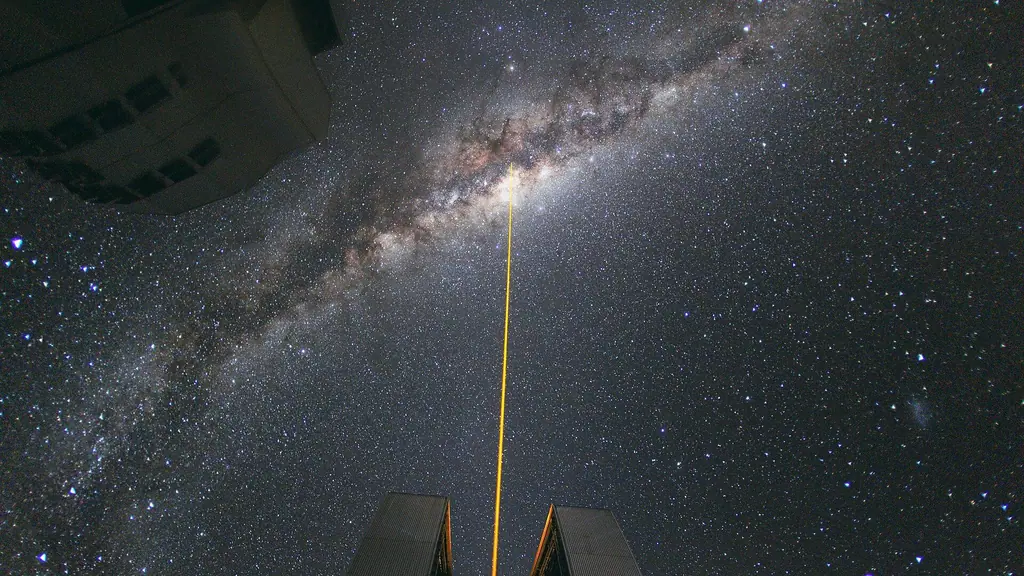
Picture a clear evening in late fall. Your ten-year-old points at a bright light low in the west that does not twinkle and asks whether it is a star, a plane or a satellite. You have a phone, a free hour and no telescope. That is enough to answer the question, and to start a hobby that can last a lifetime.
Astronomy is unusually well served by free, authoritative material. Space agencies, observatories and museums publish real images, data and teaching resources at no cost, and the best sky-mapping software is free too. This page explains how to begin observing, which official sites to trust for the science, how to avoid a few common traps, and how students can contribute to genuine research.
Start with your eyes, not equipment
Most first-time skywatchers assume they need a telescope. They usually don't. The naked eye takes in a huge field of view, and many of the most satisfying sights need nothing else: the phases of the Moon, the planets moving against the background stars over a few weeks, meteor showers and the International Space Station crossing the sky.
A few habits make a big difference:
- Get away from lights. Even a backyard is better with porch lights off. A park or rural site is better still.
- Let your eyes adjust. Give your eyes at least ten minutes in the dark before judging what you can see, and use a dim red light to read charts so you keep your night vision.
- Check the Moon. A bright Moon washes out faint stars and meteors. A few days either side of new moon gives the darkest skies.
- Lie back for meteors. NASA suggests lying down and looking up during meteor showers rather than staring at one spot.
- Try binoculars next. Ordinary binoculars show lunar craters, Jupiter's four largest moons and star clusters. NASA's skywatching pages recommend them as a first instrument.
As for that bright, steady light: planets generally shine with a steadier light than stars, and a planetarium app will name it in seconds.
Free tools for finding your way around the sky
| Tool | What it does | Good for |
|---|---|---|
| Stellarium (desktop) | Free, open-source planetarium software showing the sky for any place and time | Planning an evening; identifying objects |
| NASA's Eyes | Interactive 3D views of spacecraft, planets and the sky | Classroom demonstrations |
| What's Up (NASA) | Monthly video and article on what to look for | Families who want a short monthly plan |
| Spot the Station (NASA) | Predicts when the ISS passes over your location | A quick, reliable "wow" for children |
| Daily Moon Guide (NASA) | Shows the Moon's phase and features for each day | Moon-watching projects |
| Heavens-Above | Satellite and ISS pass predictions with star charts | Older students tracking satellites |
The calendars and date tools page covers Moon-phase tables and astronomical calendars if you want to plan observing sessions weeks ahead.
Where to learn the science
For explanations, images and current mission news, go to the source. NASA Science is the hub for planetary science, astrophysics, heliophysics and Earth science, with mission pages for Hubble, Webb and the planetary probes. Astronomy Picture of the Day publishes one image a day with a short explanation written by a professional astronomer, and its archive is a rich, searchable gallery. The European Space Agency covers European missions such as Gaia and its share of Webb, and offers material for schools. The Smithsonian's National Air and Space Museum brings history into the picture, from early rocketry to the Apollo program, with online collections and educator resources.
For younger children, NASA Space Place explains space science with games, crafts and short articles written for elementary ages. For live views of the sky and nature, see our page on live nature and science webcams for classrooms, and for broader science study, free science learning resources for every age.
A note on "naming a star"
Gift companies sell certificates that claim to name a star after someone. These names have no scientific standing. The International Astronomical Union, the body responsible for naming planetary bodies and their satellites, states plainly that it does not offer a star-naming service and dissociates itself from the commercial sale of star names. Asteroid names are proposed by their discoverers after an object is numbered, and approved names for features on planets and moons are recorded in the USGS-hosted Gazetteer of Planetary Nomenclature. If you want to honor someone, the IAU suggests a donation to an astronomy organization, planetarium or local astronomy club instead.
This is a good media-literacy example for a class: ask students to compare a star-naming advertisement with the IAU's own statement and list what each one actually promises. The same habit of checking claims against evidence applies to the story told on our page about the lost Port Orford meteorite.
Safety: the Sun, eclipses and dark sites
Safety: Never look at the Sun directly, and never through binoculars, a telescope or a camera viewfinder without a proper solar filter fitted to the front. Ordinary sunglasses, however dark, are not safe. Eclipse glasses and handheld solar viewers should meet the ISO 12312-2 international standard; throw away any that are scratched or torn. During a total solar eclipse it is safe to look without protection only during the brief period of totality. A pinhole projector, with the Sun behind you, is a safe low-cost alternative. Adults should supervise children at all times during solar viewing.
Night observing has its own common-sense rules: young children should always be with an adult, choose a safe and legal site rather than a roadside, tell someone where you are going, dress for the cold even in summer, and watch your footing in the dark.
Total solar eclipses are rare from any one place. After the 2024 eclipse, the next total eclipses visible from the contiguous United States are in August 2044, with a narrow path across Montana and the Dakotas, and in August 2045, crossing the country from California to Florida. Partial eclipses and lunar eclipses happen far more often; NASA's eclipse site lists them.
Doing real science as a student
Astronomy is one of the easiest fields in which non-professionals contribute real data.
- Measure light pollution with Globe at Night. Run by NSF NOIRLab, this international campaign asks volunteers to go out on set dates, find a featured constellation and choose the chart that matches the faintest stars they can see. Reports can be submitted from a phone or computer.
- Classify images on Zooniverse. The platform hosts volunteer projects in which people sort galaxies, spot transiting planets or flag unusual objects that computers miss.
- Browse NASA's citizen science list. NASA maintains a directory of current projects, some open to students under adult supervision.
- Join a club. The NASA Night Sky Network lists amateur astronomy clubs that hold public star parties, often with telescopes to share.
Try it: On the next clear night, sketch the Moon at the same time for five evenings in a row. Note its shape and position each time, then compare your sketches with NASA's Daily Moon Guide for the same dates.
Checklist: red flashlight, star chart or planetarium app set to night mode, warm layers, binoculars if you have them, a notebook and pencil, an adult companion for children, and the weather forecast checked for clouds.
Recommended resources
- NASA Science — NASA's central site for space and Earth science, with mission pages, explainers and current research news. Start here for any planet or mission (NASA; free, no account).
- Astronomy Picture of the Day — A daily astronomy image with a short explanation by a professional astronomer, plus a searchable archive and calendar view (NASA and Michigan Technological University; free).
- What's Up: Skywatching Tips from NASA — A monthly guide to planets, meteor showers and Moon events, available as video and text. Ideal for a family's monthly plan (NASA; free).
- NASA's Eyes — Free interactive 3D apps that visualize spacecraft, planets and the sky from a chosen location; runs in any web browser (NASA, with support from the Jet Propulsion Laboratory; no account needed).
- Spot the Station — Finds upcoming International Space Station passes for your location, with flyover schedules and alerts through the official app (NASA; website free to use).
- NASA's Daily Moon Guide — An interactive guide to the Moon's phase and visible features for each day of the year (NASA; free).
- NASA Space Place — Space and Earth science for elementary-age children, with games, crafts and simple explanations; good for younger siblings and early readers (NASA; free, no account).
- Stellarium — Free, open-source planetarium software for Windows, macOS and Linux that shows the sky for any date and place (Stellarium project; free download).
- European Space Agency — News, images and education material from Europe's space agency, including missions such as Gaia and Webb partnerships (ESA; free).
- National Air and Space Museum — Online collections, stories and learning resources on aviation and space history (Smithsonian Institution; free).
- Eclipse Viewing Safety — NASA's rules for viewing solar eclipses safely, including filter standards and pinhole projection (NASA; free).
- Globe at Night — A citizen-science campaign measuring night-sky brightness by matching star charts to what you see; submit from a phone or computer (NSF NOIRLab; free).
- Zooniverse — Volunteer research projects, including a Space category where you can classify galaxies and other objects (Zooniverse collaboration, with partners including the University of Oxford and Adler Planetarium; free).
- NASA Night Sky Network — Directory of amateur astronomy clubs and public observing events across the United States (NASA, in partnership with the Astronomical Society of the Pacific; free).
- IAU Astronomy FAQs — Official answers on naming stars, asteroids and planetary features, and other common questions (International Astronomical Union; free).
Sources
- Skywatching Tips From NASA, NASA Science
- Eclipse Viewing Safety, NASA Science
- Frequently Asked Questions, International Astronomical Union
- Globe at Night, NSF NOIRLab
- When is the next total solar eclipse in the U.S.? See the paths for the 2044 and 2045 events, CBS News