Almanacs and Fact Books Online: Quick Facts You Can Trust
Where to find quick, reliable facts now that print almanacs have faded: Census QuickFacts, statistical abstracts, global data portals and how to check a figure.
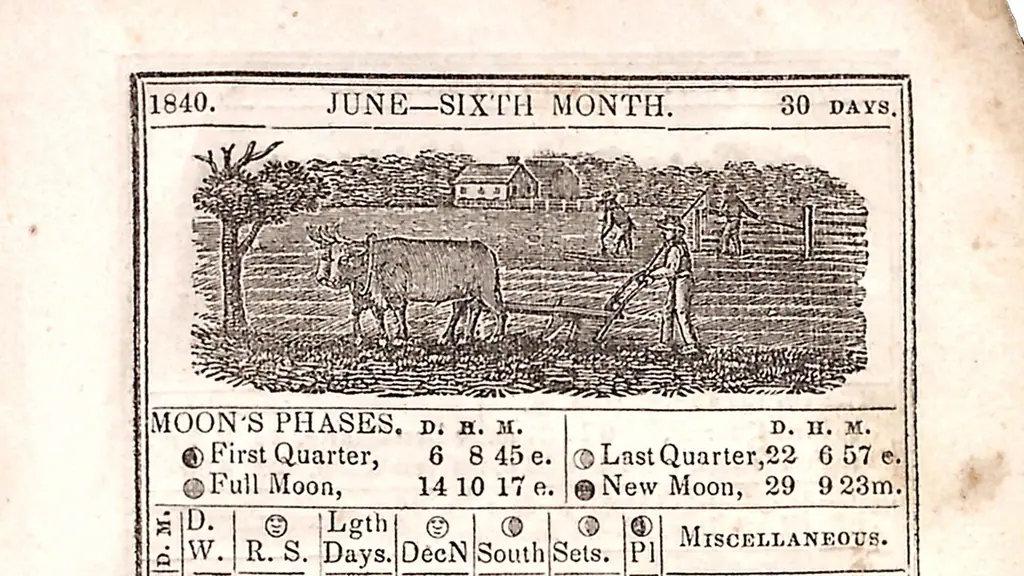
How many people live in Montana? What is the tallest mountain in Africa? Who won the Nobel Peace Prize in 1964? For most of the twentieth century, the answer to a question like that sat in a fat paperback almanac on the reference shelf, compiled once a year and trusted because a known publisher stood behind every table.
The print almanac still exists, but most quick facts are now looked up online, and that brings two problems: search results mix authoritative tables with copied, outdated or invented numbers, and some of the best-known free fact books have changed or disappeared. This page shows where today's equivalents live, which ones are official, and a short routine for checking any figure before you use it.
What an almanac actually does
An almanac is a compilation of facts and figures, organized for fast look-up and updated on a regular schedule. Good ones share three habits worth copying in any source you use:
- They cite where each figure comes from, usually a government statistical agency or an international body.
- They date their figures, so you know a population count is from a particular census or survey year.
- They update on a fixed cycle, which tells you how stale a number might be.
When you evaluate an online "facts" site, look for those same three things. A page that gives a number without a source or a year is a lead, not an answer.
Changes every researcher should know about
Two classic free fact books are no longer what they were.
The World Factbook has ended. For decades the CIA's World Factbook was the standard free reference for country profiles: geography, population, government, economy and more. On February 4, 2026, the CIA announced that the publication had been discontinued, and its pages now lead to that announcement. Earlier editions survive in web archives such as the Internet Archive's Wayback Machine, which is useful for historical comparisons, but those copies are frozen in time. Leaders, borders, populations and economic figures in an archived edition may no longer be accurate. For current country data, use the international sources in the next section and the U.S. State Department's country pages.
The Statistical Abstract moved behind a paywall. The Census Bureau published the Statistical Abstract of the United States, a single-volume digest of national statistics, from 1878 until the 2012 edition, after the agency ended its statistical compendia program in 2011. The full run from 1878 to 2012 remains free on census.gov, which makes it a superb source for historical figures. A commercial edition continues each year as the ProQuest Statistical Abstract of the United States; many public and academic libraries subscribe, so check your library's databases before buying. The Census Bureau's own advice for current numbers is to go to the agency cited in each table's source note.
Where to find quick facts now
| Question | Start here | Why |
|---|---|---|
| Population, income, housing for a U.S. state, county or town | Census QuickFacts | Official tables for all states and counties, and places of 5,000 people or more |
| Deeper U.S. demographic tables | data.census.gov | The full Census Bureau data platform |
| Jobs, wages, prices | Bureau of Labor Statistics | The official source for U.S. employment and inflation data |
| Births, deaths, life expectancy and other U.S. health statistics | CDC FastStats | One-page summaries with links to the underlying reports |
| Country indicators (population, GDP, health, education) | World Bank Open Data; UNdata | International datasets compiled from national statistical offices |
| Long-run trends with charts | Our World in Data | Free charts with sources and downloadable data |
| Historical U.S. figures | Statistical Abstract archive | Free scans of every edition from 1878 to 2012 |
| Sunrise, sunset and day length | NOAA Solar Calculator | Computed from astronomical formulas for any location |
Census QuickFacts is the closest thing to an official free almanac for the United States. Type a state, county, city or ZIP code and it returns a one-page table of population, age, race and ethnicity, housing, education, income and business figures, each labeled with its survey and year. Up to six places can be compared side by side. Areas below 5,000 people aren't shown; use data.census.gov for those.
Our World in Data, a free, nonprofit site produced by researchers at the University of Oxford together with the Global Change Data Lab, turns international statistics into charts on topics from literacy to energy use, with every chart linking to its sources. It is excellent for spotting trends; for a single official figure, follow its source link back to the original agency.
Commercial reference sites such as Infoplease combine almanac-style lists, an encyclopedia and an atlas in one place, supported by advertising. They are convenient for quick lists (state capitals, past award winners) but often summarize other sources; confirm anything important with the original.
A five-step routine for checking a fact
- Find two independent sources. If they agree, you're probably fine. If they disagree, keep going.
- Look for the original publisher of the figure: a statistical agency, a scientific body, an official record keeper.
- Check the date and definition. "Population of Chicago" can mean the city or the metropolitan area; GDP can be nominal or adjusted.
- Prefer the latest official release, but note when an older figure is the right one (for example, in a history paper).
- Cite the source and year, not the website where you happened to see the number.
Try it: Look up your county in Census QuickFacts and note its population and the survey year. Then find the same county in an encyclopedia article. Do the numbers match? If not, which year and definition does each use?
Tip: Award winners, election results and sports records are best checked at the organization that keeps the official record: the Nobel Prize's own site for laureates, a state election office for vote totals, the House of Representatives' history office for congressional facts.
Going further
For the bigger picture of fact-finding, start at the Reference Desk. When a quick fact turns into a research question, finding reliable statistics and the guide to using government open data explain how to work with full datasets. Dates and holidays have their own page, calendars and date tools, and anniversaries are covered in today in history. More hand-checked reference sources are in Reference and Research.
Recommended resources
- Census QuickFacts — One-page official profiles of U.S. states, counties and places of 5,000 or more, with sources and years. U.S. Census Bureau; free; no account.
- data.census.gov — The Census Bureau's full data platform for detailed tables and maps. U.S. Census Bureau; free; best for older students and researchers.
- Statistical Abstracts Series — Every edition of the Statistical Abstract of the United States from 1878 to 2012, free to download. U.S. Census Bureau; free; ideal for historical comparisons.
- ProQuest Statistical Abstract of the United States — The commercial continuation of the national data book. ProQuest; paid, usually available free through a library subscription.
- Bureau of Labor Statistics — Official U.S. data on employment, wages, prices and productivity. U.S. Department of Labor; free.
- CDC FastStats — Quick summaries of U.S. health statistics with links to full reports. National Center for Health Statistics; free.
- World Bank Open Data — Country indicators on population, economy, health and education, with downloads. World Bank; free; no account.
- UNdata — Statistical databases from across the United Nations system. United Nations Statistics Division; free.
- Our World in Data — Charts and datasets on long-run global trends, each linked to its sources. Global Change Data Lab and University of Oxford researchers; free, nonprofit.
- USAFacts — Government data on U.S. spending, population and outcomes presented in plain charts. USAFacts, a nonpartisan civic initiative; free.
- U.S. Department of State: Countries and Areas — Official pages on U.S. relations with each country. U.S. Department of State; free.
- NOAA Solar Calculator — Sunrise, sunset, solar noon and sun position for any place and date. NOAA Global Monitoring Laboratory; free.
- The Old Farmer's Almanac — A long-running almanac known for gardening calendars, moon phases and folklore; treat its long-range weather forecasts as tradition, not science. Yankee Publishing; free website with advertising.
- NobelPrize.org — The official record of every Nobel laureate, with biographies and prize motivations. Nobel Prize Outreach; free.
- History, Art & Archives, U.S. House of Representatives — Official facts and records on Congress, its members and its history. Office of the Historian and Office of Art and Archives; free.
Sources
- Spotlighting The World Factbook as We Bid a Fond Farewell, Central Intelligence Agency
- Statistical Abstracts Series, U.S. Census Bureau
- QuickFacts, U.S. Census Bureau
- About Our World in Data, Our World in Data
- Statistical Abstract of the United States (product page), ProQuest