Barack Obama's Inaugural Addresses (2009 and 2013)
Context, structure and themes of Barack Obama's 2009 and 2013 inaugural addresses, with tips for reading them closely and links to official texts and video.
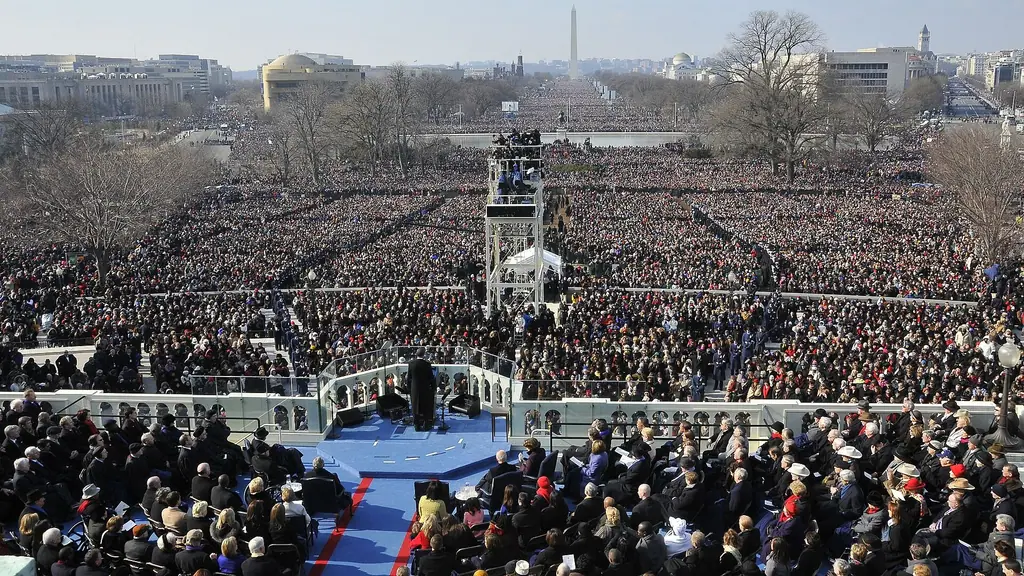
Suppose your civics class is comparing how presidents open a term in office, and you have been handed two speeches given four years apart by the same man. The first was delivered to one of the largest crowds ever gathered in Washington, in the middle of a financial crisis. The second came after a hard reelection, a month after a school shooting, and on the federal holiday honoring Martin Luther King Jr.
Barack Obama's two inaugural addresses reward that kind of side-by-side reading. This page sets out what happened on each day, how each speech is built, and which official and academic sites hold reliable texts and video, so you can quote accurately and cite a source your teacher will accept.
January 20, 2009: the first inauguration
Obama took the oath of office on the West Front of the U.S. Capitol on January 20, 2009, as the 44th president and the first African American to hold the office. Chief Justice John Roberts administered the oath. Obama placed his hand on the Bible Abraham Lincoln had used at his own first inauguration in 1861.
The crowd was enormous. A later estimate by the District of Columbia put attendance at about 1.8 million people, and that figure is widely cited as the largest inaugural crowd on record. Treat it as what it is, though: an estimate. Nobody counts heads on the National Mall, and crowd figures for any event depend on who is doing the estimating and how.
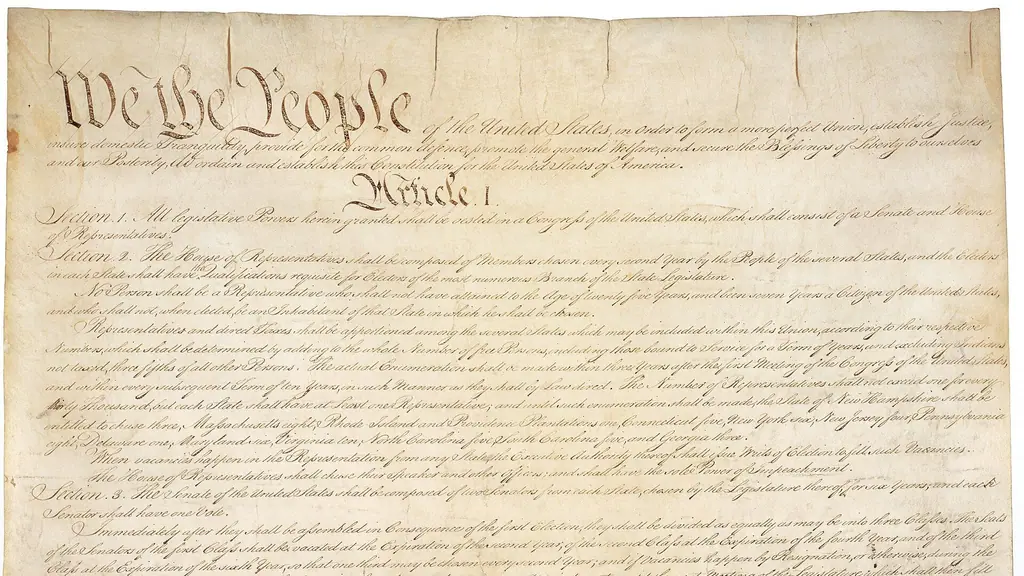
One small piece of history happened the next day. During the ceremony, the chief justice put the word "faithfully" in the wrong place, and Obama repeated the wording as he heard it. On the evening of January 21, Roberts administered the oath again in the White House Map Room. The White House counsel described the repeat as a precaution, since the exact words of the oath are written into the Constitution (Article II, Section 1).
What the 2009 address argues
The speech runs to roughly 2,400 words. It opens by naming the crises of the moment: war, a damaged economy, lost jobs and homes, costly health care and failing schools. Its central move is to answer those crises with an appeal to civic duty rather than a list of programs. Obama called for "a new era of responsibility," asking Americans to accept duties to themselves, the nation and the world, and he described the country's diverse heritage as a source of strength rather than weakness. The closing returns to the founding generation: patriots huddled by an icy river in the winter of 1776, hearing words George Washington ordered read to them. Hard times become something earlier Americans endured and survived.
January 21, 2013: the second inauguration
The Constitution sets January 20 as the day a presidential term begins. In 2013 that date fell on a Sunday, so Obama took the oath privately at the White House on January 20 and repeated it publicly at the Capitol on Monday, January 21, which was also Martin Luther King Jr. Day. Roberts again administered the oath. The White House, citing an inaugural official, estimated the public crowd at about one million, smaller than 2009 but still very large.
The second address is shorter and more pointed. It is organized around the Declaration of Independence's claim that all men are created equal, and it repeats the Constitution's opening words, We, the people, as a refrain to introduce one area of unfinished work after another: the middle class, retirement security, climate change, voting access, immigration, equal pay for women, equal treatment of gay Americans, and the safety of children (a reference to Newtown, Connecticut). Its most quoted sentence links three landmarks of American rights movements, describing the founding creed as having guided earlier generations "through Seneca Falls, and Selma, and Stonewall." Women's suffrage, civil rights and gay rights were placed side by side in a presidential inaugural address.
Comparing the two speeches
| 2009 | 2013 | |
|---|---|---|
| Setting | Financial crisis, two wars, a historic first | After reelection; a month after the Sandy Hook shooting |
| Organizing idea | Responsibility and renewal | Equality as unfinished work |
| Key device | Appeal to the endurance of earlier generations | A repeated refrain from the Constitution's first words |
| Tone | Sober, steadying | Argumentative, agenda-setting |
| Approximate length | About 2,400 words | About 2,100 words |
Notice how the first speech asks citizens to do something (carry burdens, accept duties) while the second tells them what the government and the country should do next. Ask whether that shift reflects the moment, the man four years into the job, or both.
Reading an inaugural address like a historian
Inaugural speeches are polished, public and deliberately broad, which makes them easy to summarize badly. A slower method works better.
- Get an authoritative text. Use the archived White House transcript, the American Presidency Project, the Miller Center or the government's official compilation of presidential documents (all listed below). Avoid unattributed copies on quote sites, which often drop or alter lines.
- Watch or listen once. Delivery changes meaning. Applause lines, pauses and departures from the prepared text show what the speaker stressed.
- Map the structure. Mark where the speech diagnoses a problem, appeals to history, proposes action and closes. Most inaugurals follow some version of that arc.
- Track the borrowed words. Both speeches quote or echo the Declaration of Independence, the Constitution's Preamble and earlier presidents. Find each echo and ask why it is there.
- Check the context. Newspapers from the week, the Library of Congress inauguration guide and the presidential library's records tell you what listeners already had on their minds.
- Quote briefly and cite. Short quotations with a clear citation beat long block quotes. Record the source, date and URL as you go.
Try it: Read the final three paragraphs of each address. Write one sentence on what each ending asks the listener to feel or do, then compare them with the closing of Franklin D. Roosevelt's first inaugural, which also spoke to a nation in economic crisis.
For the wider tradition, our guide to presidential inaugural addresses explains where to find every president's text, and the pages on Franklin D. Roosevelt's four inaugural addresses and Jimmy Carter's 1977 address make useful comparisons. If you are building a lesson, teaching with primary sources covers analysis tools from the Library of Congress and National Archives.
Tip: When citing a speech, name the speaker, the title ("Inaugural Address"), the date it was delivered and the site where you read it. If you watched video, cite the video separately, because transcripts and delivered versions can differ slightly.
Recommended resources
- President Barack Obama's Inaugural Address (2009) — The archived White House posting of the first address, with the full text. A dependable text to cite (Obama White House archive, preserved by the National Archives; free).
- Inaugural Address by President Barack Obama (2013) — The official transcript of the second address as released by the press office (Obama White House archive; free).
- Administration of Barack H. Obama, 2009: Inaugural Address — The text as printed in the Daily Compilation of Presidential Documents, the government's official record of presidential statements (GovInfo, U.S. Government Publishing Office; free).
- Inaugural Address, January 20, 2009 — The American Presidency Project's edition, with publication details; use the site's search to find the 2013 address and other presidents' speeches (University of California, Santa Barbara; free).
- January 20, 2009: Inaugural Address — Transcript and video of the first address in a searchable speech archive (Miller Center, University of Virginia; free).
- January 21, 2013: Second Inaugural Address — Transcript, summary and video of the second address (Miller Center, University of Virginia; free).
- U.S. Presidential Inaugurations: A Resource Guide — A research guide arranged by period, pointing to addresses, photographs and other primary sources for every inauguration (Library of Congress; free).
- The Inaugural Addresses of the Presidents — A long-standing collection of inaugural texts useful for comparing Obama's speeches with earlier ones (Avalon Project, Yale Law School; free).
- Inaugural Address (2009) at Teaching American History — The 2009 text in a document library built for classroom use, alongside related founding documents (Teaching American History, Ashland University; free).
- Barack Obama Presidential Library: Digital Research Room — Entry point for the administration's records, photographs and archived websites held by the National Archives (Barack Obama Presidential Library; free).
- Presidential Libraries and Museums — Overview of the federal presidential library system, useful for finding records from other administrations to compare (National Archives; free).
Sources
- President Barack Obama's Inaugural Address, The Obama White House (archived by the National Archives)
- Inaugural Address by President Barack Obama (January 21, 2013), The Obama White House (archived by the National Archives)
- January 21, 2013: Second Inaugural Address, Miller Center, University of Virginia
- Obama Retakes Oath Of Office, NPR
- How many attended Obama's second inauguration?, CBS News
- U.S. Presidential Inaugurations: A Resource Guide, Library of Congress