Online Museums and Virtual Exhibitions Worth Exploring
Major museum collections and virtual tours online, from the Smithsonian, The Met and the British Museum, with image reuse rules and classroom ideas.
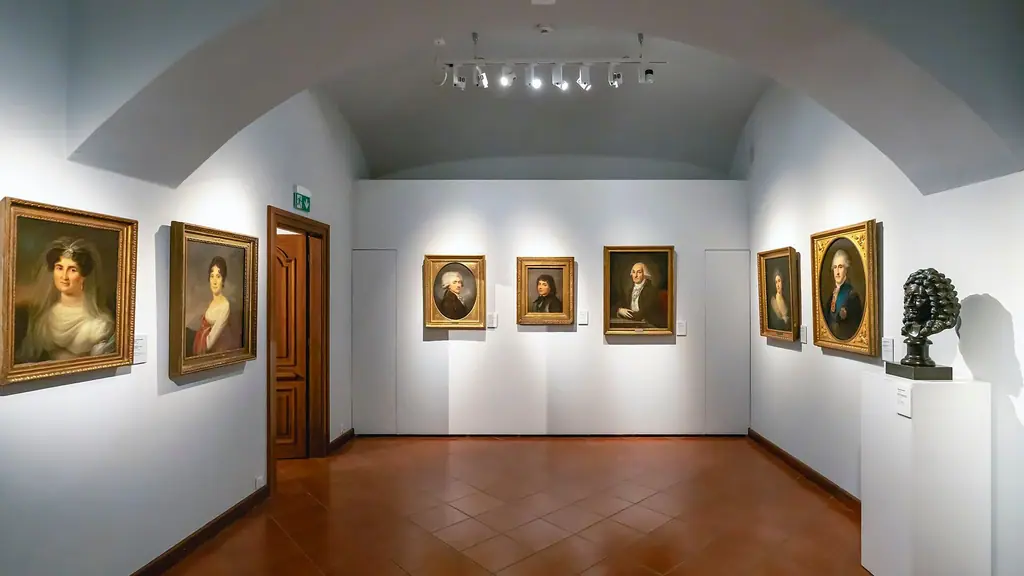
A sixth-grade class studying ancient Egypt is unlikely to visit London, New York and Cairo this year. Online, the same class can zoom in on the brushwork of a painted coffin until individual cracks are visible, compare objects held by museums on three continents, and walk a virtual gallery in Street View before lunch. For a student writing about the Renaissance, or a family that wants something better than another cartoon on a rainy afternoon, the opportunity is similar.
Museums have spent years putting their collections online, and several of the largest now let anyone download high-resolution images of public-domain works for free. The quality varies, though, and so do the rules for reusing what you find. This guide points you to collections worth exploring, explains the difference between "free to view" and "free to use," and offers classroom activities that turn browsing into real looking and thinking.
Three kinds of online museum experience
It helps to know what you are looking for, because each type serves a different purpose.
| Type | What it is | Best for |
|---|---|---|
| Collection database | A searchable catalog of objects with photographs, dates, materials and museum numbers | Research, close looking, finding images for projects |
| Virtual tour | Panoramic photography of galleries or sites you can "walk" through | Orientation, sense of scale, virtual field trips |
| Online exhibition or story | A curated sequence of objects with text, often on a theme | Introductions to a topic, reading practice, discussion starters |
Many museums offer all three. Collection databases are the deepest and the least polished; online exhibitions are the most engaging but cover less.
Collections worth knowing
The Metropolitan Museum of Art
The Met introduced its Open Access Initiative in February 2017. Images of public-domain artworks and basic data on all accessioned works are available for unrestricted use under Creative Commons Zero (CC0), and the museum now lists more than 492,000 Open Access images in its online collection. Open Access works carry an "OA" icon at the lower left of the image. For older students who code, The Met offers its data through an API and as a downloadable CSV file, and it has published more than 100 3D models of objects you can rotate and zoom.
Smithsonian Open Access
On February 25, 2020, the Smithsonian released more than 2.8 million 2-D and 3-D images under CC0, along with related metadata and research data. That release is a subset of a far larger holding: some 155 million objects across 19 museums, nine research centers, libraries, archives and the National Zoo. Digitization is ongoing, and new and updated files are added regularly. The collection ranges across art, natural history, air and space, and American history, which makes it useful well beyond art class.
The British Museum
The British Museum's Collection online gives access to almost five million objects in more than two million records, with high-definition images you can enlarge to examine detail, plus curated themes such as Egypt, China, the Americas and "Death and memory." The museum publishes much of its website content under a Creative Commons Attribution-NonCommercial-ShareAlike 4.0 license, marked with the Creative Commons logo, and asks for the credit line "© The Trustees of the British Museum." It names one-off classroom use and educational use within a school among the non-commercial uses it accepts. Records also carry a content warning: some descriptions, written over more than 250 years, include language or attitudes the museum would no longer consider appropriate, which is itself a useful discussion point with older students.
Google Arts & Culture
Google Arts & Culture works with museums and heritage sites around the world to present images, stories and virtual tours. Its Street View collection lets you step inside institutions such as the Rijksmuseum, the British Museum, the Uffizi Galleries and the Musée d'Orsay, and tour landmarks such as the Taj Mahal, the Palace of Versailles and the Great Pyramid of Giza. It is a platform rather than a museum, so check the partner institution named on each item for details and reuse terms.
Europeana and the Digital Public Library of America
These two aggregators search across many institutions at once. Europeana brings together digitized artworks, books, photographs and objects from thousands of European museums, libraries and archives, and each item shows its rights statement. The Digital Public Library of America does the same for American collections and adds primary source sets with teaching guides.
The Met also names peer institutions with open access programs, including the Art Institute of Chicago, the Cleveland Museum of Art, the National Gallery of Art and the Smithsonian's Cooper Hewitt design museum, so there is plenty more to explore once you know what to look for.
Free to view is not always free to use
Before downloading an image for a project, presentation or website, check its terms. The main categories you will meet:
| Label | What it means | Typical example |
|---|---|---|
| CC0 / public domain | No restrictions; credit is courteous but not required | Met and Smithsonian Open Access images |
| CC BY-NC-SA | Reuse with credit, for non-commercial purposes, sharing adaptations under the same license | British Museum content marked with the license |
| All rights reserved or restricted | Viewing only; reuse needs permission or a legal exception such as fair use | Many modern and contemporary works, and items with third-party rights |
When in doubt, credit the museum and the object (title, maker if known, date, museum and object number) and link to the record. Our guide to copyright, fair use and Creative Commons for students explains these licenses in more depth, and Public Domain Books and Archives covers finding other freely reusable material.
Tip: Search collection databases by museum number when you have one; it takes you straight to the right record. Otherwise, use the "open access" or "has image" filters first, then narrow by period, place or material. Try more than one name for a place or culture, since older records may use historical terms.
Classroom ideas
Each activity works in person or remotely and can be scaled from upper elementary to high school.
- Object detective. Show a close-up of one object without its label. Students list what they notice, what they think it was used for and what makes them say so, then read the full museum record and compare. This mirrors the "observe, reflect, question" approach widely used for teaching with primary sources; see our guide to teaching with primary sources.
- Curate a mini-exhibition. In small groups, students choose five open access objects on a theme (water, power, childhood, travel), write a 50-word label for each, and arrange them in a slide deck or printed gallery walk. Require full credit lines.
- Across the collections. Find related objects in two museums, such as pottery from the same period held in London and New York. How do the two records describe them differently? What does each museum emphasize?
- Virtual field trip with a mission. Before a Street View tour, give each student one question to answer: find the oldest object you can, find something made of gold, find a room that feels crowded or empty and say why. Debrief afterward.
- Read the record. Teach students to read a catalog entry: date and how certain it is, materials, dimensions, acquisition information. Ask how the object came to the museum and what questions that raises.
Try it: Search The Met's online collection for a subject you are studying, filter for Open Access images, and pick one object. Write down its title, date, culture or maker, and object number, then describe three details you can see only when you zoom in.
A note for families and younger children
Collection databases are not designed for young children and can contain images of conflict, death and the human body, as any large museum does. Explore together, use curated online exhibitions or children's pages where available, and preview a virtual tour before handing it over. Short sessions with a clear goal ("find three animals in the Egyptian galleries") work better than open browsing.
Before you start
Checklist: Decide whether you need a database, a tour or an exhibition. Use open access filters when you plan to reuse images. Record the museum, object title, date and object number for every image. Read each item's rights statement. Preview content for younger children. Credit sources in presentations and projects.
For more historical material online, from archives to digitized newspapers, see Researching History Online. Teachers can find more hand-checked collections on the For teachers page.
Curated resources
Checked by hand from the Educational Resources shelf of the library (museums). Each entry says what it costs and when we last verified it.
Exploratorium
Exploratorium (nonprofit)exploratorium.edu
A San Francisco science museum known for hands-on learning, with online activities, videos and science snacks that use everyday materials. Teachers and families can find inquiry-based experiments for exploring light, sound, motion and more.
Using it: Free online resources.
Verified
Smithsonian Open Access
Smithsonian Institutionsi.edu
Millions of images and data records from Smithsonian museums and research centers released for free reuse. Search across art, natural history, air and space, and American history collections, then download high-resolution images for school projects, publications or presentations without permission requests.
Using it: Free. Open Access items are released under CC0 and may be reused without permission; other items carry restrictions.
Verified
The Met Collection
The Metropolitan Museum of Artmetmuseum.org
A searchable online collection of hundreds of thousands of artworks spanning five thousand years. Many public domain images are released for unrestricted reuse, and object pages include dates, materials and context, making it a dependable reference for art history and world cultures.
Using it: Free. Works marked Open Access can be downloaded and reused freely; other images have restrictions.
Verified
Sources
- Open Access at The Met, The Metropolitan Museum of Art
- Smithsonian Open Access (Registry of Open Data on AWS), Smithsonian Institution, via Amazon Web Services Open Data
- Explore the collection, The British Museum
- Copyright and permissions, The British Museum
- Street View, Google Arts & Culture