The Laws of Lipit-Ishtar: An Early Sumerian Law Code
The Sumerian law code of King Lipit-Ishtar of Isin (c. 1930 BCE): what survives, how it was rediscovered, and how it compares with Ur-Nammu and Hammurabi.
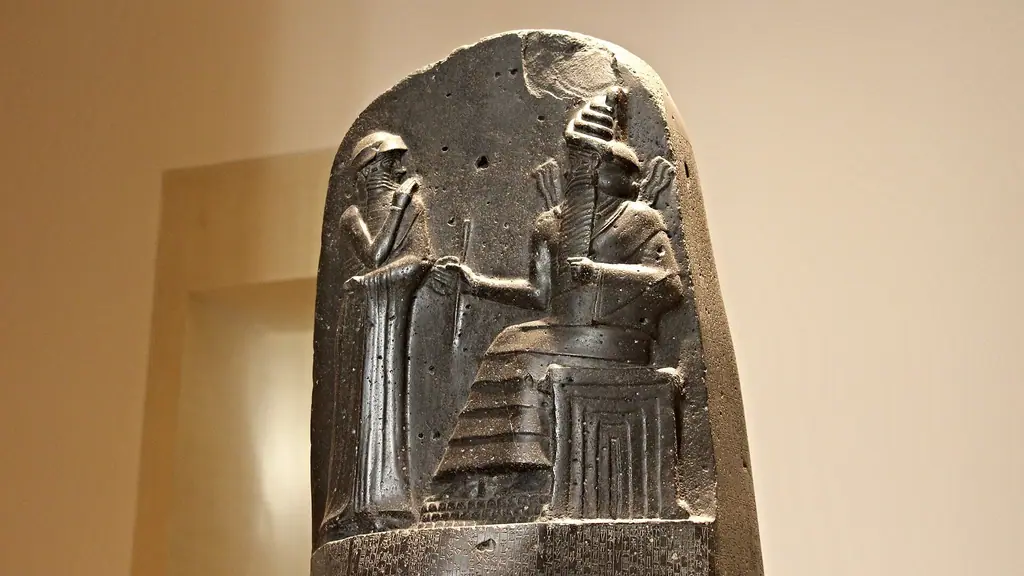
Ask most people to name an ancient law code and they say Hammurabi. Yet more than a century before Hammurabi's stele was carved, a king in the Sumerian city of Isin issued his own collection of laws, framed by a boastful prologue and a cursing epilogue, and set up on a stone monument in the holy city of Nippur. Only fragments of it survive, which is why it is far less famous. For anyone curious about where Hammurabi's famous code came from, it is essential reading.
This page explains who Lipit-Ishtar was, what his laws covered, how the text was pieced together in the twentieth century, and how it compares with the earlier Laws of Ur-Nammu and the later Code of Hammurabi. It also lists where students and teachers can find translations and images of the original tablets.
Who was Lipit-Ishtar?
Lipit-Ishtar was the fifth king of the First Dynasty of Isin, a city in southern Mesopotamia in what is now Iraq. On the chronology most historians use, he reigned from about 1934 to 1924 BCE. His dynasty arose after the collapse of the Third Dynasty of Ur, the last great Sumerian kingdom, and the kings of Isin presented themselves as Ur's heirs, ruling over "Sumer and Akkad" and caring for the old religious centers.
Lipit-Ishtar's reputation as a just king survives beyond his laws. Sumerian scribes copied praise poems and hymns in his name for generations, and several of these poems can be read in English translation in the Electronic Text Corpus of Sumerian Literature (ETCSL), a University of Oxford project.
What the code contains
Like the Laws of Ur-Nammu before it and Hammurabi's code after it, the collection has three parts.
- Prologue. The gods An and Enlil call Lipit-Ishtar to the kingship to establish justice in the land and end crime and violence. The king lists his good works, including a claim to have freed the people of Nippur, Ur and Isin from forced servitude.
- Laws. Each provision begins with the Sumerian word for "if," followed by a case and its consequence. The surviving laws deal with hiring boats, farmland and orchards, slaves and runaways, false accusation, inheritance and family property, marriage and children, and rented oxen.
- Epilogue. The king describes setting up the stele, blesses anyone who honors it and curses anyone who damages or alters it.
One feature stands out for modern readers: none of the surviving provisions prescribes the death penalty. Penalties are mostly payments or fixed compensation. A false accuser, for example, bears the penalty of the offense he alleged, a principle Hammurabi's code would also adopt.
Tip: When reading any translation, look for brackets and ellipses. They mark places where the clay is broken and the translator is restoring or omitting text. In a code this fragmentary, gaps are everywhere, and the numbering of laws varies from one edition to the next.
How the code was rediscovered
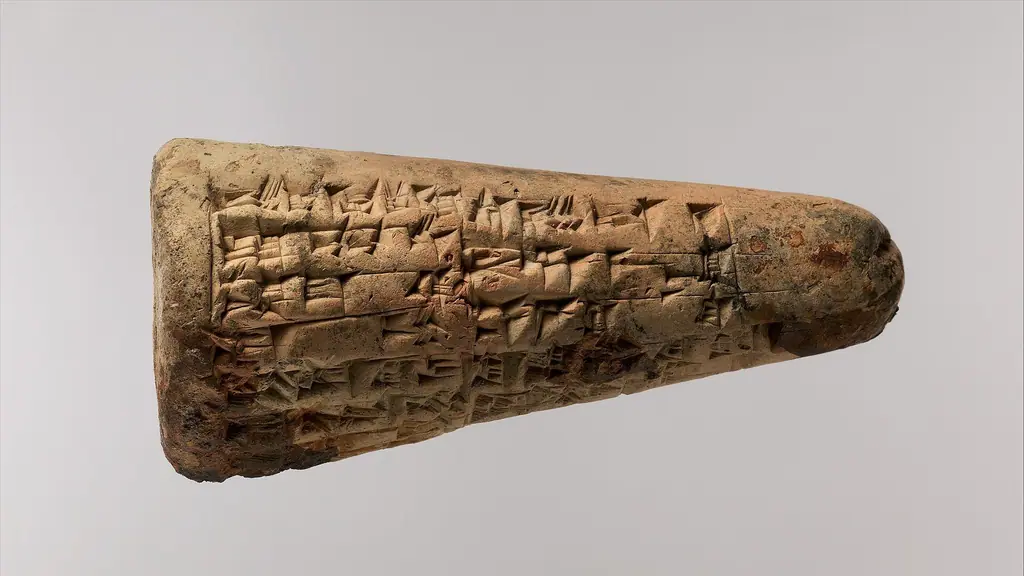
The original stone stele has not survived intact; only small pieces are known. The text is known mainly from clay tablets that scribes copied in school, almost all of them excavated at Nippur by University of Pennsylvania expeditions in the late nineteenth century. For decades the fragments remained unidentified.
In the late 1940s, Francis R. Steele, working with tablets in the University Museum in Philadelphia (today's Penn Museum), identified fragments of a Sumerian law collection bearing Lipit-Ishtar's name, published his edition in the American Journal of Archaeology in 1948 and reprinted it as a monograph. Penn Libraries has digitized that monograph, so you can see the original tablet drawings and Steele's translation free online. His reconstruction preserved thirty-seven laws in whole or in part. Later work has added more, and scholars now estimate that roughly half of the original code survives, with a total length perhaps comparable to Hammurabi's.
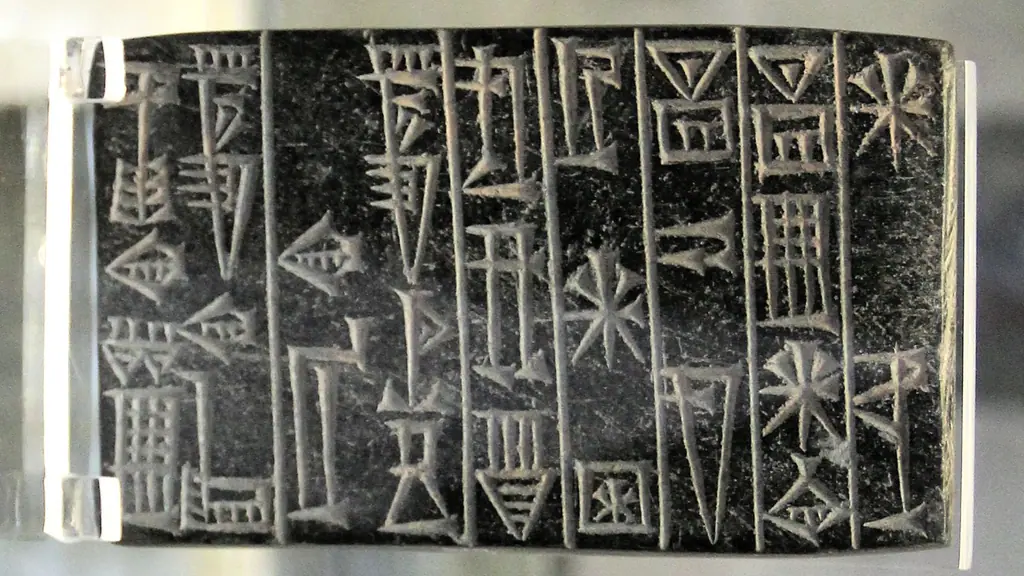
Not every copy came from Nippur. A tablet in the Louvre, cataloged as AO 5473, preserves part of the prologue; its findspot is unknown. The Cuneiform Digital Library Initiative (CDLI) brings the scattered witnesses together in a single composite record with a transliteration of the Sumerian.
Ur-Nammu, Lipit-Ishtar and Hammurabi compared
| Laws of Ur-Nammu | Laws of Lipit-Ishtar | Code of Hammurabi | |
|---|---|---|---|
| Ruler and city | Ur-Nammu of Ur | Lipit-Ishtar of Isin | Hammurabi of Babylon |
| Approximate date | c. 2100 BCE | c. 1930 BCE | c. 1750s BCE |
| Language | Sumerian | Sumerian | Akkadian |
| Structure | Prologue, laws, epilogue | Prologue, laws, epilogue | Prologue, laws, epilogue |
| How it survives | Fragmentary later tablet copies | Fragmentary tablets, mostly from Nippur | A nearly complete stele plus tablet copies |
| Typical penalties | Fines for many injuries; death for some crimes | Payments and compensation; no surviving death penalties | Many death and bodily penalties, scaled by social rank |
The continuities are striking. Both Lipit-Ishtar and Hammurabi set compensation for injuring a rented ox as a fraction of the animal's value, and in both codes damaging the ox's eye costs half its price. Scribes trained on Sumerian legal texts carried their forms and formulas into the Babylonian era, which helps explain why Hammurabi's code looks so polished: it stands at the end of a long tradition, not the beginning. Our page on the Code of Hammurabi covers that later code in detail.
Try it: Read the rented-ox provisions in a translation of the Laws of Lipit-Ishtar, then laws 247 and 248 of Hammurabi's code. List what is the same and what differs. What does the similarity suggest about how legal knowledge passed from one kingdom to the next?
Finding a translation
There is no modern critical edition of the full code. The most widely used English translation is Martha T. Roth's, in her 1995 volume Law Collections from Mesopotamia and Asia Minor, which also translates Ur-Nammu, Hammurabi and other collections and is the best single book for comparing them; ask your library for it. Claus Wilcke published a German translation in 2014. For free access, Steele's 1948 edition and the CDLI transliteration are the primary online sources, and the ETCSL catalog lists the laws among its Sumerian compositions, although it publishes translations of several of Lipit-Ishtar's praise poems rather than of the laws themselves.
For a survey of other early legal texts, see ancient law codes from Ur-Nammu to Justinian. Students new to working with ancient texts may find primary, secondary and tertiary sources and researching history online helpful.
Recommended resources
- CDLI: Laws of Lipit-Ishtar composite — A composite record that brings together the tablet witnesses, with transliteration and links to individual tablets (Cuneiform Digital Library Initiative; free).
- CDLI: Louvre tablet AO 5473 — The record of a tablet preserving part of the prologue and early laws, with transliteration and bibliography (Cuneiform Digital Library Initiative; free).
- Penn Libraries: The Code of Lipit-Ishtar (Steele, 1948) — The first full edition, digitized with plates of the tablets, downloadable as a PDF (University of Pennsylvania; free).
- ETCSL: Lipit-Eštar praise poem A — An English translation of a Sumerian praise poem for the king, showing how royal propaganda echoed the code's prologue (University of Oxford; free).
- ETCSL catalog — Lists Sumerian compositions by genre, including the law collections and all the Lipit-Ishtar poems and letters (University of Oxford; free).
- The Met: The Isin-Larsa and Old Babylonian Periods — A museum essay on the political world of the Isin kings and their successors (Metropolitan Museum of Art; free).
- Oracc: Open Richly Annotated Cuneiform Corpus — A collaborative platform for annotated cuneiform text editions, for advanced students exploring Sumerian and Akkadian sources (Oracc project; free).
- The Avalon Project: Code of Hammurabi — A free translation of Hammurabi's laws for side-by-side comparison (Yale Law School; free).
- Wikipedia: Code of Lipit-Ishtar — A short overview with references to the Roth and Wilcke translations; use it to orient yourself, then cite the scholarly sources (Wikimedia community; free).
- Wikipedia: Code of Ur-Nammu — Background on the oldest known law code, its tablets and its rediscovery (Wikimedia community; free).
Sources
- RIME 4.01.05.add10 (Laws of Lipit-Ishtar) composite (P464355), Cuneiform Digital Library Initiative
- RIME 4.01.05.add10, ex. 01 (P345378), Louvre AO 5473, Cuneiform Digital Library Initiative
- The Code of Lipit-Ishtar (Francis R. Steele, 1948), Penn Libraries, University of Pennsylvania
- ETCSL catalogue, Electronic Text Corpus of Sumerian Literature, University of Oxford
- Code of Lipit-Ishtar, Wikipedia