The Code of Hammurabi: Text, Translations and Teaching Sources
What the Code of Hammurabi says, how its stele was found at Susa in 1901, which free translations to use, and how to teach it beyond 'an eye for an eye.'
Most students meet the Code of Hammurabi as a single slogan: "an eye for an eye." Suppose your class is asked to decide whether the code was fair. If all you have is the slogan, the answer seems easy. Read a few dozen of the laws themselves and the question gets far more interesting, because the punishment for the same injury depended on who was hurt and who did the hurting.
This page explains what the code is, how its most famous copy was found, which free translations you can read today and how they differ, and how teachers can use the text to build historical thinking rather than repeat a cliché.
What the code is
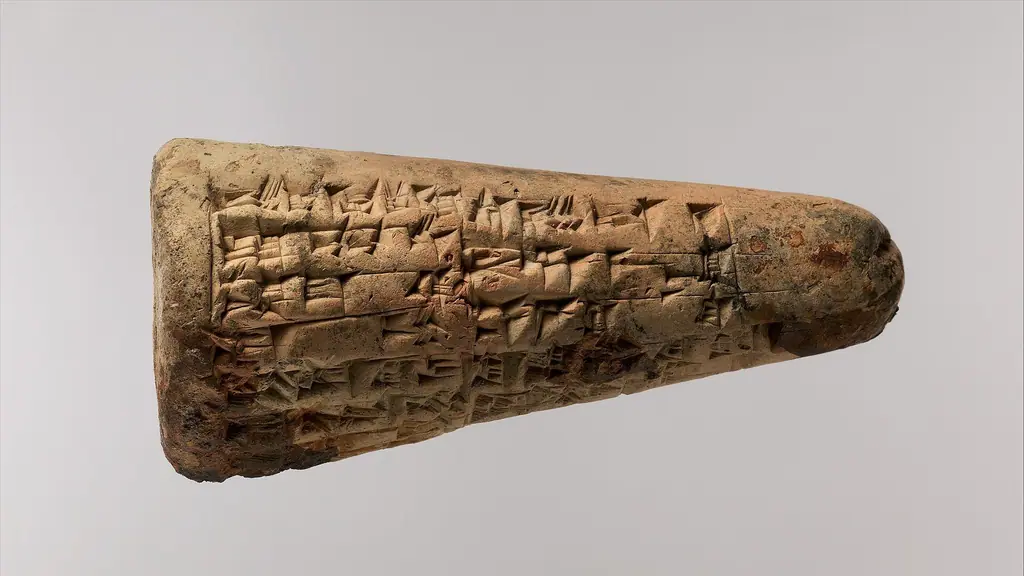
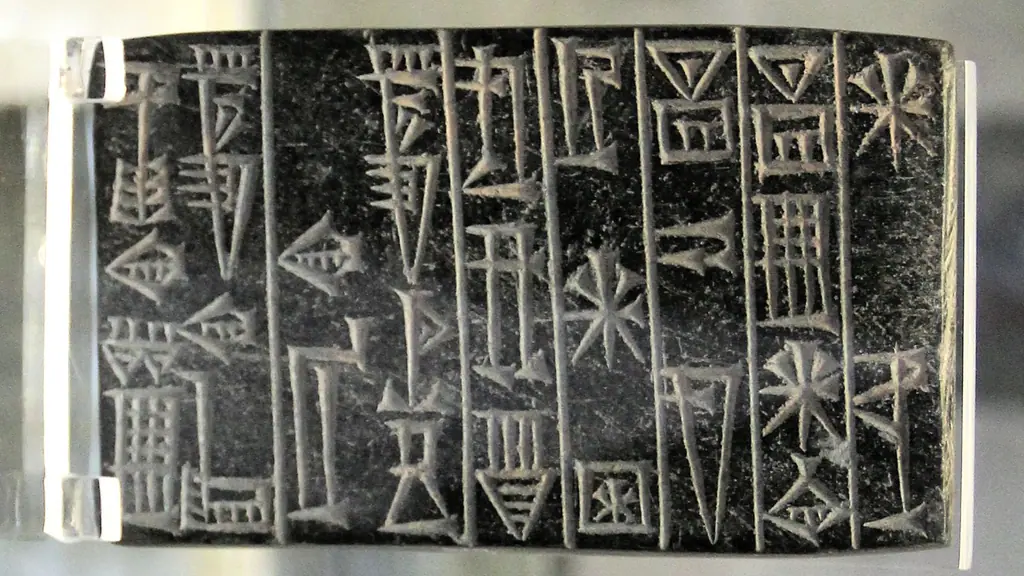
Hammurabi ruled Babylon in southern Mesopotamia, in present-day Iraq, from about 1792 to 1750 BCE (the dates the Louvre uses). Over his reign he turned Babylon from a minor city into the center of a large kingdom. Late in that reign he had a collection of laws inscribed on stone monuments, written in the Akkadian language in cuneiform script.
The text has three parts:
- A prologue, in which Hammurabi lists the gods who chose him and the cities he cared for, presenting himself as a king appointed to bring justice so that the strong would not oppress the weak.
- The laws, about 282 of them as numbered by modern editors, each in the form "if someone does this, then this follows." They cover false accusation, theft, property, trade and debt, farming and irrigation, marriage, divorce and inheritance, adoption, assault, medical and building work, wages and the hire of animals.
- An epilogue, which praises the king's justice and calls down curses on any future ruler who alters or destroys the monument.
Hammurabi's laws were not the first. Earlier Sumerian collections such as the Laws of Ur-Nammu and the Laws of Lipit-Ishtar follow a similar pattern of prologue, laws and epilogue. What makes Hammurabi's code famous is its length and the survival of an almost complete monument.
The stele: how it was found
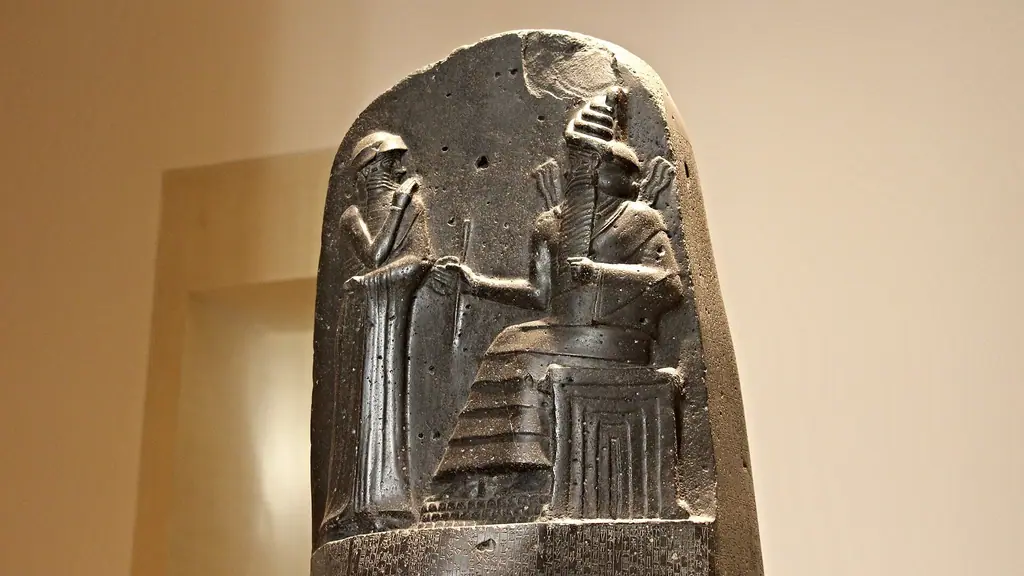
The best-known copy is a polished basalt stele about 2.25 meters (just over 7 feet) tall, now in the Louvre in Paris. At the top, a carved relief shows Hammurabi standing before Shamash, the sun god and god of justice. Below, the laws run in columns around the stone.
The stele was not found in Babylon. A French archaeological expedition led by Jacques de Morgan uncovered it in 1901 and 1902 at Susa, in what is now southwestern Iran. Scholars believe it was carried there as war booty, probably by an Elamite king in the twelfth century BCE, centuries after Hammurabi's death. Several columns on the front were deliberately erased in antiquity, perhaps to make room for an inscription that was never carved. Many clay-tablet copies of the laws, some made long after Hammurabi's time, have since filled in much of the missing text, a sign that scribes kept copying the code as a model of legal writing for generations.
Reading it: free translations compared
The code has been translated many times. Older translations are free online; newer scholarly ones are usually in print.
| Translation | Where to read it | Things to know |
|---|---|---|
| L. W. King (1910) | Avalon Project at Yale; Fordham's Ancient History Sourcebook; World History Commons | The most widely reproduced free English text. King's numbering skips laws 66 to 99, the erased section, and his wording reflects early twentieth-century scholarship. |
| Robert Francis Harper (1904) | Internet Archive scan; Wikisource transcription | Includes the cuneiform text, transliteration and a glossary. Its title dates Hammurabi to "about 2250 B.C.," an estimate later revised by centuries. |
| Modern scholarly translations | University and public libraries | Recent translations use current readings of the Akkadian and fill gaps from tablet copies. Ask a librarian for a recent edition if you need precise wording. |
Comparing two versions of the same law is a useful exercise in itself. King renders one social class as "freed man"; many modern translators use "commoner" for the same Akkadian term. The difference matters when you are deciding what the laws say about society.
Tip: Fordham's Sourcebook page also reproduces commentary from 1910 and 1915. Read it as a historical document about how early twentieth-century writers saw Babylon, not as current scholarship.
Teaching beyond "an eye for an eye"
In King's translation, law 196 reads: "If a man put out the eye of another man, his eye shall be put out." The next laws change the picture. If the victim was a member of a lower class, the penalty was a payment in silver or gold; if the victim was someone's slave, the offender paid part of the slave's value to the owner. The famous principle of retaliation applied among social equals, and the code as a whole sorts people into ranks with different protections.
A few other features that make good discussion material:
- Professional liability. A builder whose house collapses and kills the owner faces death; a surgeon's fees and penalties depend on the patient's status.
- Economic detail. Many laws fix wages, prices and rental rates, including compensation for injuring a hired ox, valued as a fraction of the animal's worth.
- Procedure and evidence. The code opens with laws against false accusation and requires witnesses and written contracts in many transactions.
- Real practice versus ideal. Historians debate how far courts actually applied these laws. Surviving court records seldom cite the code, which suggests it may have been as much a royal statement of justice as a working rulebook.
Try it: Read laws 195 to 214 in two translations. Make a table with three columns: the offense, the victim's status, and the penalty. Then write two sentences answering: was the code "fair," and fair by whose standards?
The Digital Inquiry Group's free lesson uses the code to examine religious, economic and social life in Babylonia, and it pairs well with the Louvre's object record and an image of the stele. For a wider survey of early legal texts, see ancient law codes from Ur-Nammu to Justinian and our guide to teaching with primary sources. The primary, secondary and tertiary sources guide explains how a translation fits into that scheme.
Recommended resources
- Louvre: Code of Hammurabi (SB 8) — The museum's catalog record for the stele, with dimensions, material, findspot and high-resolution images (Musée du Louvre; free).
- The Avalon Project: The Code of Hammurabi — L. W. King's 1910 translation with a law-by-law index, easy to print and cite (Lillian Goldman Law Library, Yale Law School; free).
- Fordham Ancient History Sourcebook: Code of Hammurabi — King's translation alongside two early twentieth-century commentaries, useful for discussing how interpretations change (Fordham University; free).
- World History Commons: The Code of Hammurabi — The code as a classroom primary source with an image and citation, linked to a short teaching module (Roy Rosenzweig Center for History and New Media and partners; free).
- Digital Inquiry Group: Hammurabi's Code — A document-based lesson with teacher and student materials and slides (Digital Inquiry Group; free; account required to download).
- The Met: The Isin-Larsa and Old Babylonian Periods — A museum essay placing Hammurabi's reign and the stele in their historical setting (Metropolitan Museum of Art; free).
- Harper's 1904 edition on the Internet Archive — A scanned early edition with cuneiform text, transliteration, translation and glossary (Internet Archive; free).
- Wikisource: The Code of Hammurabi (Harper translation) — A searchable transcription of Harper's public-domain translation (Wikimedia volunteers; free).
- Institute for the Study of Ancient Cultures: Publications — The University of Chicago institute's publications, many free as PDFs, including studies of Mesopotamian history and law for advanced students (University of Chicago; many titles free).
Sources
- Code de Hammurabi (SB 8), Musée du Louvre
- The Code of Hammurabi, translated by L. W. King, The Avalon Project, Yale Law School
- Ancient History Sourcebook: Code of Hammurabi, c. 1780 BCE, Internet History Sourcebooks Project, Fordham University
- Hammurabi's Code (lesson plan), Digital Inquiry Group
- The Code of Hammurabi, King of Babylon (Harper, 1904), Internet Archive (University of Toronto copy)