Dinosaurs for Students: Museum and University Resources
Trustworthy dinosaur science for students and families: what counts as a dinosaur, how paleontologists know what they know, myths and museum resources.
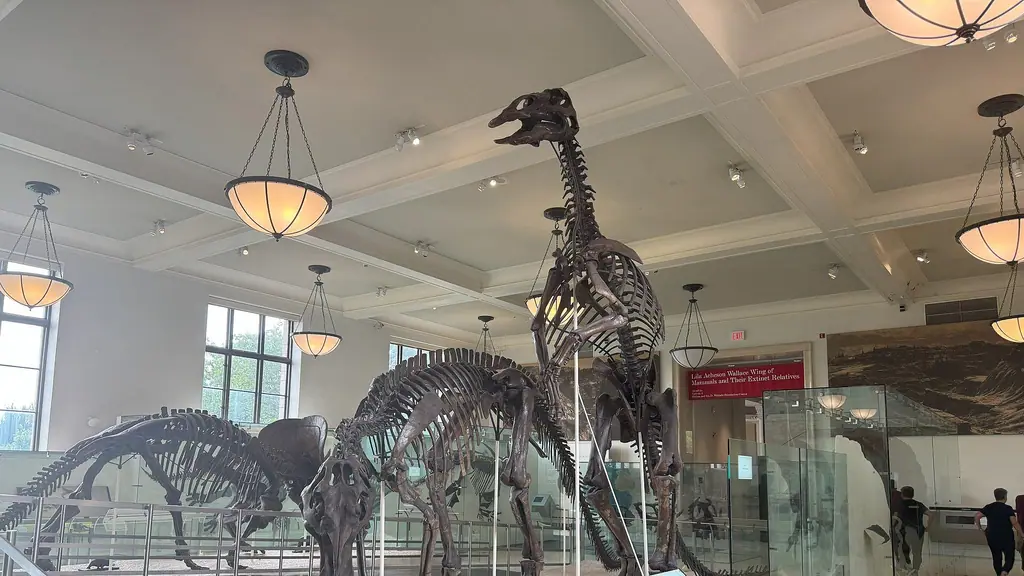
Suppose a third grader asks whether a pterodactyl is a dinosaur, or a middle schooler needs a source for a report on Tyrannosaurus rex and finds a dozen websites that each give a different length. Dinosaurs may be the most popular science topic for young people, and that popularity attracts plenty of shaky information.
The good news is that some of the world's best museums and university research centers publish free, accurate and engaging dinosaur material. This page explains a few core ideas that help students sort good information from bad, shows how paleontologists reach their conclusions, and lists trustworthy places to learn more.
What counts as a dinosaur?
"Dinosaur" is a scientific term for a particular group of reptiles, not a label for any large prehistoric animal. The University of California Museum of Paleontology puts it plainly: not everything big and dead is a dinosaur.
| Animal | Dinosaur? | What it actually is |
|---|---|---|
| Tyrannosaurus, Triceratops, Stegosaurus, Brachiosaurus | Yes | Non-bird dinosaurs |
| Pigeons, eagles, chickens | Yes | Birds, the living descendants of feathered dinosaurs |
| Pterosaurs ("pterodactyls") | No | Flying reptiles closely related to dinosaurs |
| Plesiosaurs, ichthyosaurs, mosasaurs | No | Marine reptiles |
| Dimetrodon (sail-backed) | No | An earlier animal more closely related to mammals |
| Woolly mammoths | No | Mammals that lived long after dinosaurs |
The idea that birds are dinosaurs surprises many adults. It rests on a large body of evidence, including skeletal features shared by birds and small meat-eating dinosaurs and, since the 1990s, fossils from China and elsewhere that preserve feathers on dinosaurs that could not fly.
When dinosaurs lived
Non-bird dinosaurs lived during the Mesozoic Era, divided into the Triassic, Jurassic and Cretaceous periods. They first appeared in the Triassic and dominated land ecosystems for well over 100 million years. The Smithsonian's Deep Time hall shows T. rex as the top predator about 66 million years ago, close to the asteroid impact and mass extinction that ended the age of non-bird dinosaurs.
Those spans are hard to picture. One useful comparison: Stegosaurus lived roughly 150 million years ago, so more time separates Stegosaurus from T. rex than separates T. rex from us. Pictures that show the two fighting are fiction.
Tip: Dates in older books may differ by a million years or so from newer sources, because rock-dating methods keep improving. Small differences like 65 versus 66 million years are normal; wildly different numbers are a warning sign.
How paleontologists know what they know
Fossils do not come with labels. Scientists build conclusions from several lines of evidence and are open about what remains uncertain.
- Finding and excavating fossils. Most dinosaur fossils are found in sedimentary rock exposed by erosion. Teams record exactly where each bone lies before removing it, because position and surrounding rock carry information.
- Dating the rocks. Volcanic ash layers above and below a fossil can be dated using the steady decay of radioactive elements, giving an age range for the animal.
- Comparing anatomy. By comparing bones across many species, scientists work out family relationships and how features such as feathers or horns evolved.
- Reading bone tissue. Thin slices of bone show growth rings, a little like tree rings. The Field Museum reports that rings in the bones of SUE, its famous T. rex, indicate the animal reached full size at about 19 and lived to about 28.
- Using modern technology. CT scanning lets researchers look inside skulls and bones without damaging them; the Field Museum used micro-CT scans of SUE's forelimb to study how T. rex arms worked.
- Studying trace fossils. Footprints, nests, eggs and even fossil dung reveal behavior that bones cannot.
Scientific names change too. When new fossils show that two "species" are really one, or that a familiar animal belongs in a different group, museums update their labels. Brontosaurus is a famous example: long treated as the same animal as Apatosaurus, it was argued to be distinct again in a 2015 study, and paleontologists still discuss the question. Changes like this are a sign of science working, not of scientists getting it wrong.
Some things remain educated guesses. Skin color has been inferred for a few feathered species from microscopic structures, but for most dinosaurs color in artwork is the artist's choice. Sounds, too, are largely unknown.
Try it: Pick one dinosaur and look it up in the Natural History Museum's Dino Directory and on one other museum site. Note its length, when it lived and where fossils were found. Do the sources agree? If not, which one explains how the number was estimated?
Spotting unreliable dinosaur information
- Check who wrote it. Museum, university and government sites are written or reviewed by paleontologists. Quiz and listicle sites often recycle outdated or invented "facts."
- Look for the word "about." Honest sources give lengths and weights as estimates, often with a range, because complete skeletons are rare. SUE, one of the most complete T. rex skeletons known, is about 90 percent complete.
- Watch for movie science. Films are entertainment. Real Velociraptor, for example, was roughly the size of a turkey and had feathers.
- Be wary of "dinosaurs still alive" claims. Apart from birds, there is no credible evidence of living dinosaurs; such stories are hoaxes or misidentifications.
Visiting fossil sites and collecting responsibly
Seeing fossils in the ground, at places such as Dinosaur National Monument in Utah and Colorado, is unforgettable. It is also tightly regulated.
Safety: Under the Paleontological Resources Preservation Act of 2009 and park regulations, collecting fossils in national parks is prohibited without a scientific permit, and vertebrate fossils such as dinosaur bones on other federal land generally require a permit too. Report finds to rangers instead of removing them. In badlands and quarries, stay on marked trails, carry water, watch for unstable slopes and keep young children within arm's reach.
Many museums offer supervised fossil digs, family programs and online classroom activities, which are the safest way for young people to experience paleontology firsthand.
For the wider story of how species disappear, see extinct animals. Teachers will find more classroom-ready material in free science learning resources and online museums and virtual exhibitions, and families can browse ideas on our For Families page.
Recommended resources
- Smithsonian: Deep Time Fossil Hall — The National Museum of Natural History's fossil hall, with a virtual tour and teaching materials on the history of life. Free (Smithsonian Institution).
- American Museum of Natural History: Dinosaurs — Articles, videos and exhibition pages from one of the world's largest dinosaur collections. Free online; museum admission charged (New York).
- UC Museum of Paleontology: The Dinosauria — A university introduction to what dinosaurs are, how they are classified and common misconceptions. Free (University of California, Berkeley).
- Natural History Museum: Dino Directory — Fact files for more than 300 dinosaurs, searchable by name, period, location and diet. Free (Natural History Museum, London).
- Field Museum: SUE the T. rex — The story of one of the most complete T. rex skeletons and what scientists have learned from it. Free (Field Museum, Chicago).
- Royal Tyrrell Museum — Alberta's paleontology museum and research center, with online learning programs. Free website; admission charged.
- Museum of the Rockies — A Montana State University museum with a major dinosaur research collection. Free website; admission charged.
- NPS: Fossils and Paleontology — Fossil parks, junior paleontologist activities and rules for protecting fossils on public land. Free (National Park Service).
- Dinosaur National Monument — Visitor information for the park where a quarry wall displays roughly 1,500 dinosaur bones in place. Free website; park entry fee applies.
- Paleobiology Database — A research database of fossil finds that older students can use to map where and when species lived. Free.
- The Paleontological Society — A scientific society with educational resources and information about careers in paleontology. Free to browse.
- USGS: Geologic Time — A short government booklet explaining the geologic time scale and how rocks are dated; some figures reflect when it was written. Free (U.S. Geological Survey).
Sources
- David H. Koch Hall of Fossils – Deep Time, Smithsonian National Museum of Natural History
- The Dinosauria, University of California Museum of Paleontology
- SUE the T. rex, Field Museum
- Laws, Regulations, & Policies: Fossils and Paleontology, National Park Service
- The Dino Directory, Natural History Museum, London