Extinct Animals: Reliable Sources on Lost Species
How scientists decide a species is extinct, what IUCN Red List categories mean, famous losses from the dodo to the thylacine, and how to judge de-extinction.
Suppose a headline announces that an animal "extinct for thousands of years" has been brought back, and the next week a different story says a bird long thought extinct may have been spotted in a swamp. Both stories are about extinction, and both are harder to judge than they look.
Extinction sounds absolute, yet deciding that the last individual of a species has died is a slow, careful scientific judgment. This page explains how that judgment is made, which organizations make it, what we can learn from some well-documented losses, and how to read the claims that circulate about rediscoveries and "de-extinction."
How scientists decide a species is extinct
You cannot prove a negative by looking once. A species is declared extinct only after repeated, well-designed searches in the places and seasons where it should be found have come up empty, usually over many years.
The global standard is the IUCN Red List of Threatened Species, maintained by the International Union for Conservation of Nature with partner organizations and thousands of specialist scientists. Its published categories and criteria define the key terms:
| Category | What it means in plain English |
|---|---|
| Extinct (EX) | There is no reasonable doubt that the last individual has died, after exhaustive surveys throughout the species' historic range |
| Extinct in the Wild (EW) | Survives only in captivity, cultivation or populations established well outside its natural range |
| Critically Endangered (CR) | Facing an extremely high risk of extinction in the wild |
| Endangered (EN) and Vulnerable (VU) | Very high and high risk of extinction in the wild |
Because the "Extinct" bar is deliberately high, the Red List also flags some Critically Endangered species as Possibly Extinct: probably gone, but not yet confirmed. The Yangtze River dolphin, or baiji, is an example. As London's Natural History Museum describes, a six-week survey of the Yangtze in 2006 found no baiji at all, and scientists concluded that the species was functionally extinct, meaning that even if a few remained, the population could no longer survive.
National lists work differently
Countries keep their own legal lists. In the United States, the Fish and Wildlife Service (with NOAA Fisheries for most marine species) administers the Endangered Species Act. Removing a species from the list because it is extinct is a formal legal process with public comment. In October 2023 the Fish and Wildlife Service removed 21 species from the list due to extinction, including several Hawaiian birds and freshwater mussels. The ivory-billed woodpecker had been included in the original 2021 proposal, but the Service set it aside for further review instead of finalizing that decision, an example of how contested these judgments can be. For any species, check the Service's ECOS database for its current legal status rather than relying on a news story.
Tip: When you read that a species is "extinct," ask who said so. A national agency's legal decision, an IUCN Red List assessment and a single research paper are different kinds of evidence, and they are not always updated at the same time.
Lessons from well-documented losses
A few extinctions are known in unusual detail, and each teaches something different.
- The dodo (Mauritius). A large flightless bird last reliably sighted in 1662, according to the Natural History Museum. Hunting and introduced animals that preyed on eggs drove it out within about a century of regular human visits. Because it vanished before modern scientific description, even basic facts about how it lived are still being worked out from bones and early accounts.
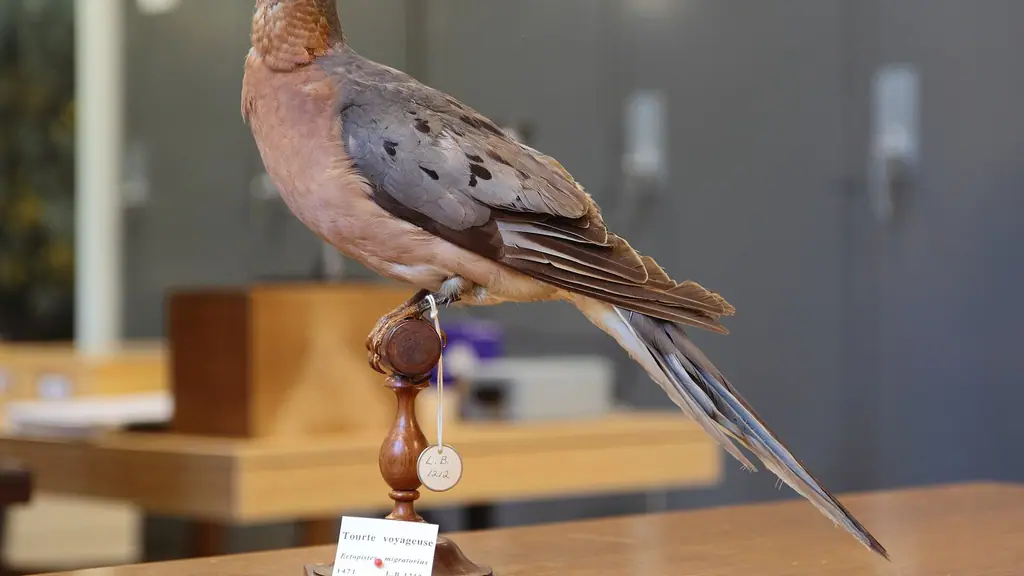
- The passenger pigeon (North America). Once among the most abundant birds on the continent, with population estimates in the billions. The Smithsonian notes that wild birds had disappeared by the early 1900s despite rewards offered for finding a nest. The last known individual, a female named Martha, died at the Cincinnati Zoo in 1914, and her body is in the Smithsonian's collections. Lesson: abundance is no protection against relentless hunting and habitat loss.
- The thylacine (Tasmania). A striped carnivorous marsupial that had already vanished from mainland Australia thousands of years earlier. Persecution as a supposed threat to sheep pushed it toward extinction in Tasmania, and the last known individual died at a Hobart zoo in 1936. Reported sightings still appear; none has produced verifiable evidence.
Mass extinctions in the deep past, such as the one 66 million years ago that ended the age of non-bird dinosaurs, happened over vast timescales. For that story, see our page on dinosaurs for students.
Rediscoveries: "Lazarus" species
Occasionally an animal thought lost turns up again. The most famous case is the coelacanth, a fish known only from fossils until a living one was identified off South Africa in 1938. Rediscoveries are real, which is why scientists are cautious before declaring extinction. But most reported sightings of famous lost species are mistaken identifications, unclear photos or hoaxes. A credible rediscovery usually comes with clear photographs or video, specimens or DNA, independent confirmation by specialists, and publication in a scientific journal.
Try it: Find a news story about a "rediscovered" species. List what evidence the article reports (photo, DNA, expert confirmation, journal publication). Then look up the species on the IUCN Red List or ECOS. Has its official status changed?
De-extinction: what the claims really mean
Advances in genome sequencing and editing have made "de-extinction" a popular headline. In April 2025, a biotechnology company announced three gray wolf pups with edits to a small number of genes chosen to give them traits associated with the extinct dire wolf. Scientific American reported that many scientists regard the animals as genetically modified gray wolves rather than dire wolves; no extinct genome has been recreated.
The IUCN Species Survival Commission addressed this in 2016 guiding principles that describe the products of such work as proxies: new organisms with some characteristics of an extinct species, never the species itself. The principles ask whether a proxy would bring real conservation benefit and what risks it could pose to existing wildlife and ecosystems.
Checklist: Reading a de-extinction story? Ask (1) which living species the animals actually are, (2) how many genes were changed compared with the differences between the two species, (3) whether independent scientists were quoted, (4) whether results are published in a peer-reviewed journal, and (5) who benefits from the announcement.
Where to find reliable information
Start with organizations that hold specimens, collect data or make official assessments: the IUCN Red List, the U.S. Fish and Wildlife Service, major natural history museums, and biodiversity databases run by research institutions. Encyclopedia-style species pages are useful for overviews; for current status, always check the assessing body itself.
For living species and how they are studied, see our page on wildlife and animal science resources and biology learning resources. For judging websites in general, our guide to evaluating online sources explains lateral reading.
Recommended resources
- IUCN Red List of Threatened Species — The global database of species assessments, searchable by name, category, region and threat. Free to search; downloading data requires a free account (IUCN).
- IUCN Red List Categories and Criteria — The official document defining Extinct, Extinct in the Wild and the threat categories. Free PDF (IUCN Library).
- IUCN SSC Guiding Principles on Creating Proxies of Extinct Species — The 2016 guidance on de-extinction, its risks and conservation tests. Free PDF (IUCN Species Survival Commission).
- ECOS: Environmental Conservation Online System — Official U.S. listing status, recovery plans and documents for species under the Endangered Species Act. Free (U.S. Fish and Wildlife Service).
- USFWS: Endangered Species Program — How the Endangered Species Act works, with listing, delisting and recovery information. Free (U.S. Fish and Wildlife Service).
- Smithsonian: The Last Passenger Pigeon — The Smithsonian's account of the passenger pigeon and Martha, the last known individual. Free.
- Natural History Museum: The Dodo — What scientists now know about the dodo and why it disappeared. Free (Natural History Museum, London).
- Australian Museum: The Thylacine — Biology, history and extinction of the thylacine from one of Australia's oldest museums. Free.
- NatureServe Explorer — Conservation status of species and ecosystems across the Americas, compiled by a network of scientists. Free (NatureServe, a nonprofit).
- Encyclopedia of Life — Species pages that gather text, images and data from museums and scientific partners. Free (hosted by the Smithsonian's National Museum of Natural History).
- Biodiversity Heritage Library — Digitized historical natural history books and journals, including original descriptions of species now extinct. Free.
- GBIF: Global Biodiversity Information Facility — Open data on where species have been recorded, from museum specimens and field observations worldwide. Free; downloads need a free account (international network funded by governments).
- Paleobiology Database — A scientist-run database of fossil occurrences useful for studying extinctions in deep time. Free.
Sources
- IUCN Red List Categories and Criteria, Version 3.1, Second Edition, International Union for Conservation of Nature
- 21 species delisted from the Endangered Species Act due to extinction, U.S. Fish and Wildlife Service
- The Last Passenger Pigeon, Smithsonian Institution
- The dodo bird: The real facts about this icon of extinction, Natural History Museum, London
- The baiji: Why this extinct river dolphin still matters, Natural History Museum, London
- The Dire Wolf Isn't Back—But Here's What 'De-Extinction' Tech Can Actually Do, Scientific American