DICDictionaries and Encyclopedias
Free Online Dictionaries: General, Learner's and Specialist Picks
Which free dictionary to open for which job: general American usage, learner's English, word origins, legal and medical terms, with tips for reading entries.
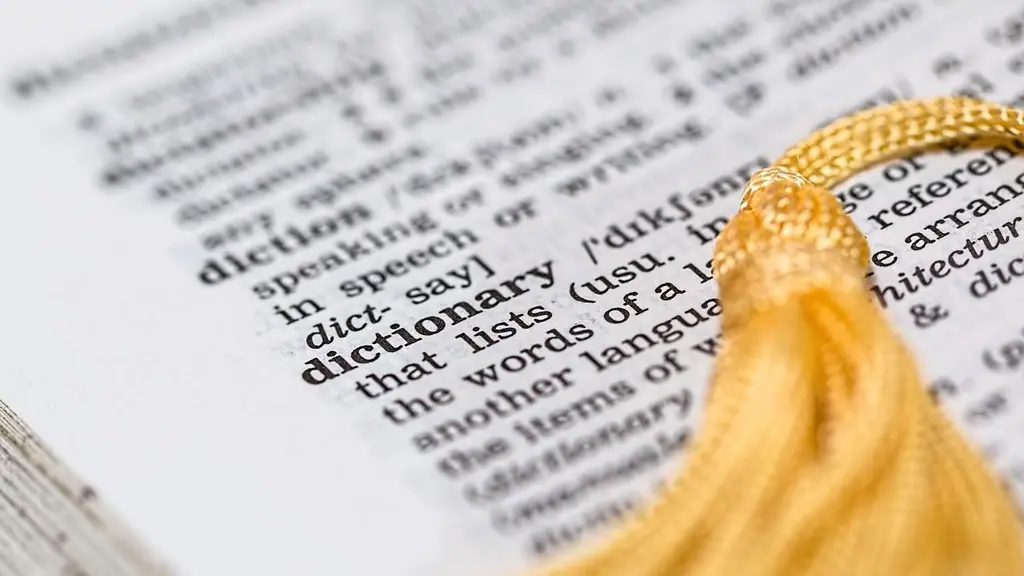
A student reading a court decision for civics class hits the phrase "res judicata." A nurse-in-training sees "cholecystectomy" on a chart. A newcomer to English wants to know whether "actually" means the same as the Spanish actualmente (it does not). Each of them needs a dictionary, but not the same dictionary.
The free web now offers far more than one all-purpose word book. There are general dictionaries edited by long-established publishers, learner's dictionaries written in deliberately simple language, historical dictionaries that trace where words came from, and specialist glossaries maintained by law schools and federal health agencies. This page sorts them by job, explains how to read an entry so you get more than a definition, and ends with a list of dependable free options.
Match the dictionary to the question
Most look-up frustration comes from asking a general dictionary a specialist question, or a learner's dictionary a historical one. Start by naming what you actually need.
| Your question | Type of dictionary | Free examples |
|---|---|---|
| What does this everyday word mean, and how do Americans spell and say it? | General (native-speaker) | Merriam-Webster, American Heritage |
| I'm learning English: how do I use this word in a sentence? | Learner's | Oxford Learner's, Cambridge, Longman |
| Where did this word come from, and when? | Etymological | Online Etymology Dictionary, AHD's Indo-European roots appendix |
| What does this term mean in law? | Legal glossary | Wex, U.S. Courts glossary |
| What does this term mean in medicine? | Medical dictionary or tutorial | Merriam-Webster Medical, MedlinePlus, NCI cancer terms |
| I know the idea but not the word | Reverse dictionary | OneLook |
General dictionaries: the everyday default
For American spelling, pronunciation and current meanings, a general dictionary from an established publisher is the right first stop. Merriam-Webster and the American Heritage Dictionary both offer free online editions. Their entries are written by professional lexicographers, list senses in a consistent order, and mark words as informal, offensive or dated when that matters.
The two differ in useful ways. Merriam-Webster's site adds a thesaurus, a medical dictionary and frequently updated word notes, and is supported by advertising. The American Heritage site is plainer, and it includes usage notes that discuss disputed questions (is "impact" acceptable as a verb?) along with an appendix of Indo-European roots that shows how distant English words share an ancestor.
Volunteer-edited Wiktionary covers an enormous range of words and languages, including slang and technical terms that commercial dictionaries skip. Because anyone can edit it, treat it as a lead rather than an authority: check an unusual claim against an edited dictionary before relying on it.
Learner's dictionaries: written for people still learning English
A native-speaker dictionary may define a word using harder words. Learner's dictionaries avoid that by defining entries with a restricted vocabulary, and they show grammar patterns that fluent speakers never think about: whether a noun is countable, which preposition follows a verb, whether a phrase is formal.
Oxford Learner's Dictionaries offer both British and American editions free online, along with the Oxford 3000 and 5000 lists of core words that Oxford recommends learners prioritize. Cambridge Dictionary and the Longman Dictionary of Contemporary English follow the same approach and include audio pronunciations. Teachers working with English learners often find these the most practical classroom dictionaries even for native speakers in the early grades, because the example sentences show words in natural use.
Tip: When a student copies a definition that doesn't fit the sentence they're reading, the problem is usually the sense, not the dictionary. Ask them to read every numbered sense and pick the one that matches the context, then test it by substituting the definition into the original sentence.
Etymology: where words came from
Etymological dictionaries trace a word's earlier forms and first recorded uses. The free Online Etymology Dictionary is the most widely used, with concise histories that cite approximate dates of first use. The American Heritage roots appendix is excellent for seeing families of related words. The full historical record of English is in the Oxford English Dictionary, which is a subscription service; many public and academic libraries provide free access with a library card, so check your library's online resources before paying.
Etymology is also where myths cluster. Stories that a word began as an acronym (a claim often made about common swear words and about "posh") almost never hold up. If an origin story sounds too neat, look it up in an etymological dictionary rather than repeating it.
Legal and medical dictionaries
Specialist fields use ordinary-looking words in exact, sometimes surprising ways. "Consideration" in contract law is not thoughtfulness; "negative" on a medical test is often good news.
For law, Wex from Cornell Law School's Legal Information Institute is a free, community-built legal dictionary and encyclopedia, with entries drafted by Cornell law students and recent graduates under the institute's supervision. It links terms to the statutes and cases where they matter. The federal judiciary's Glossary of Legal Terms on uscourts.gov is shorter and written for jurors, parties and the public. Both explain terms; neither gives legal advice about a particular situation.
For medicine, the Merriam-Webster Medical Dictionary handles definitions. MedlinePlus, from the National Library of Medicine, retired its own medical dictionary but keeps two excellent tools: an interactive Understanding Medical Words tutorial and a table of word parts (prefixes, roots and suffixes) that lets you decode unfamiliar terms. The National Cancer Institute's Dictionary of Cancer Terms and the National Human Genome Research Institute's Talking Glossary of Genetic Terms cover their fields in plain language. A dictionary explains what a word means, not what a diagnosis means for a particular person; that conversation belongs with a clinician.
How to read a dictionary entry
An entry holds much more than a definition. Work through it in this order:
- Headword and spelling variants. Note whether the dictionary lists a British spelling as a variant.
- Pronunciation. Play the audio if there is one; otherwise check the dictionary's pronunciation key, because each publisher uses its own symbols.
- Part of speech. Many words are both nouns and verbs with different senses.
- Numbered senses. Read all of them; the first is not always the most common in every dictionary.
- Labels. Watch for informal, offensive, chiefly British, archaic or field labels such as law or medicine.
- Examples and usage notes. These show how the word behaves in a sentence.
- Etymology and date. Often at the end of the entry.
Try it: Look up "sanction" in a general dictionary. You'll find it can mean both to permit and to penalize. Write one sentence using each sense, then check a learner's dictionary to see how it separates the two.
When you need a word you can't name, OneLook helps from the other direction: type a description such as "fear of long words" and it suggests candidates drawn from hundreds of dictionaries, then links to their definitions. For synonyms, see our page on free online thesauruses; for acronyms, the acronyms and abbreviations page; and for longer explanations of ideas rather than words, free online encyclopedias. Translators should read what online translation tools do well before trusting a bilingual result. More hand-checked reference works are in the Dictionaries and Encyclopedias subject.
Recommended resources
- Merriam-Webster — Free general American English dictionary with audio pronunciations, a thesaurus and word-history notes. Merriam-Webster; free with advertising; no account needed for look-ups.
- American Heritage Dictionary — The free online edition of a respected American dictionary, notable for usage notes on disputed points. HarperCollins; free; no account.
- Indo-European Roots (American Heritage Dictionary) — An appendix tracing English words back to reconstructed ancestral roots, useful for vocabulary lessons built on word families. HarperCollins; free.
- Oxford Learner's Dictionaries — Learner's dictionaries in British and American editions, with simple definitions, grammar codes and the Oxford 3000 and 5000 core word lists. Oxford University Press; free with advertising.
- Cambridge Dictionary — Learner and native-speaker definitions plus many bilingual dictionaries, with British and American audio. Cambridge University Press; free with advertising; optional account for word lists.
- Longman Dictionary of Contemporary English — A learner's dictionary with clear example sentences and notes on common mistakes. Pearson; free with advertising.
- Wiktionary — A volunteer-edited dictionary covering many languages, slang and technical terms. Wikimedia Foundation; free, no ads; check unusual claims elsewhere.
- Wordnik — Shows definitions from several dictionaries alongside real example sentences gathered from news and books. Wordnik, a nonprofit; free.
- OneLook — Searches hundreds of dictionaries at once and works as a reverse dictionary when you can describe a word but not name it. Free; no account.
- Online Etymology Dictionary — Short, dated histories of English words and phrases. Free with advertising; a good first stop for word origins.
- Wex — A free legal dictionary and encyclopedia linking terms to statutes and cases. Legal Information Institute, Cornell Law School; free; not legal advice.
- Glossary of Legal Terms — Plain-language definitions of terms used in federal courts. Administrative Office of the U.S. Courts; free.
- Merriam-Webster Medical Dictionary — Definitions of medical terms and abbreviations. Merriam-Webster; free with advertising.
- Understanding Medical Words (MedlinePlus) — An interactive tutorial on how medical terms are built from prefixes, roots and suffixes. U.S. National Library of Medicine; free, no ads.
- NCI Dictionary of Cancer Terms — Plain-language definitions of terms related to cancer and its treatment. National Cancer Institute; free.
Sources
- Wex: Legal Dictionary and Encyclopedia, Legal Information Institute, Cornell Law School
- Oxford 3000 and 5000 word lists, Oxford University Press
- Understanding Medical Words Tutorial, MedlinePlus, U.S. National Library of Medicine
- About Wordnik, Wordnik
- OneLook Dictionary Search, OneLook