How to Research a School Project: From Question to Bibliography
A week-by-week plan for school research projects: narrow a topic, write a question, find and read sources, take notes, then cite them in a bibliography.
Suppose you have four weeks to write about the Dust Bowl. On day one it feels like plenty of time. On day twenty-five you have three browser tabs, half an outline, and no idea where you found the statistic you wanted to use. Most research projects go wrong in the same way: not because the student cannot write, but because the research had no plan.
This guide gives you that plan. It breaks a typical school research project into four weeks, each with a clear goal and a short list of tasks, and includes a one-week version for when time is tight. It works for a middle school report or a high school research paper; adjust the amount of reading to your grade and your teacher's instructions. Along the way you will build the habits school librarians teach: asking good questions, choosing trustworthy sources, taking notes in your own words, and giving credit.
The plan at a glance
| Week | Goal | You will finish with |
|---|---|---|
| 1 | Choose and focus | A narrowed topic, a research question, a list of search terms |
| 2 | Find sources | Six to ten promising sources, each checked and logged |
| 3 | Read and take notes | Notes organized by subtopic, plus a working outline |
| 4 | Write and cite | A draft, in-text citations and a finished bibliography |
The American Association of School Librarians organizes its national standards for learners around six shared foundations: Inquire, Include, Collaborate, Curate, Explore and Engage. You will practice most of them in this plan, especially inquiring (asking questions) and curating (gathering and organizing sources).
Week 1: Choose a topic and turn it into a question
Start broad, then narrow. The Purdue Online Writing Lab suggests narrowing a topic by subtopic, by group of people or by time period. A worked example:
- Broad topic: The Dust Bowl
- Narrower: How the Dust Bowl affected families in the southern Great Plains
- Narrower still: Why many Dust Bowl families moved to California, and what happened when they arrived
- Research question: What pushed families to leave the southern Plains during the Dust Bowl, and how were they received in California?
A good research question cannot be answered with a single fact, but it can be answered with the sources available to you in the time you have. If a quick search turns up almost nothing, broaden it. If it turns up whole books on your exact question, narrow it.
Get background first. Read an encyclopedia entry or a textbook section so you know the key people, places, dates and vocabulary. These become your search terms. For the example: "Dust Bowl," "Okies," "migrant workers," "Farm Security Administration," "1930s drought."
Check the assignment. How many sources are required? Must some be primary sources? Which citation style? Write these at the top of your project notes.
Week 2: Find and check your sources
Aim for a mix of source types:
- Reference and background: encyclopedias and subject reference books from your library.
- Books: search your school or public library catalog; ebooks count.
- Articles: use your library's student databases for magazines, newspapers and journals.
- Primary sources: materials created at the time. The Library of Congress provides free classroom materials built on primary sources, including Primary Source Sets on frequently taught topics; for the Dust Bowl example, its collections include Farm Security Administration photographs and recordings of migrant workers. The Smithsonian Learning Lab gathers museum images, texts and recordings in one search.
- Official and expert websites: government agencies, museums, universities.
Our guide to primary, secondary and tertiary sources explains why a strong project needs more than one kind.
Check every source before you rely on it. For anything unfamiliar online, open a new tab and find out who is behind it before you read closely. How to Find Reliable Information Online walks through the full method.
Log sources as you find them. For each one, record the author, title, publisher or website, date, URL (for online sources) and the date you accessed it. A simple table works, or a free citation manager.
Tip: Your school librarian is the most underused research tool in the building. Ask which databases your school subscribes to, how to log in from home, and whether the library has books on your topic. Five minutes with a librarian can save five hours of searching.
Week 3: Read actively and take notes in your own words
Skim first. Read the introduction, headings and conclusion of each source to decide whether it is worth a close reading. Then read the useful parts carefully and take notes.
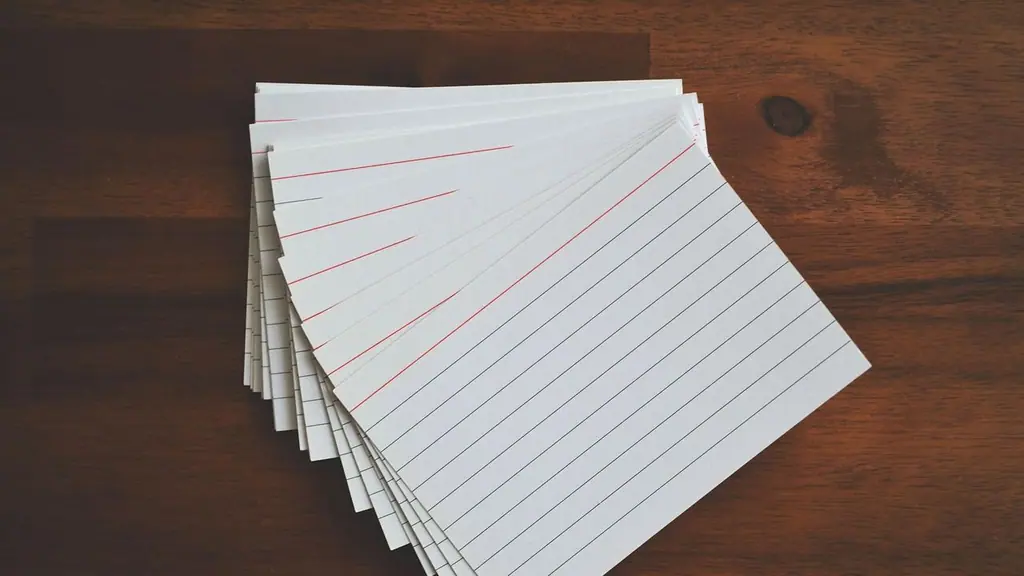
Use one note per idea. On an index card, a sticky note or a line in a document, write:
- The subtopic it supports (for example, "reasons for leaving" or "arrival in California")
- The idea in your own words
- Any exact words you might quote, in quotation marks
- The source and page number or section
Purdue's writing lab distinguishes three ways to use a source: quoting (exact words, in quotation marks), paraphrasing (one passage restated in your own words) and summarizing (the main points of a longer piece in your own words). All three must be credited to the source. A good test for a paraphrase: close the source, write the idea from memory, then compare to make sure you did not copy phrasing by accident.
Sort and outline. At the end of the week, group your notes by subtopic. Each group becomes a section of your paper or presentation. Gaps become obvious: if one section has a single note, you need another source.
Try it: Pick one paragraph from a source you plan to use. Write a one-sentence summary, a two-sentence paraphrase and one short quotation from it. Then write the citation. If you can do all four, you have the core skills for the whole project.
Week 4: Draft, cite and build the bibliography
Draft from your outline. Write the body sections first, using your notes; write the introduction and conclusion last, once you know what you are introducing and concluding.
Cite as you write. Add an in-text citation every time you use a source's idea, words or data, not just when you quote. Use the style your teacher assigned. For MLA, the MLA Style Center, run by the Modern Language Association that publishes the MLA Handbook, answers common questions free. Our guide on how to cite online sources has worked examples in MLA, APA and Chicago.
Build the bibliography from your log. List every source you cited (your teacher may call it Works Cited, References or Bibliography), formatted in your style and arranged as the style requires, usually alphabetically by author. If your teacher wants an annotated bibliography, add a short summary and evaluation under each entry.
Revise. Check that every paragraph supports your research question, every fact has a citation, and every citation appears in the bibliography.
Doing your own work
Research means using other people's work honestly. Rules about collaboration and about AI tools differ between schools and between teachers, so check the policy for your class before you start. Never submit writing you did not produce, never use tools to disguise copied text, and ask your teacher if you are unsure whether something is allowed. Common Sense Education's free digital citizenship lessons, used by many schools, cover giving credit and respecting creative work online.
The one-week version
Short on time? Compress the plan without skipping a stage:
Checklist: Day 1: get background and write your research question. Day 2: find four to six sources, including one primary source, and log them. Days 3–4: read and take notes in your own words, one idea per note. Day 5: sort notes and outline. Day 6: draft with in-text citations. Day 7: build the bibliography, revise and proofread.
For tools to speed up the searching stage, see online research tools for students. The student resources below have been checked by Re-Quest's editors, and the For Students page gathers more guides.
Curated resources
Checked by hand from the For Students shelf of the library (guides or reference works or libraries and archives). Each entry says what it costs and when we last verified it.
APA Style
American Psychological Associationapastyle.apa.org
The official website for APA Style from the American Psychological Association, with free guides on reference formats, in-text citations, paper formatting, bias-free language and sample papers. The authoritative place to confirm current APA rules for psychology, education, nursing and social science assignments.
Using it: Free guidance; the full manual is paid.
Verified
BigFuture (College Board)
College Boardbigfuture.collegeboard.org
Free college and career planning tools from the College Board, including a college search, scholarship information, career exploration and step-by-step guidance on applications and paying for college. Useful for high school students and families starting to plan, with optional accounts to save lists and progress.
Using it: Free; account optional.
Verified
Chicago-Style Citation Quick Guide
University of Chicago Presschicagomanualofstyle.org
A free quick guide from the publishers of The Chicago Manual of Style showing example citations in both the notes-and-bibliography and author-date systems. Covers books, articles, websites and other common sources, helpful for history and humanities students who need the essentials without the full manual.
Using it: Quick guide is free; the full manual requires a subscription.
Verified
MLA Style Center
Modern Language Associationstyle.mla.org
The official free website of the Modern Language Association for MLA style. It offers guidance on formatting papers and citing sources, worked examples, answers to common questions and teaching resources, making it the most reliable place to check current MLA conventions instead of relying on unofficial summaries.
Using it: Free, no account.
Verified
Open Library
Internet Archive (nonprofit)openlibrary.org
An open, editable catalog that aims to have a web page for every book, linked to digital copies where available. You can borrow many modern ebooks, read public domain titles and track books you have read or want to read, all from a library-style catalog.
Using it: Free account needed to borrow; borrowed books are read in the browser or app for a limited loan period.
Verified
Poetry Foundation
Poetry Foundationpoetryfoundation.org
A large online collection of poems, poet biographies, articles and audio. Teachers and students can explore poetry across eras and styles, with learning resources and guides for close reading.
Using it: Free, no account.
Verified
Purdue OWL
Purdue University Writing Labowl.purdue.edu
The Purdue Online Writing Lab offers free guides on academic writing, grammar, research and citation styles including APA, MLA and Chicago. Clear examples and explanations make it one of the most widely used writing references for students and teachers.
Using it: Free, no account. Check the edition notes since citation styles change over time.
Verified
Science Buddies
Science Buddies (nonprofit)sciencebuddies.org
A nonprofit providing free science project ideas, step-by-step guides and STEM activities for students. Useful for science fair planning, with project ideas organized by grade and interest.
Using it: Free, with some ads; account optional.
Verified
SIFT (The Four Moves)
Mike Caulfield (digital literacy researcher)hapgood.us
A widely taught framework for evaluating online information: Stop, Investigate the source, Find better coverage and Trace claims to their origin. A short, practical method suitable for students and adults learning lateral reading.
Using it: Free blog post.
Verified
Standard Ebooks
Standard Ebooks (volunteer project)standardebooks.org
A volunteer project producing carefully edited, well-typeset ebook editions of public domain literature. Texts are proofread, formatted to modern standards and offered in formats for Kindle, Kobo and other readers, making classic novels, essays and poetry pleasant to read on any device.
Using it: Free, no account needed. Downloads work with most e-readers; the books are public domain in the United States.
Verified
UNC Writing Center Handouts
University of North Carolina at Chapel Hillwritingcenter.unc.edu
A free library of handouts from the Writing Center at the University of North Carolina at Chapel Hill covering thesis statements, argument, paragraphing, grammar, citation and writing in specific disciplines. Clear, practical explanations make these handouts useful for high school and college writers at any stage of a paper.
Using it: Free, no account.
Verified
Sources
- Research Overview, Purdue Online Writing Lab
- Quoting, Paraphrasing, and Summarizing, Purdue Online Writing Lab
- Education Resources from the Library of Congress, Library of Congress
- National School Library Standards, American Association of School Librarians
- MLA Style Center, Modern Language Association
- Digital Citizenship Lessons, Common Sense Education